The Table
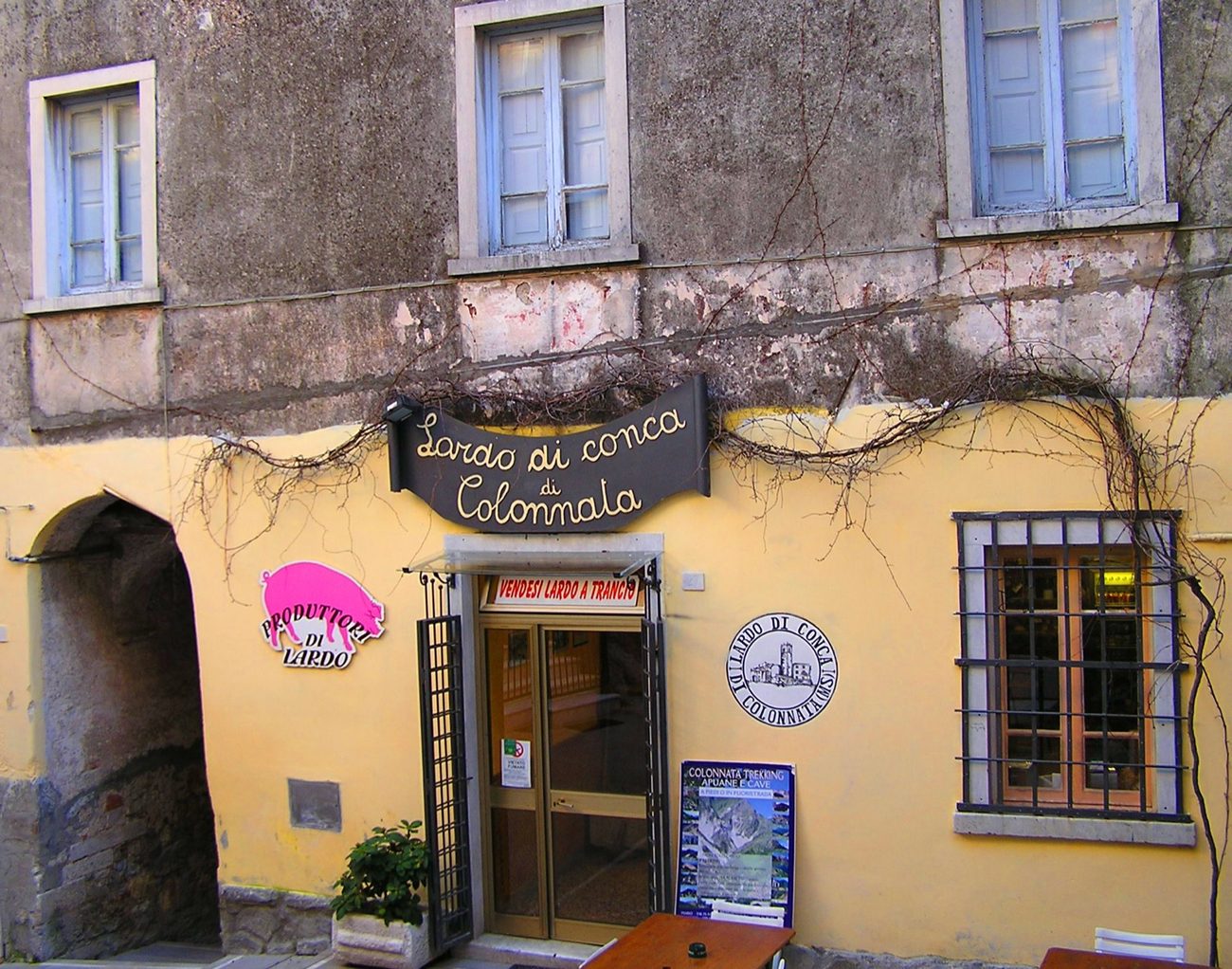
You climb to Colonnata on a road that keeps turning back on itself, the Apuan Alps going white above you long before any snow could explain it. The whiteness is marble. Carrara quarries the stuff a few bends below, and the village at the top has lived off two pale things cut from the same mountain: the stone, and the fat that is cured inside it.
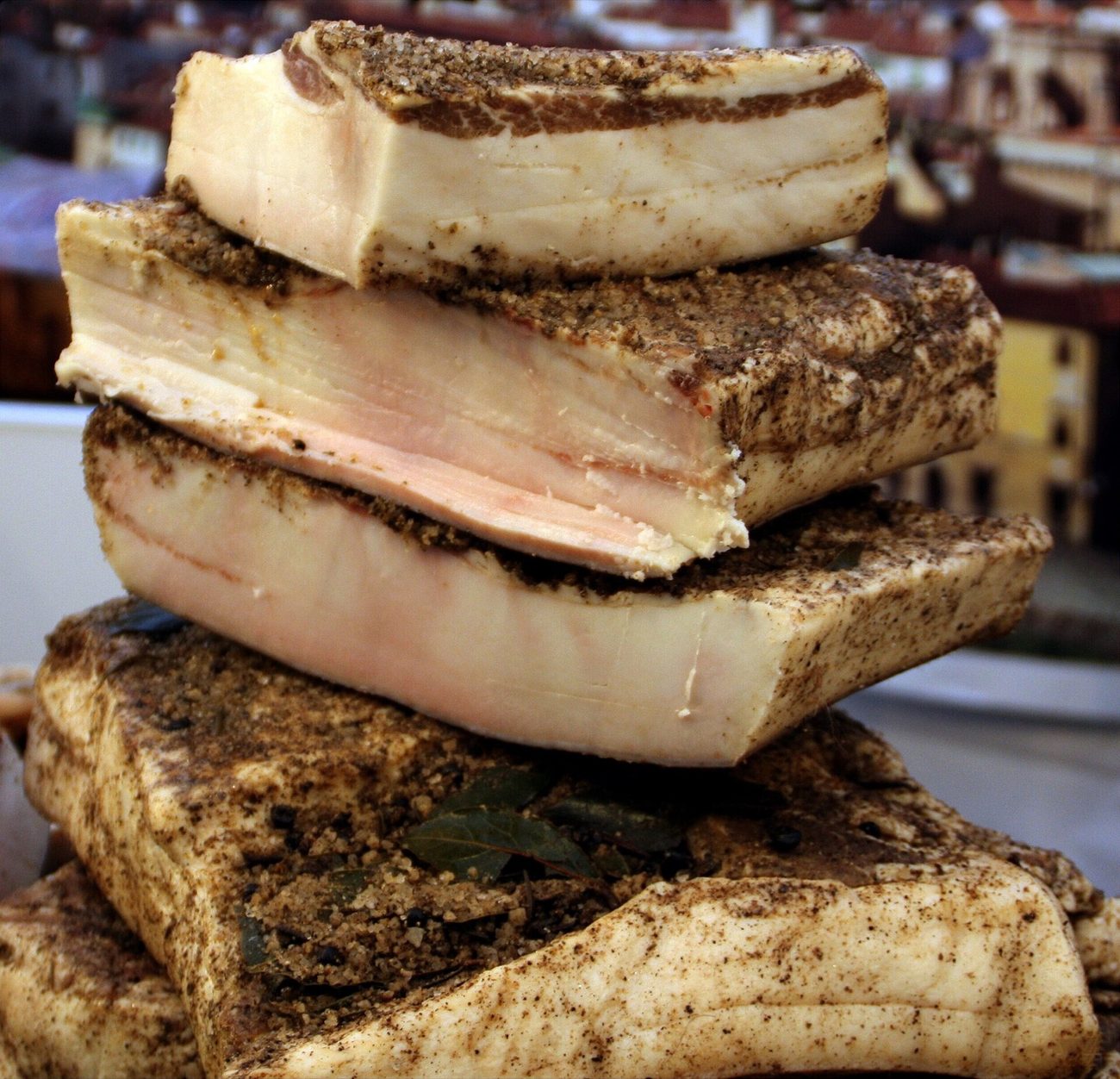
Lardo is pork back-fat, and that is the whole of it. No lean, no frill. It was quarrymen's food, cheap energy for men who spent their days splitting rock, and for a long time nobody outside the valley thought to covet it. Then the rest of Italy tasted what the marble did, and Colonnata stopped being a secret.
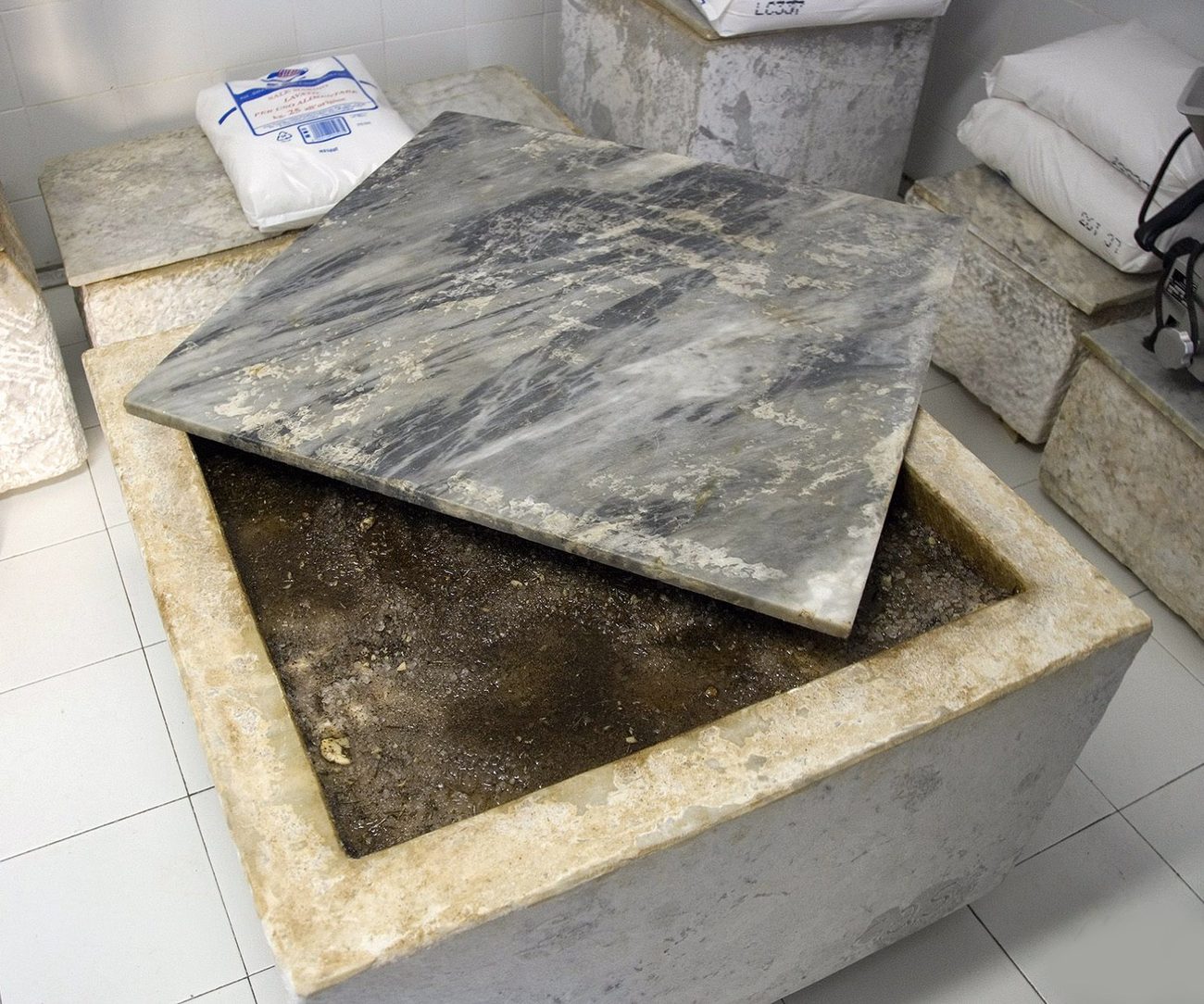
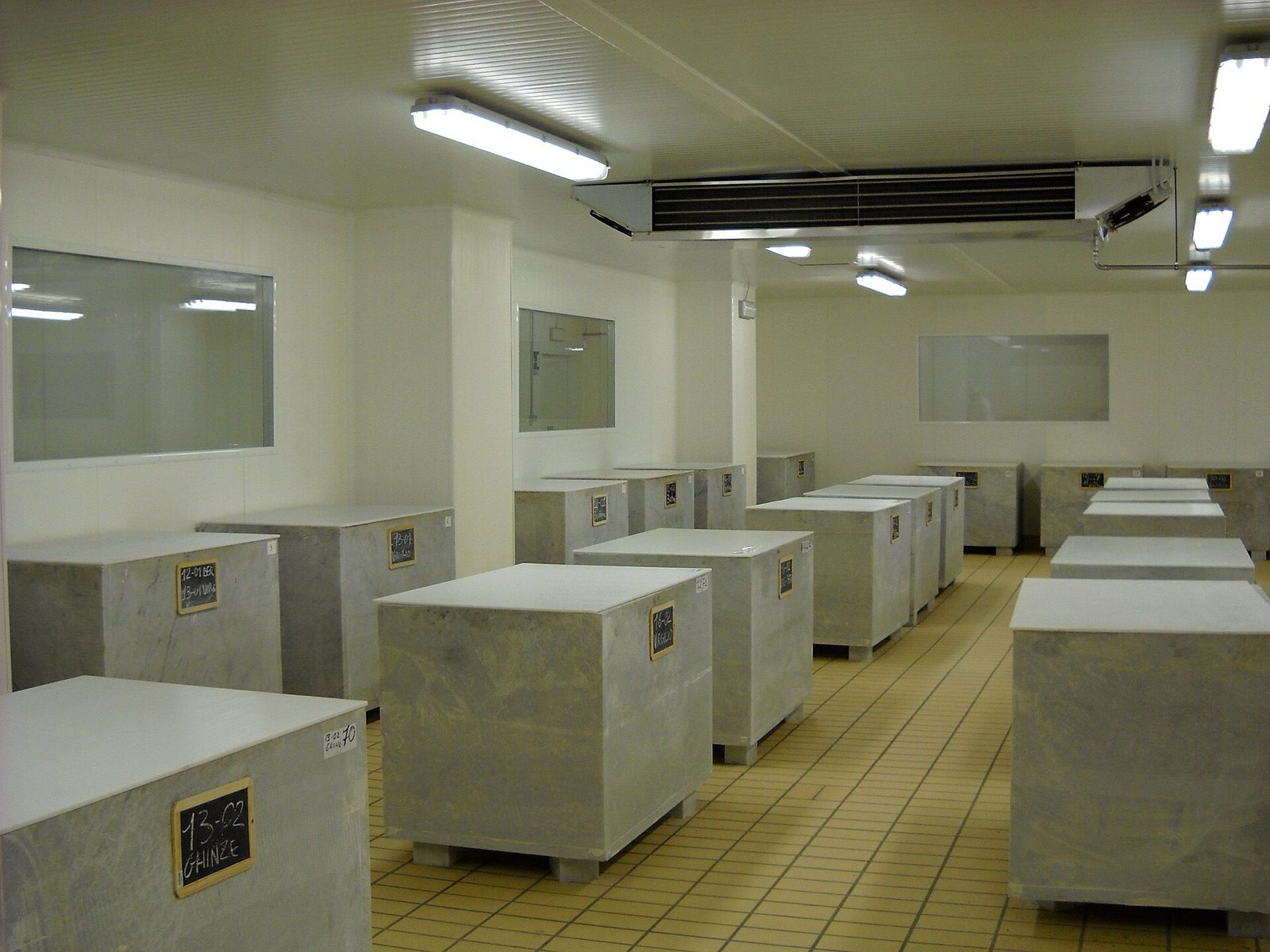
The method has not really changed. Slabs of fat are trimmed and packed into a conca, a rectangular basin carved from local marble and rubbed first with garlic. Between the layers go coarse sea salt, black pepper, rosemary, and a mix of herbs each family guards a little jealously. The basin is sealed and left in a cool cellar for at least six months. No refrigeration ever touches it. The cellars hold their own damp chill, and the fat slowly gives up its heaviness and takes on scent.
The marble is not decoration. Carrara stone is close to chemically neutral, it holds a steady cool temperature without any help, and it is faintly porous, so over years each basin grows its own bacterial flora. That is why a conca in one cellar gives a different result from the one next door, and why nobody has managed to fake Colonnata with a plastic tub somewhere warm.
You do not chew it so much as wait for it to disappear.
Eat it the way the village does. Sliced almost to transparency, laid over warm bread so the edges begin to melt, perhaps a grind of pepper and nothing else. Good lardo is not greasy on the tongue. It is cool, faintly sweet, herb-scented, and gone before you have decided what it reminded you of. A glass of something sharp behind it does no harm.
The name has been protected as an IGP since 2004, which keeps the marble basins and the village boundary inside the definition and the imitators out. That matters, because this is one of those foods that refuses to travel from its terroir. We would not order it in a city that has never seen the quarries. We would drive up the switchbacks, sit where the white dust settles on everything, and have it cut fresh from the conca.