We have always preferred to arrive by rail when the railway is the point, and 2026 has restored a few lines that earn the indulgence. A long-mourned night train is back; a high alpine crossing remains the most beautiful in Europe.
These are the routes we would book now, chosen for the view from the window and the places they deliver you to, not for speed.
- Paris–Berlin night train (European Sleeper). Relaunched on 26 March 2026 after years dark, the sleeper leaves Paris in the early evening and reaches Berlin the next morning; from 13 July it extends north toward Hamburg.
- Amsterdam/Brussels–Milan night train (European Sleeper). Beginning in 2026, this overnight service runs via Cologne, Bern and Brig to Stresa on Lake Maggiore before Milan, threading the Alps to the edge of the Italian lakes.
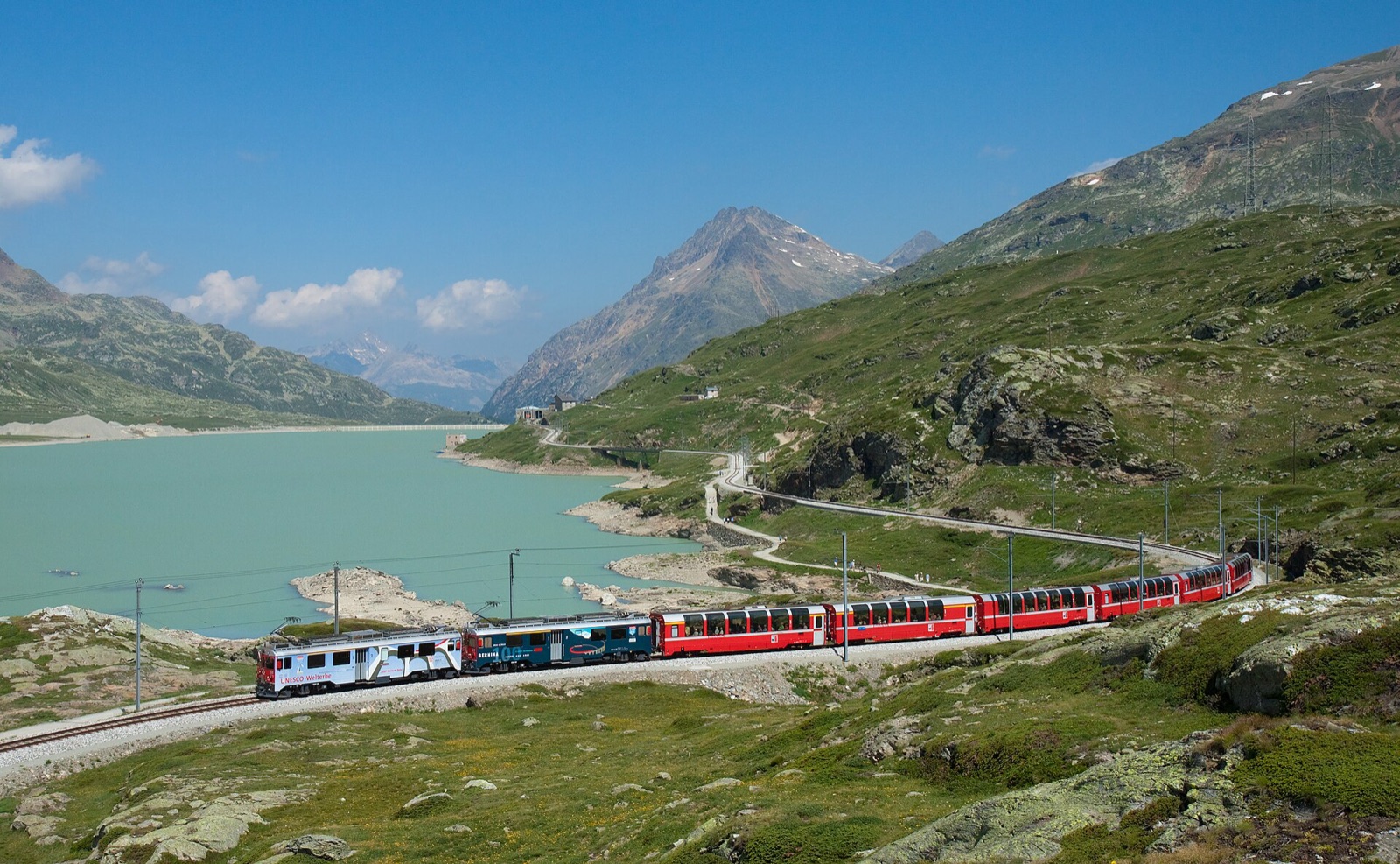
- Bernina Express, Switzerland to Italy. The UNESCO-listed crossing climbs over the Bernina Pass above 2,250 metres before the spiral Brusio viaduct drops it down to Tirano in Italian Valtellina, the most theatrical alpine descent toward the south.
- Train des Pignes, Nice to Digne-les-Bains. The narrow-gauge line runs inland from the Riviera coast through the Préalpes d'Azur, trading the sea for gorges and hill villages in a few unhurried hours.
- Belgrade to Bar, Serbia and Montenegro. One of Europe's most dramatic single lines tunnels and bridges down from the Balkan interior to the Montenegrin Adriatic, a slow plunge from mountains to sea.
The Edit is a VANE Journal column. We choose the way we choose hotels — first-hand, on our own terms, with no placement bought. Photo: Photo: Kabelleger / David Gubler (http://www.bahnbilder.ch), Wikimedia Commons (CC BY-SA 3.0).
← More from the Journal