A finca that stayed a finca
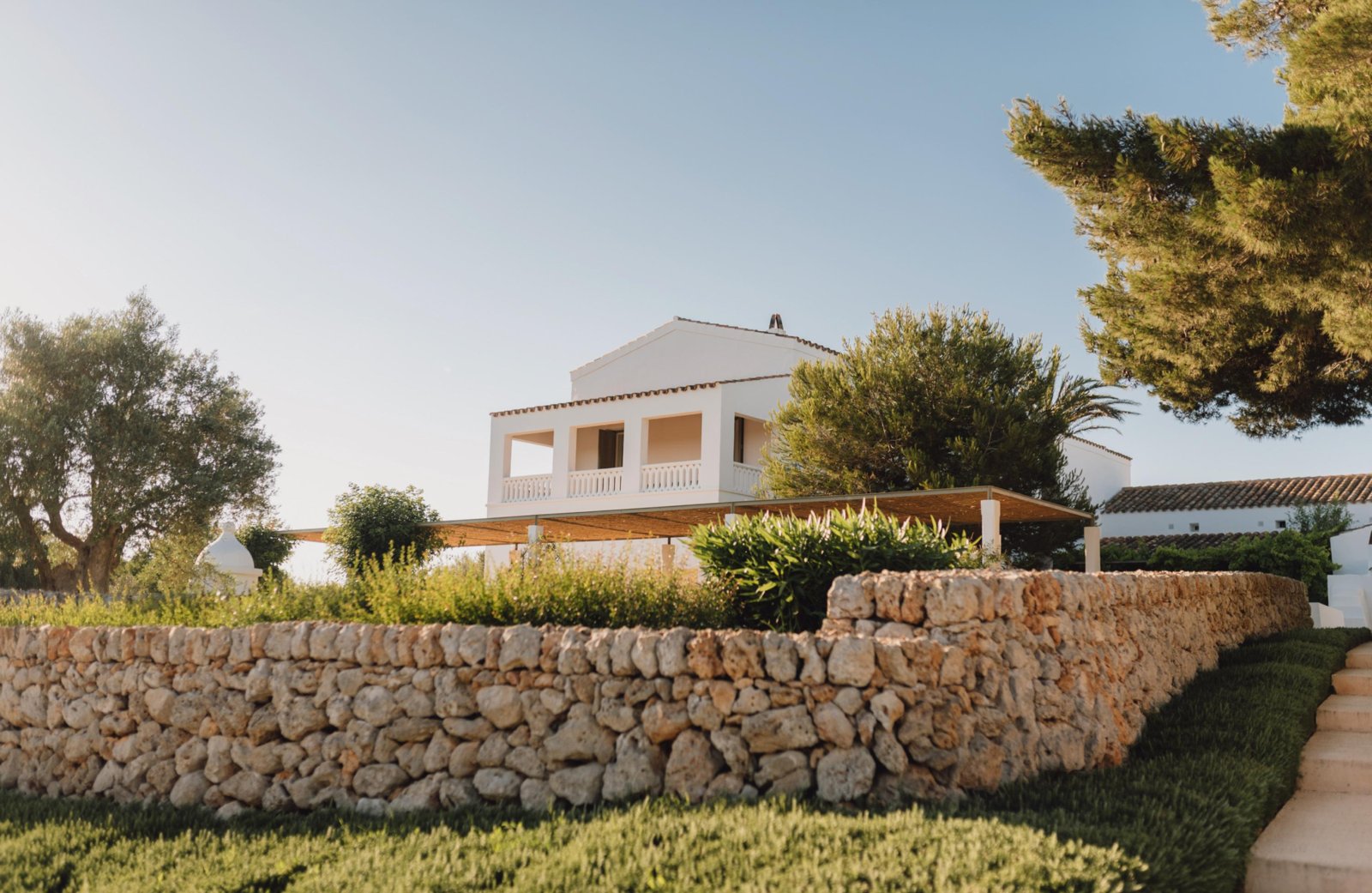
The estate runs to seventy-four hectares of farmland on the low ground between Alaior and the sea, and the buildings on it are the ordinary ones a Menorcan farm has always had. Whitewash over honey-coloured marès stone, single storeys, thick walls, the tiled ridges the island builds without thinking. There is a nineteenth-century core and there are later additions, and nothing about the group of them asks to be admired. That is the achievement. When money reaches a farm like this it usually smooths the character off it. Here the money went the other way, into keeping the plainness intact.
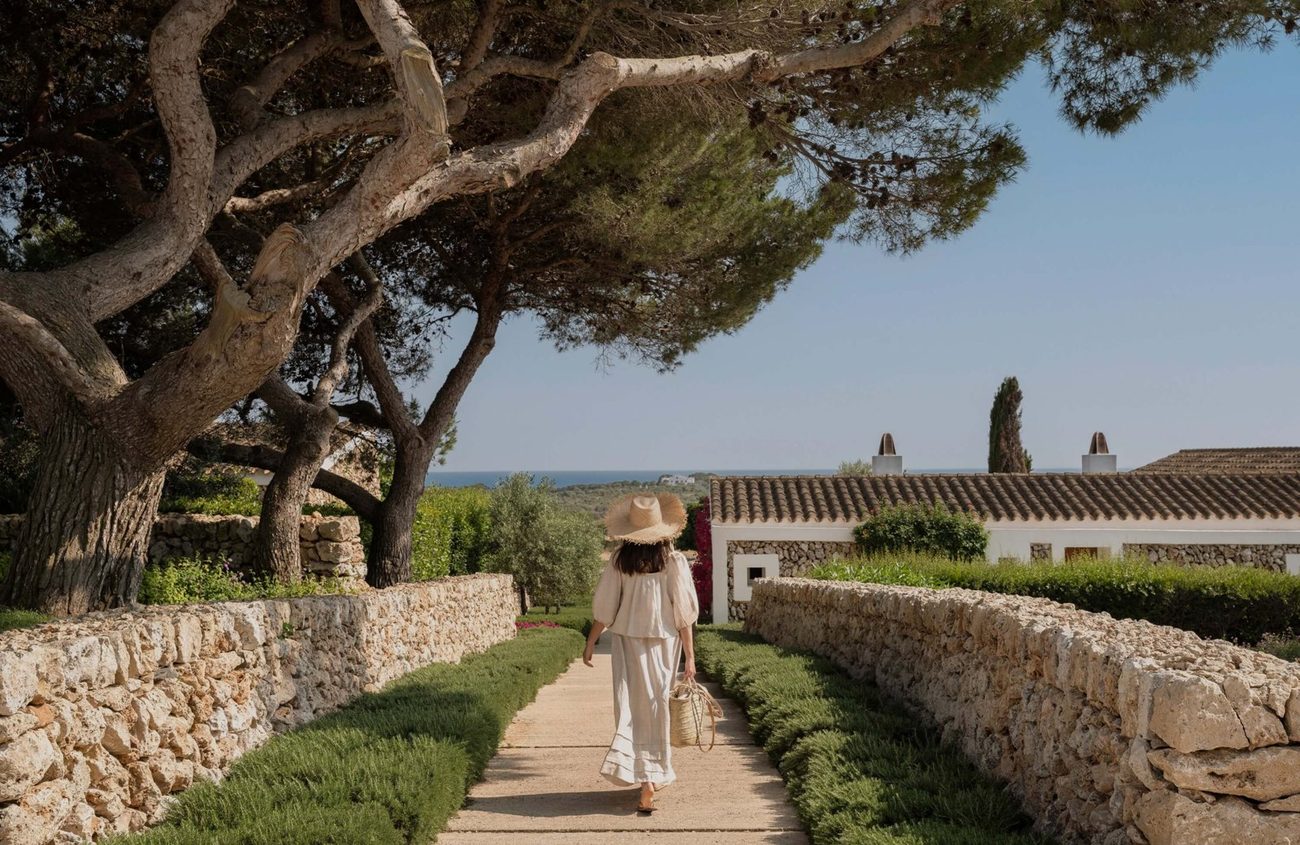
You feel the discipline of it before you are through the gate. Dry-stone walls, the island's signature, carry the eye across the grounds and hold the lines the farmers drew. The pines and the old olives were left where they stood. The result is a hotel that behaves like a place with work to do, which, as it turns out, it still has.
They cleaned the stone and changed almost nothing else.
Twenty-seven rooms, and the vines outside them
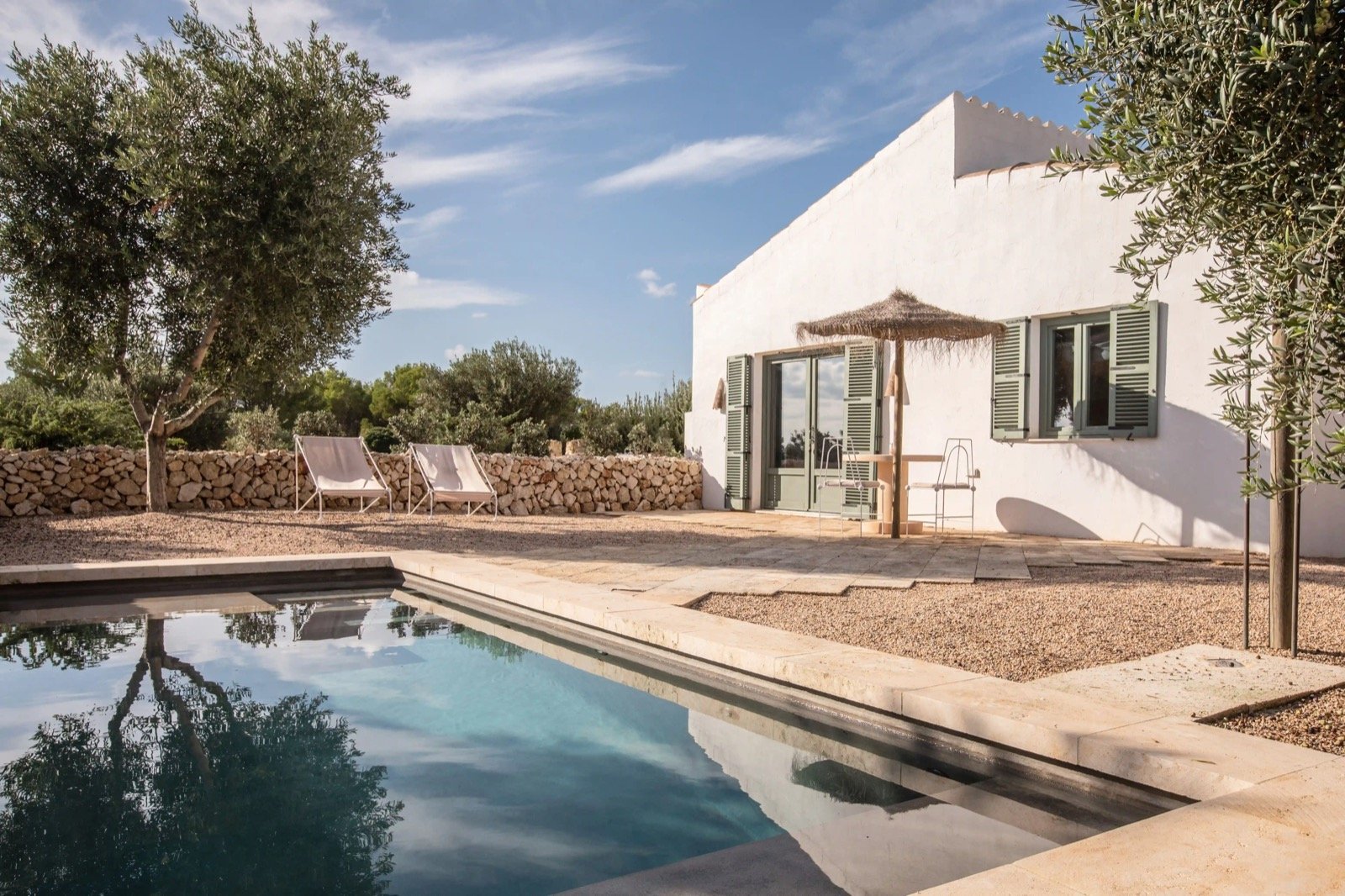
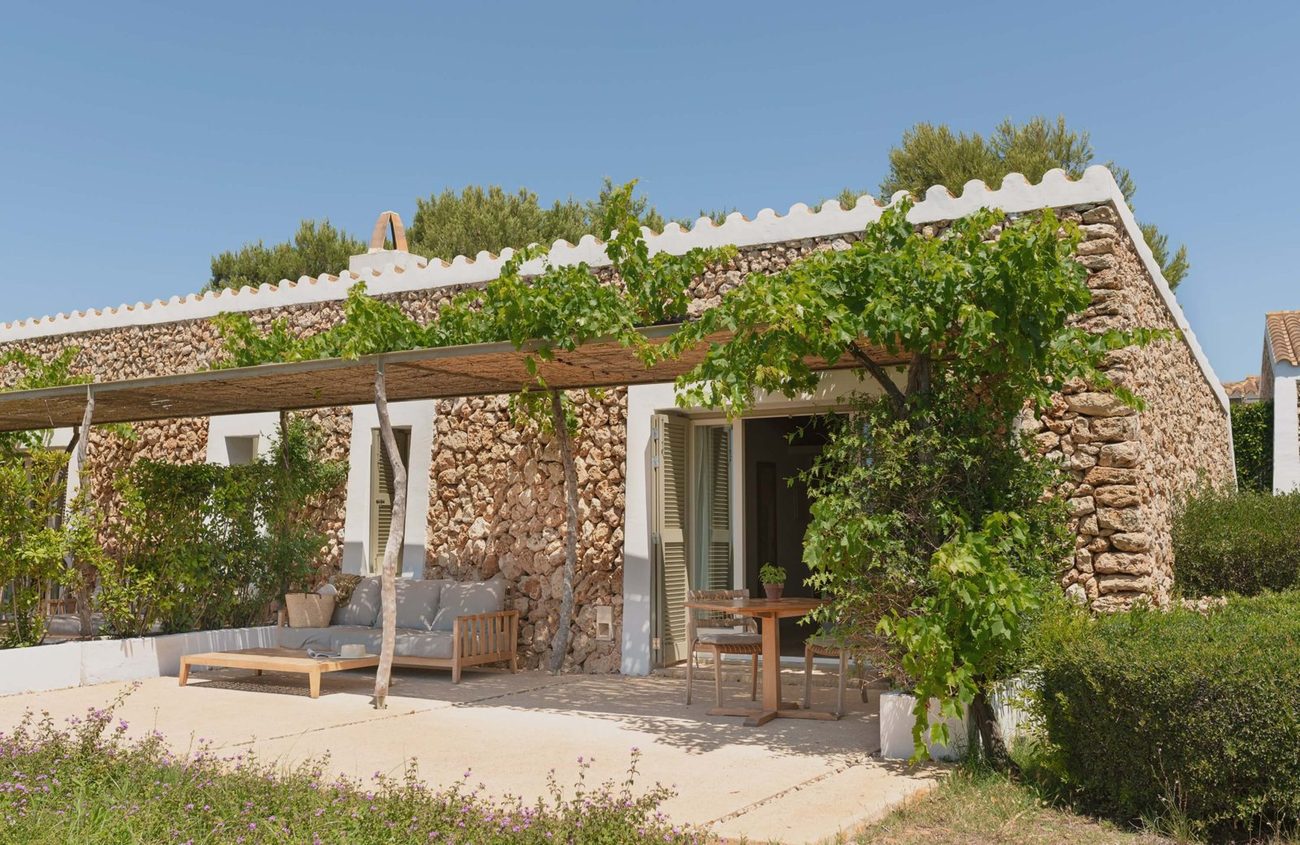
There are twenty-seven rooms and cottages across the estate, and the grammar holds from the plainest to the largest. Marès walls left bare, natural linen, worn wood, gardens outside scented with lavender and rosemary. Some are set within the old farmhouse. Others are cottages standing among the vines, their terraces shaded by pergolas the grapevine has been trained across, so that in summer you sit under leaf rather than canvas. The good ones give you the country and, past it, a strip of the Mediterranean.
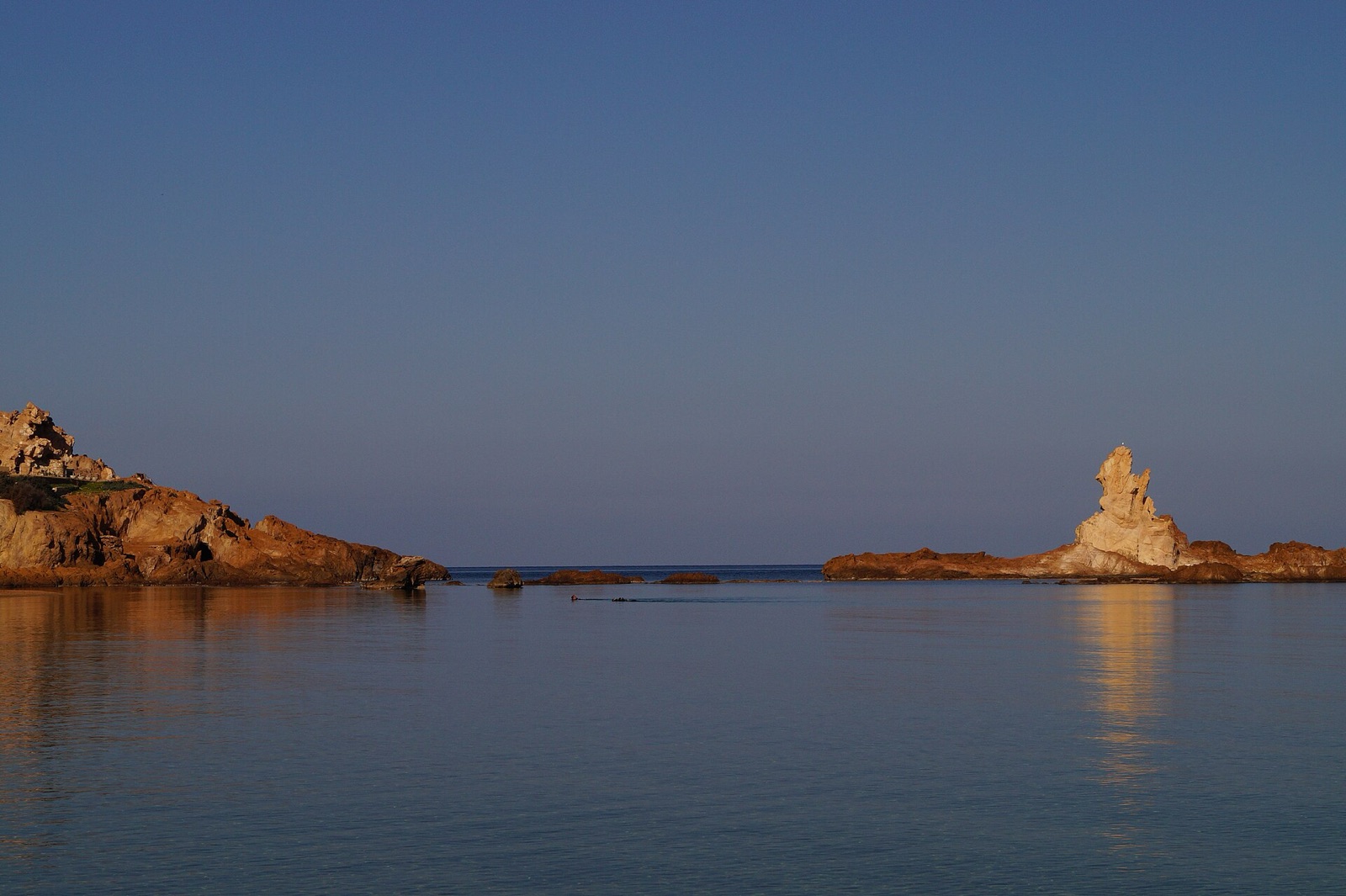
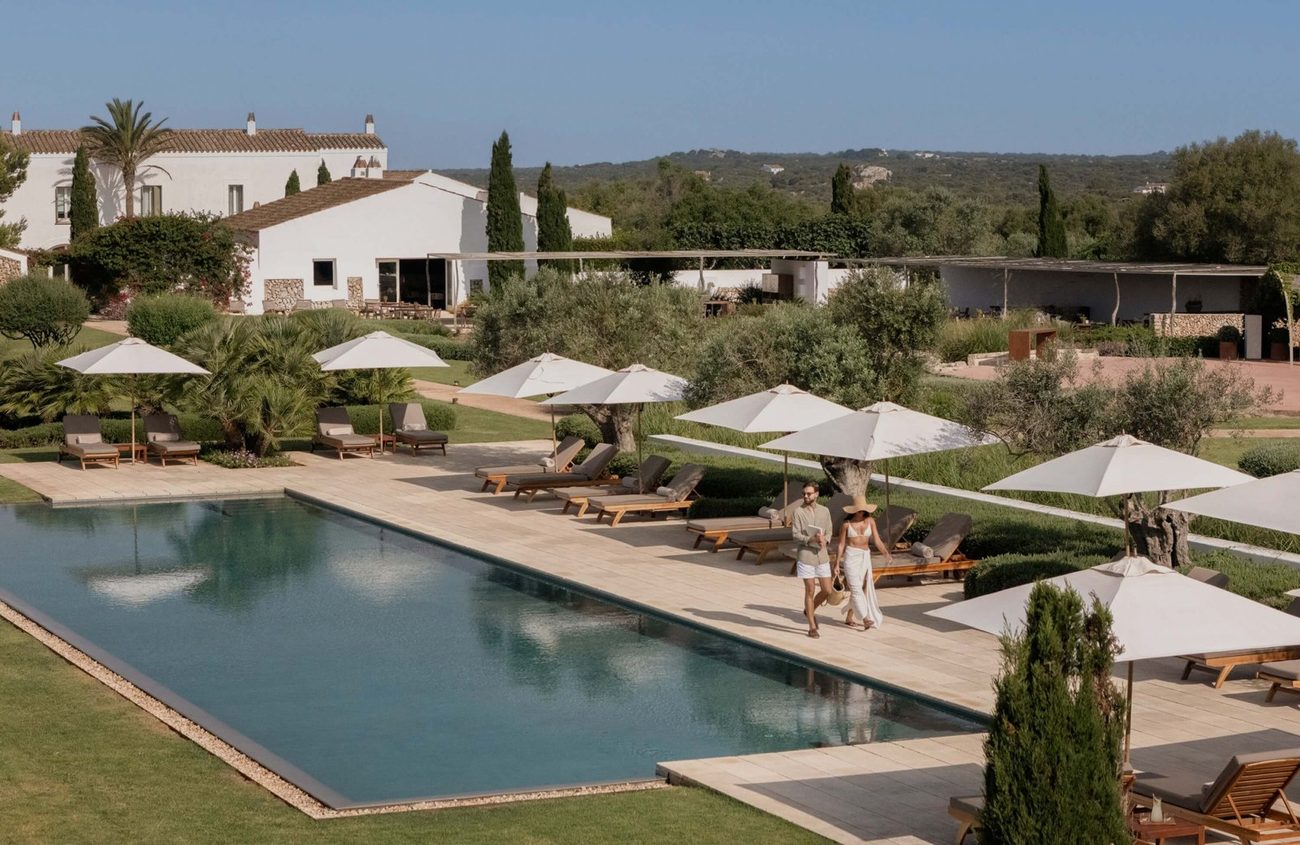
A long pool sits below the house on the terraced ground, cypresses and olives around it, the land dropping away to the coast. There is a smaller water channel higher up, fed by spouts from the wall, quiet in the heat. None of it is large and none of it needs to be. The house is a member of Small Luxury Hotels and carries a Michelin Key, and it earns both without raising its voice. What it sells, in the end, is the view off the terrace and the silence behind it.
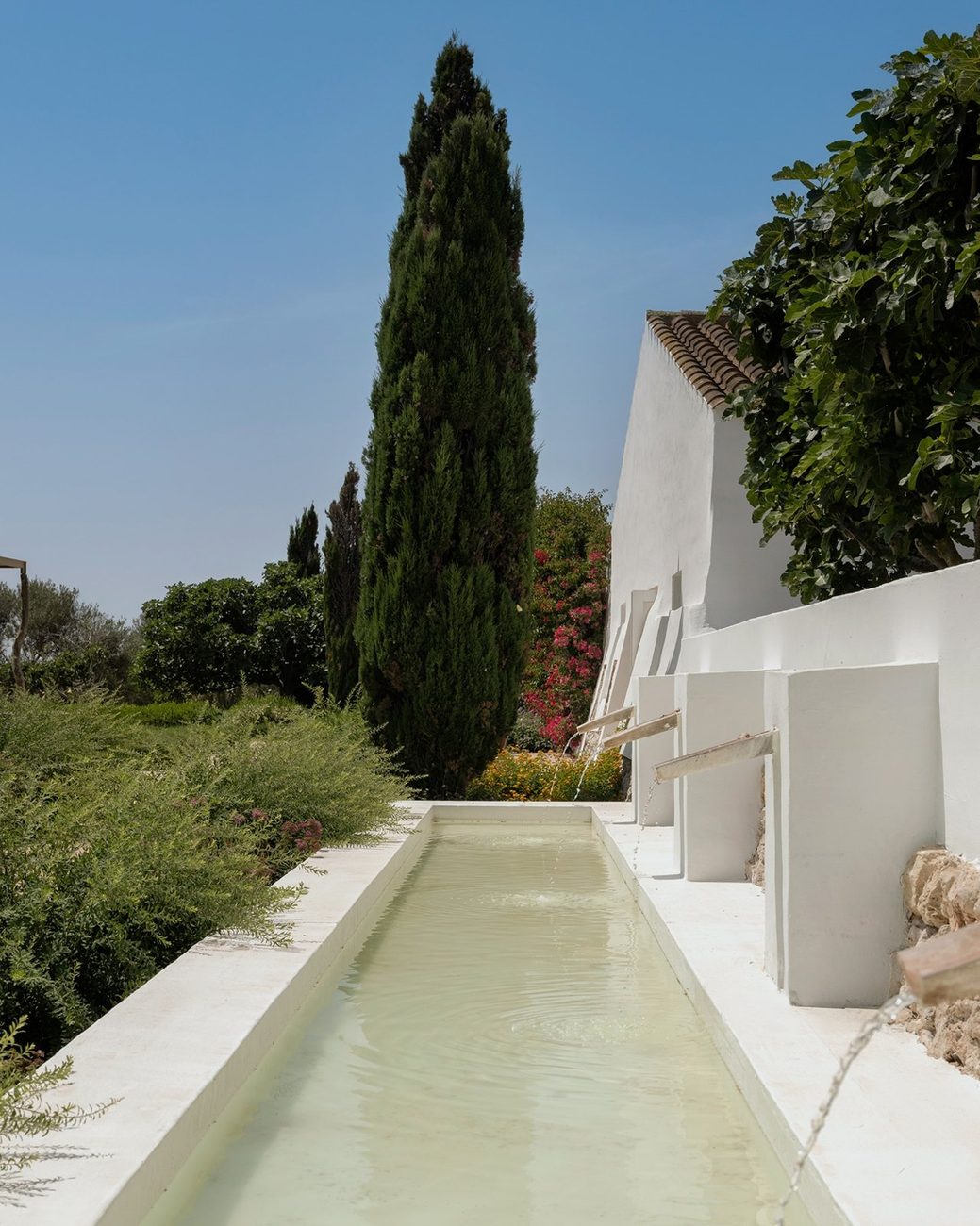
The country, a strip of sea, and very little else.
A vineyard the island had half forgotten
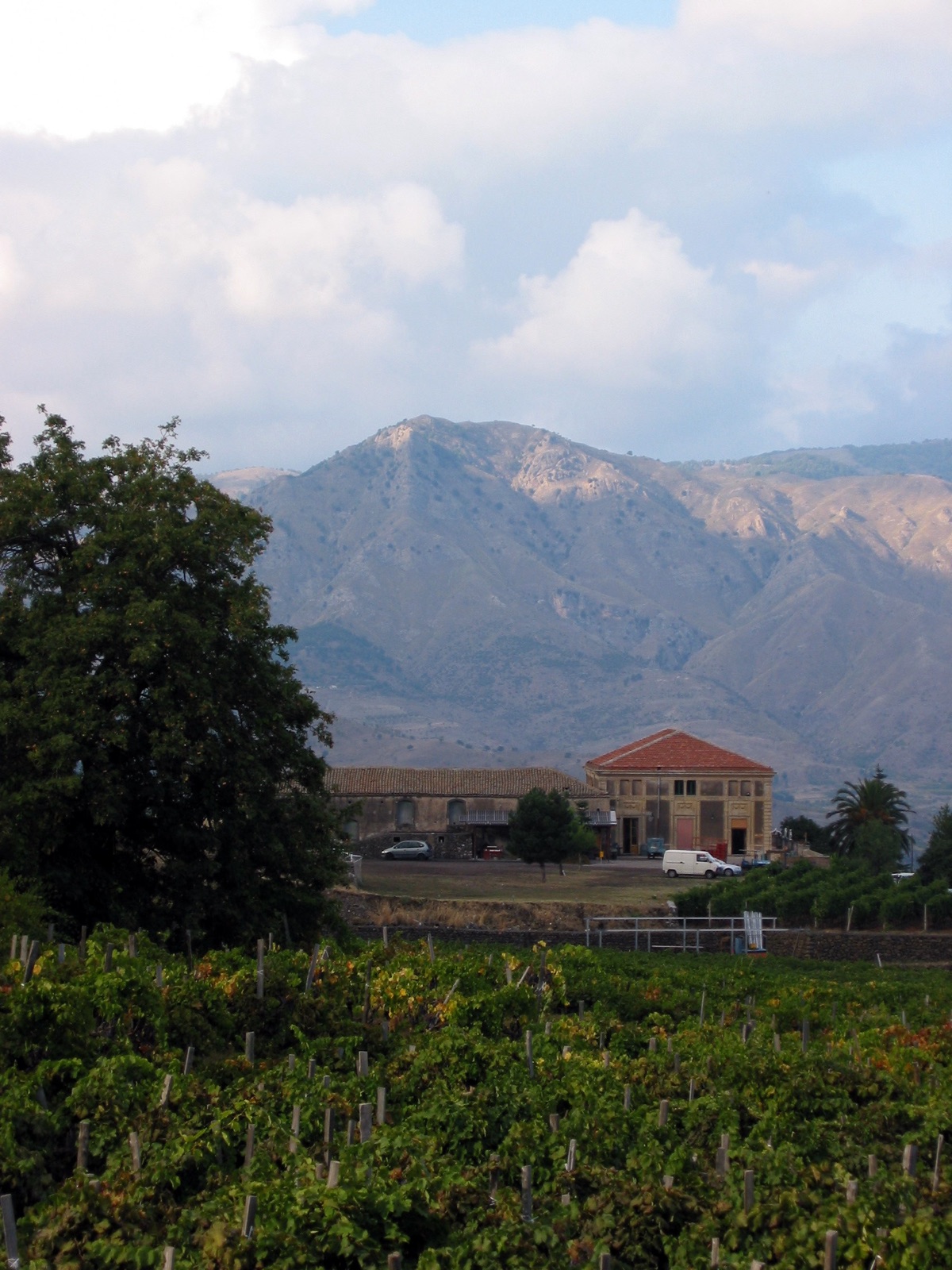
Fourteen of the estate's hectares are planted to vine, and the family put them there on purpose. Menorca had all but lost its winemaking, and Torralbenc set out to bring it back, planting the slopes and waiting. The first vintage came in 2016, after more than a decade of it. The bottles carry the estate's own name, from whites off Chardonnay and Malvasia to reds of Syrah, Merlot and Monastrell, and the work has been recognised as the best of its kind in Spain by the wine-tourism awards. The vineyard is the reason the place makes sense. Everything else grows out of it.
The kitchen sits in the old store-house, the room where the harvest and the barrels once went, and it cooks the way the estate is farmed. Gorka Txapartegi, who holds a Michelin star at his own table in the Basque Country, advises it, and Gerardo Espinoza runs the stoves day to day. The technique is Basque and the produce is Menorcan, much of it from the garden a short walk off the terrace, and the two meet without a fuss. It is careful cooking that keeps the island in view. You eat looking at the vines that filled your glass, which is a simple pleasure and a rare one.
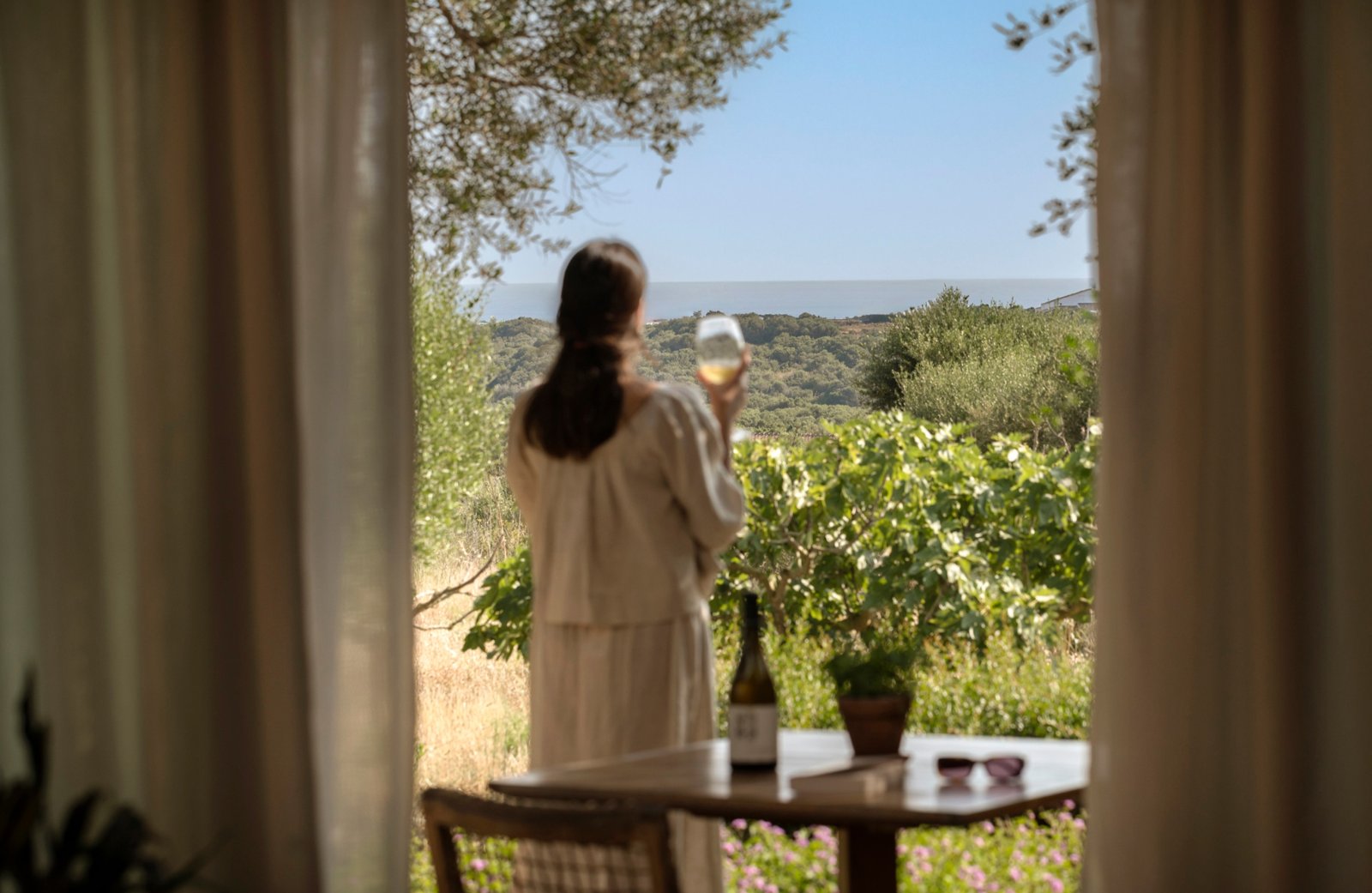
A vineyard the island had half forgotten, planted again from scratch.
Menorca is the Balearic that stepped out of the race, and Torralbenc is the hotel that reads most like the island itself. A farm kept as a farm, with a vineyard it revived from nothing and a kitchen that cooks the land around it, all of it held to a whitewashed plainness that never tips into performance. It is close to the airport and a short run from the coves, yet it feels a long way from either. For the wine and the quiet, on an island that has kept both, it is hard to better.
Photos: Torralbenc (official), self-hosted with credit.