A hotel built in steps
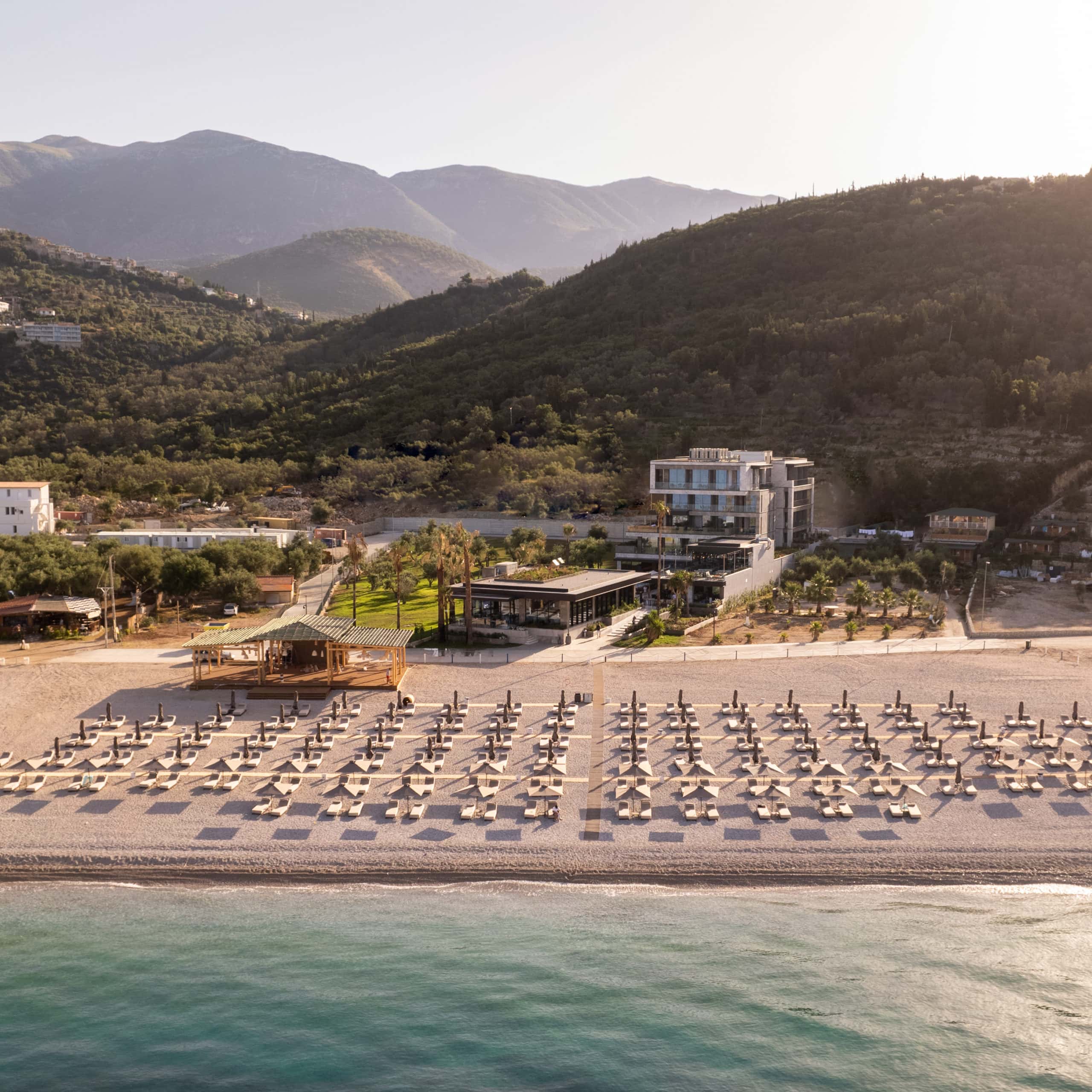
Look at Prado from the water and the plan gives itself away. The building rises in five storeys up the hillside, and every one of them is drawn back from the floor below, so the facade reads as a staircase rather than a cliff. That is the whole move, and it is a generous one. Each balcony is left open to the sky instead of tucked under the terrace above, which is the single thing most sea-view hotels get wrong and then cannot undo. Here the light reaches all the way in, and the view is yours from a sun bed rather than a sliver glimpsed under an overhang.
The palette is pale stone and a great deal of glass, with charcoal reveals cut between the floors to keep the whole thing from looking soft. It is a contemporary building, no argument there, and it does not pretend to have grown out of an old fishing village. What it does is stand with some discipline on a coast where discipline has been rare. The hills of the Ceraunians climb green behind it, the Ionian lies flat and clear in front, and the architecture spends its energy framing both.
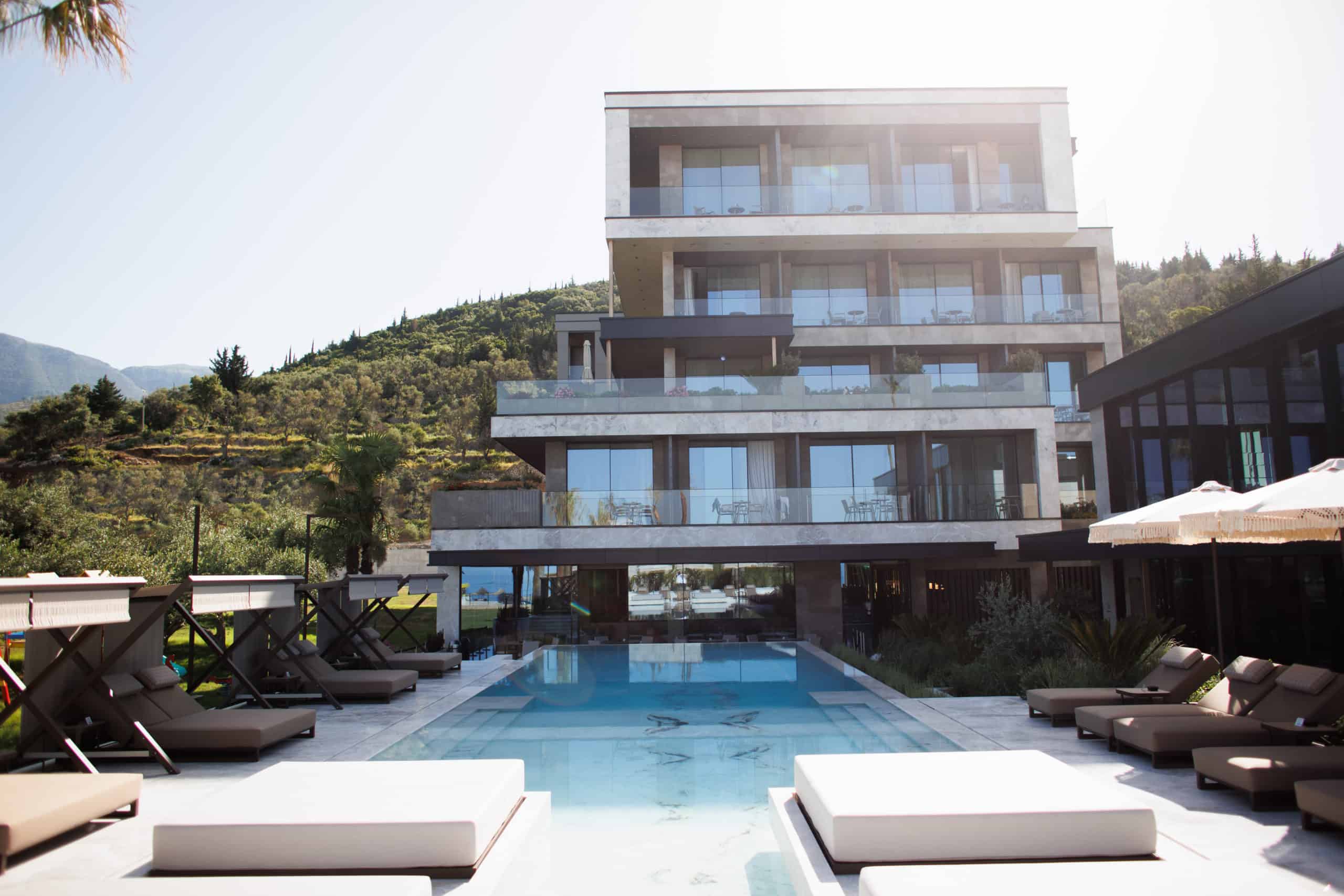
Every floor steps back, so the balcony above never steals your sky.
Fifty-seven balconies, and what they face
There are fifty-seven rooms and suites, and each keeps its own balcony. The interiors run to greige and soft neutrals, warm wood panelling behind the bed, full-height glass drawn with a sheer and a heavier curtain, nothing loud set in to compete with what is outside. The grander suites take a jacuzzi and a longer terrace. It is a calm, current sort of comfort, more city-hotel precision than seaside improvisation, and it wears well against a hard Himarë afternoon.
The one choice worth getting right is which way you face. Take a room high in the stack, turned to the water, and the Ionian runs out to the horizon with the beach club small below you. The hillside rooms look back to the old village climbing its ridge, which has its own quiet appeal but gives up the sea. Our advice is plain: pay up for the height and the blue, and spend the mornings on the balcony before the sand fills.
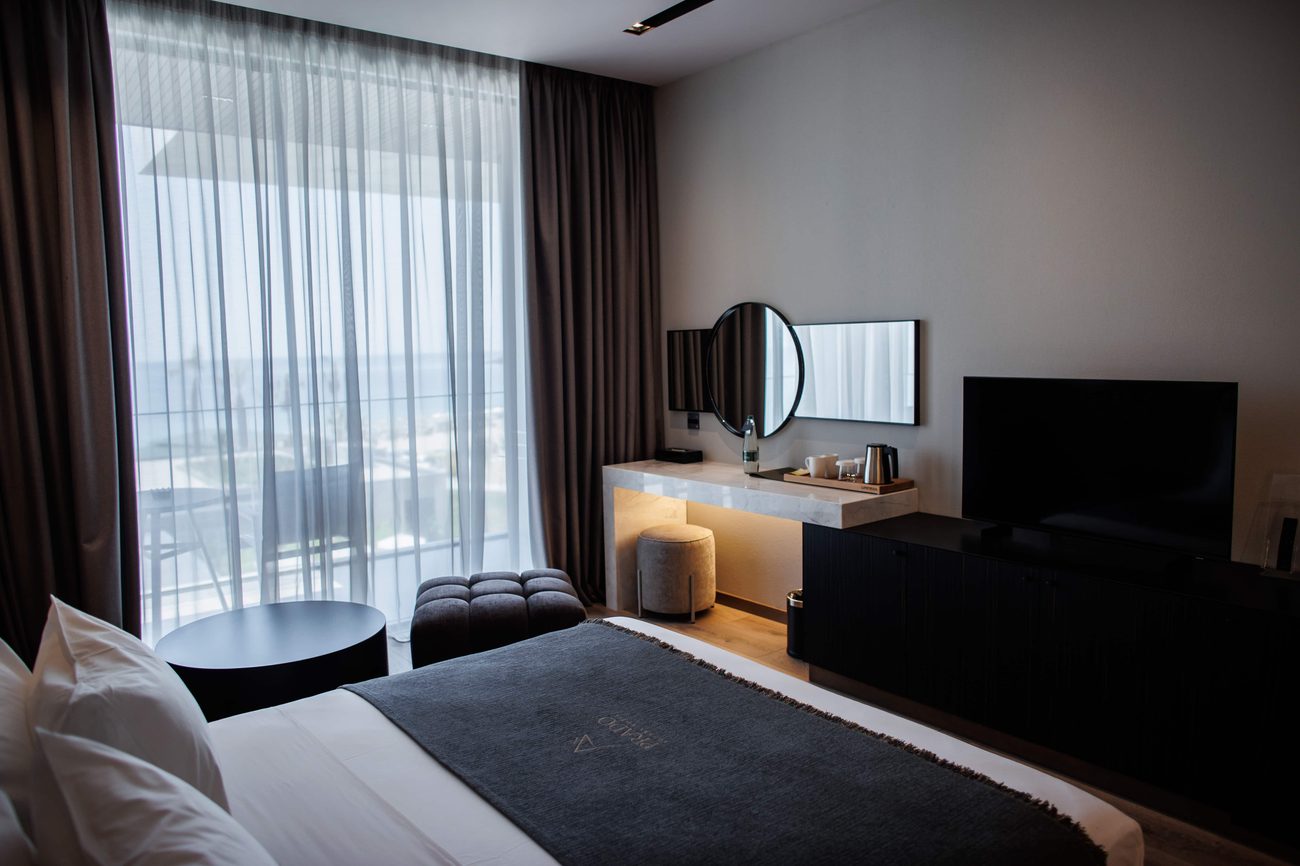
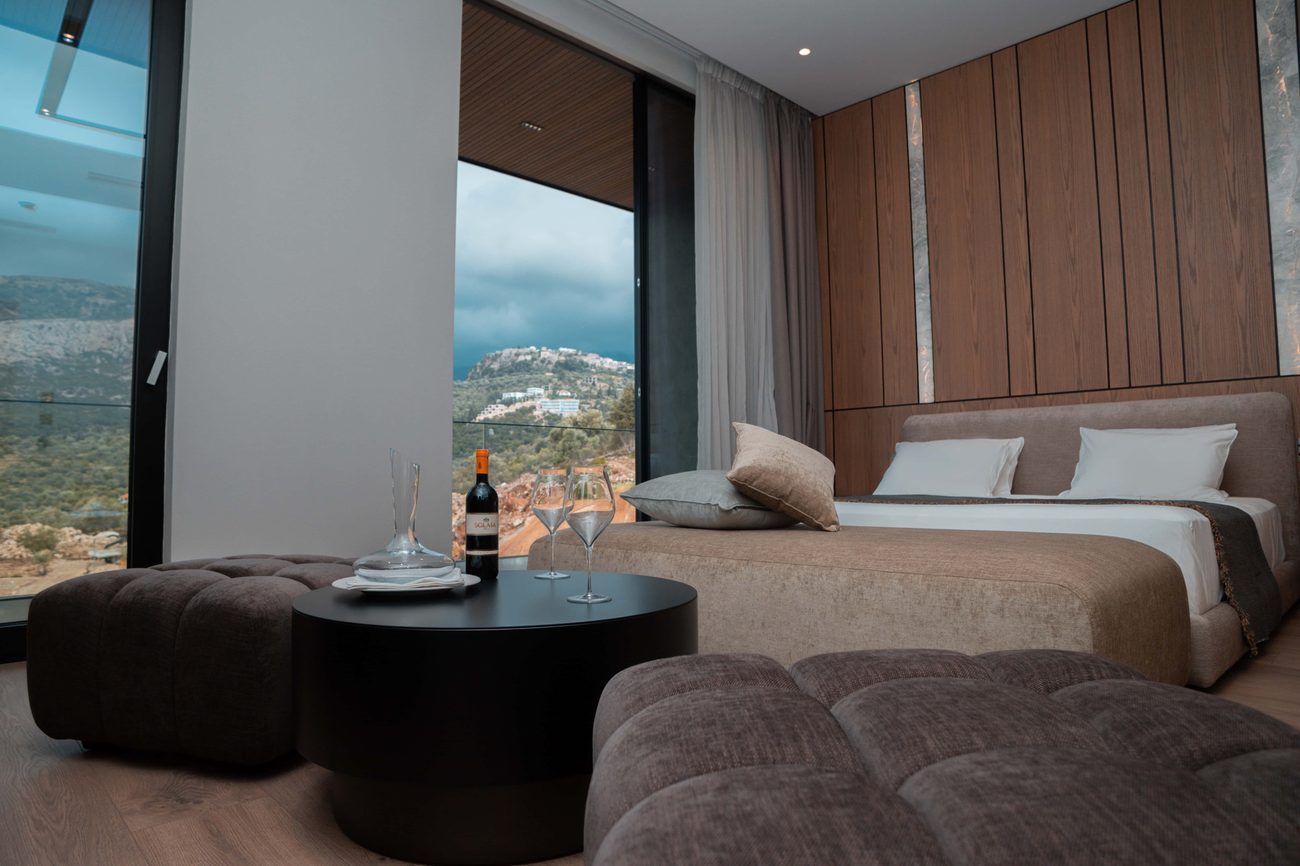
The Ionian in front, the Ceraunian hills at your back.
What it is, and when to come
Dinner is at a sea-facing restaurant that leans Mediterranean, with a separate sushi bar for the nights when raw fish and a cold glass make more sense than a full plate. Two more bars, one at the pool and one down on the sand, tell you the shape of the day the place is built around. This is cooking for a holiday rather than a pilgrimage, generous and well turned out, and best taken late with the light going pink over the water. Breakfast runs long, and the long room under its timber-slatted ceiling never rushes you off.
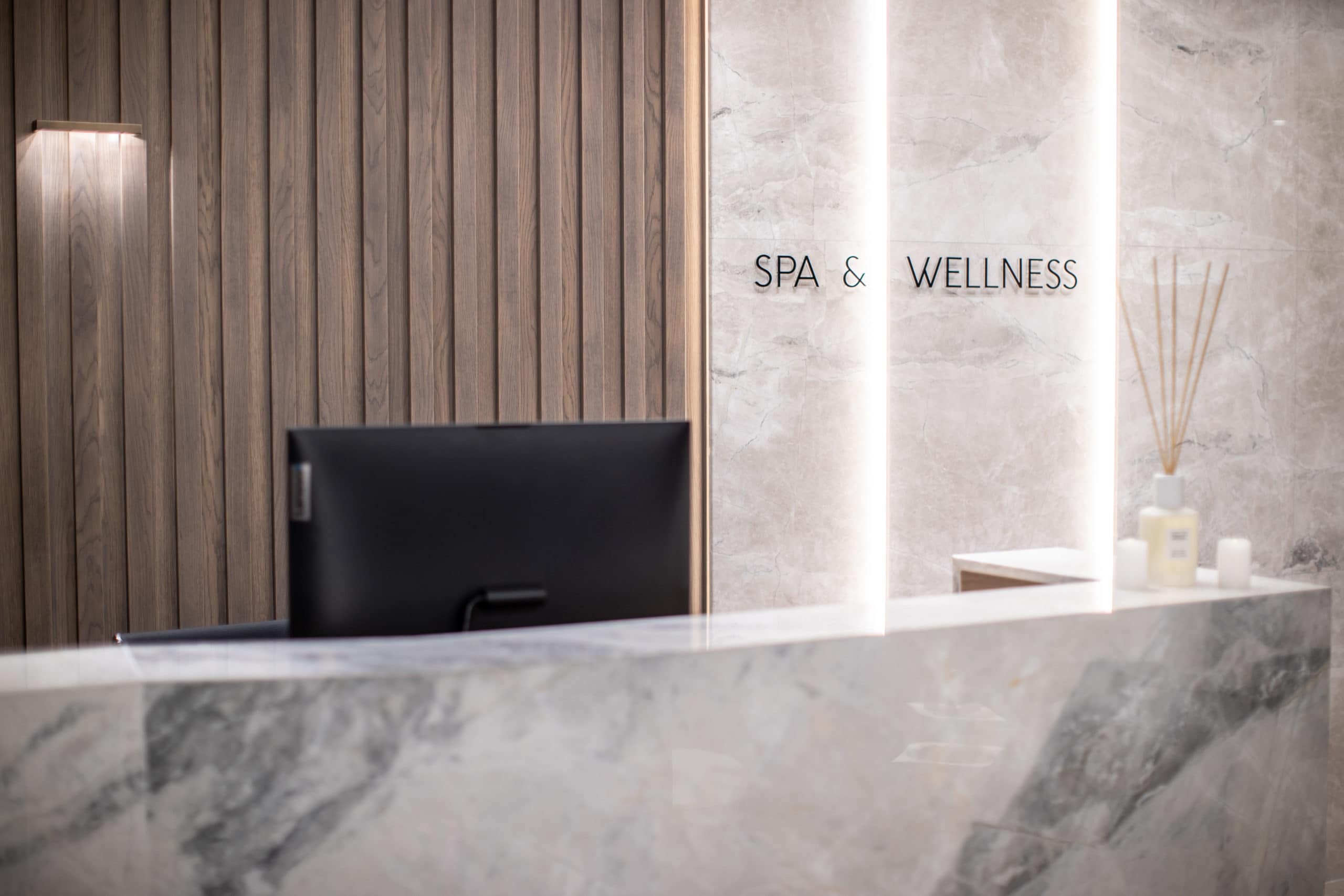
The water does the rest. An infinity pool runs toward the Ionian, a second outdoor pool sits behind it, and a spa gives over a floor to a sauna, a steam room, a gym and a beauty salon, with treatments that lean Balinese and Thai. Unusually for this coast, Prado stays open the year round, which makes it one of the few places in Himarë you can take in the quiet months. That matters, because in August the beach club at its feet fills right up, and we will not pretend otherwise. Come either side of high summer and the architecture, the pool and the long sea view do the work the crowds would otherwise undo.
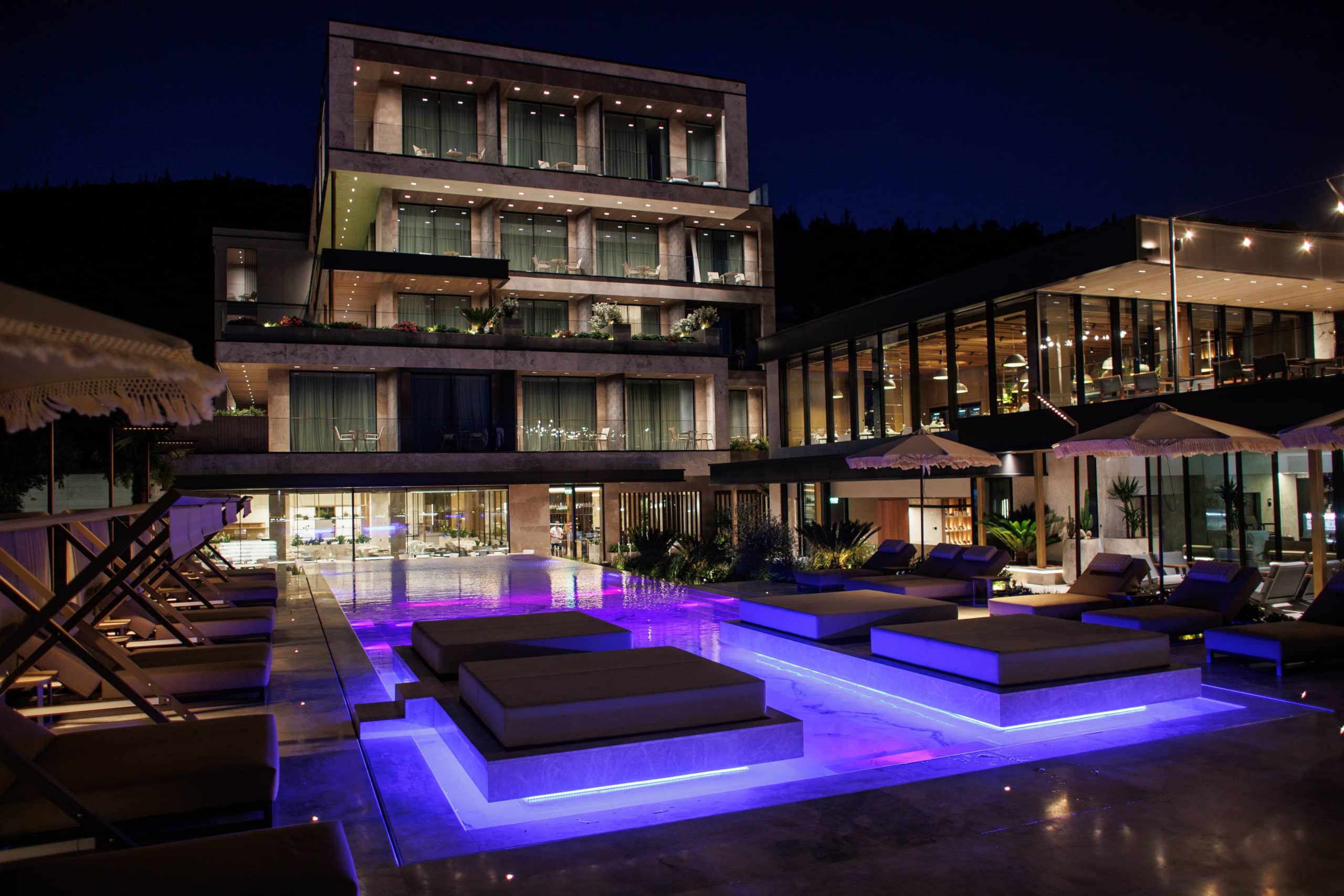
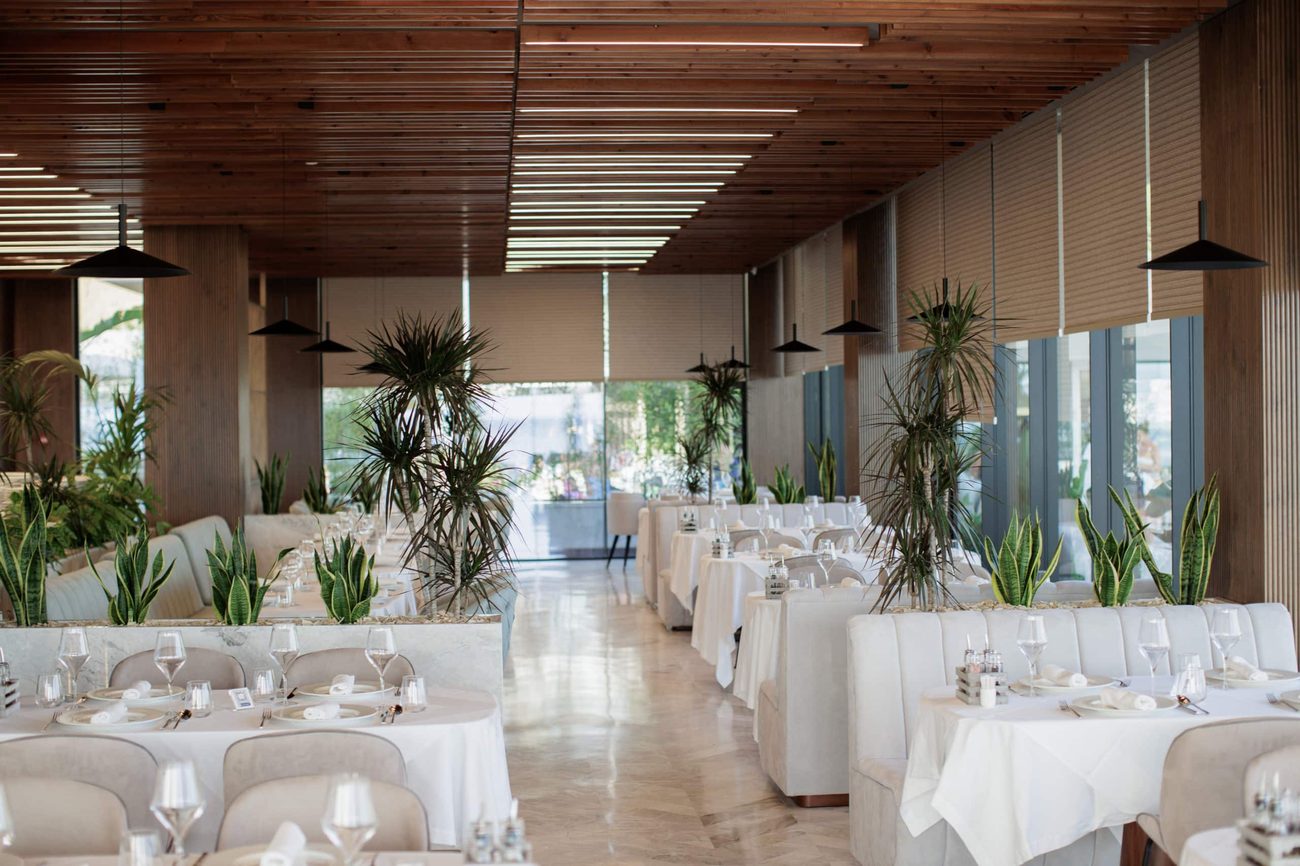
In August it fills; in the shoulder weeks it empties into something quieter.
Prado is the most convincing piece of design on this stretch of the Ionian, an architect's idea rather than a developer's shortcut, and the terraced section is a real thought rather than a facade trick. It is a sizeable five-star hotel with a beach club below it, so go in knowing the summer version is busy and dressed up. In the quiet months it is the better thing to our eye: fifty-seven balconies open to the sky, an infinity pool reaching for the water, and Himarë going about its old business just along the coast. Take a room high in the stack, turned to the sea, and let the building do what it was drawn to do.
Photos: Prado Luxury Hotel (official), with credit.