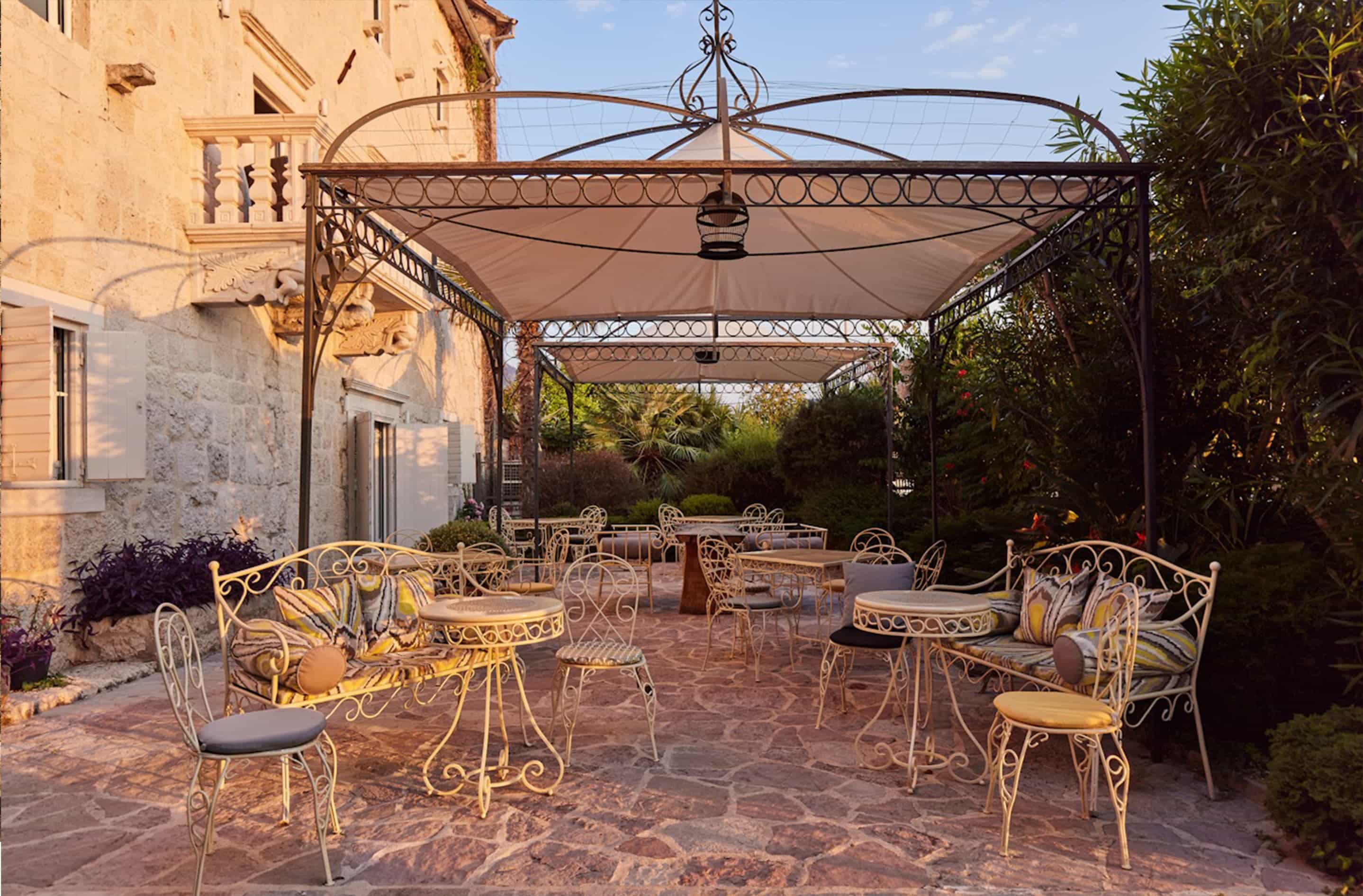
Where the bay runs out of room
Kotor's walls get the coaches and the cruise crowds, and rightly so; the old town packed against its mountain is one of the sights of the Adriatic. Dobrota is the antidote, a few minutes north along the same shore, where the bay narrows and the tour buses thin out. It is not really a village so much as a line, a long single row of houses following the water for a couple of kilometres, each with its own strip of shore and, more often than not, its own little jetty. The shipowners and captains put them here because the deep water came right up to the door, and the money came off the deep water.
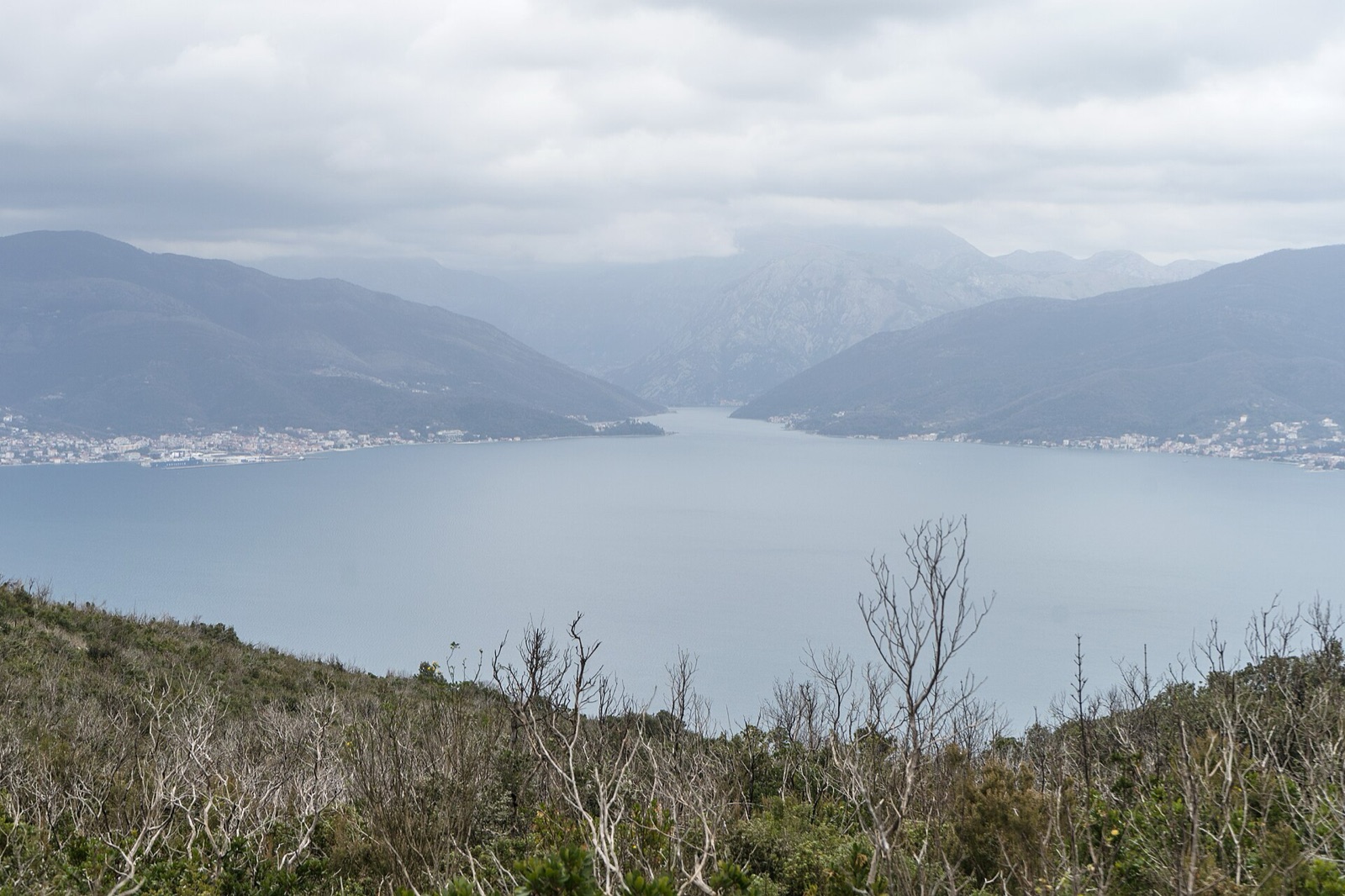
Palazzo Radomiri sits on that line with the bay at its feet. Cross the road and you are on the stone quay; the water is close enough to touch from the jetty, so still on a calm morning that the mountains lie doubled in it. Behind the house the ground goes almost vertical, the grey karst wall of the Boka climbing straight from the shore. A cruise ship threads the narrows now and then, improbably large against the small stone chapels along the front, and then it is gone and the quiet comes back. This is a corner of the coast that rewards staying put.
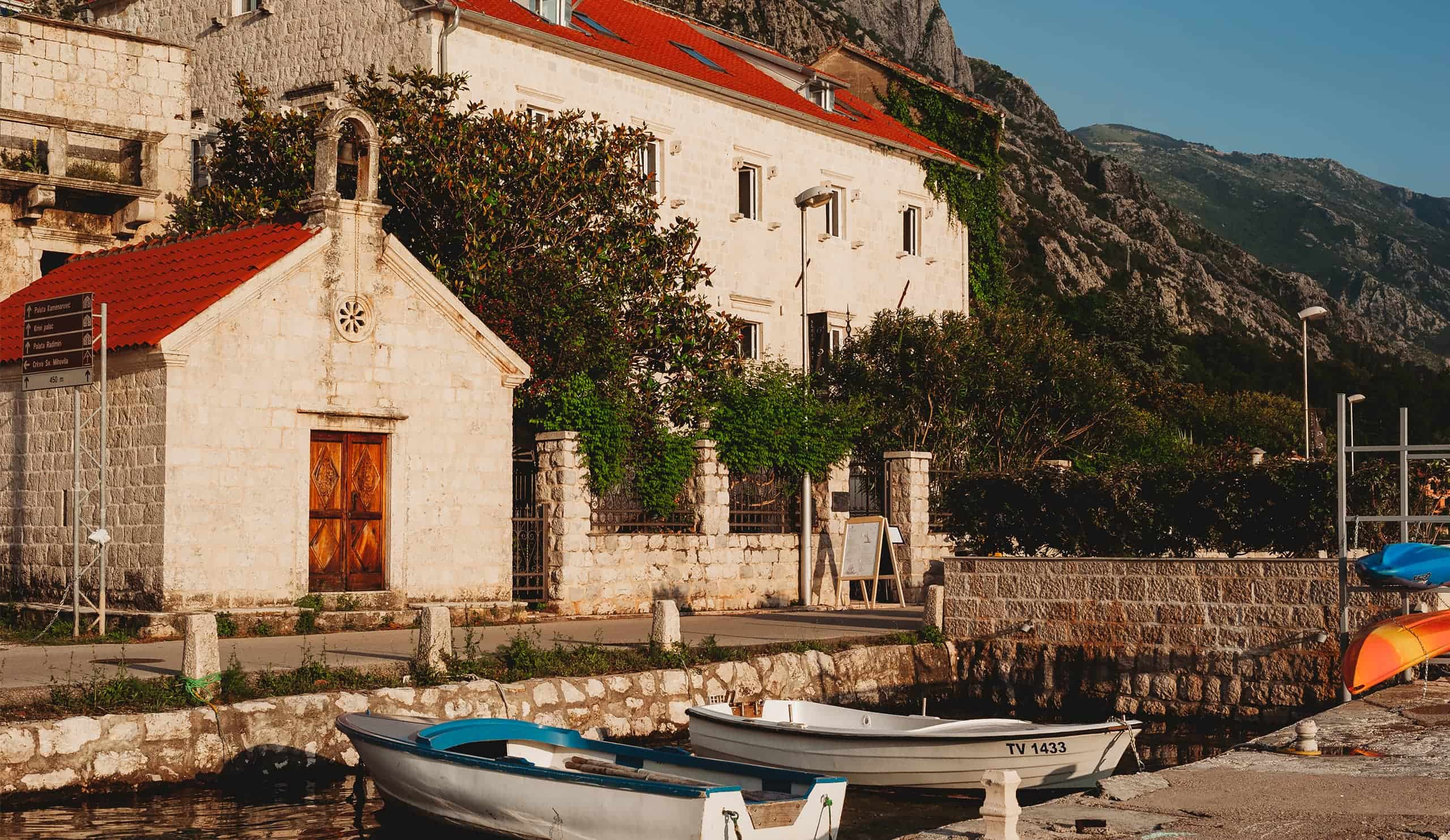
The houses face the water because that is where the money came from.
Ten rooms, ten boats
The house dates its own line to a 1688 map by the Venetian cartographer Vincenzo Coronelli, on which the Radomiri complex already appears. What stands today is a late-17th-century captain's mansion that a local family took on and reopened in 2007, and the restraint of the work is what carries it. The bones were kept honest: exposed stone walls, wooden beams overhead, travertine underfoot, and pieces chosen room by room rather than bought by the crate. There are ten rooms, each named after a boat, and each turned either to the bay or to the courtyard with its small pool. Some hold a heavy carved bedstead against a painted wall; others are plainer. None of them try too hard.
The pleasure is in the windows. They are deep, set into thick stone, and they frame the same view the captains had: green water, a far shore of pale houses, the grey mountains behind, sometimes a white ship sliding across the gap. You could sit in one of those recesses with a coffee and lose a morning to it without noticing. The antiques and the old fabrics could tip into fuss in the wrong hands, and here and there they come close, but the sheer weight of the stone keeps the whole thing anchored. It reads as a house someone lives in rather than a set someone dressed.
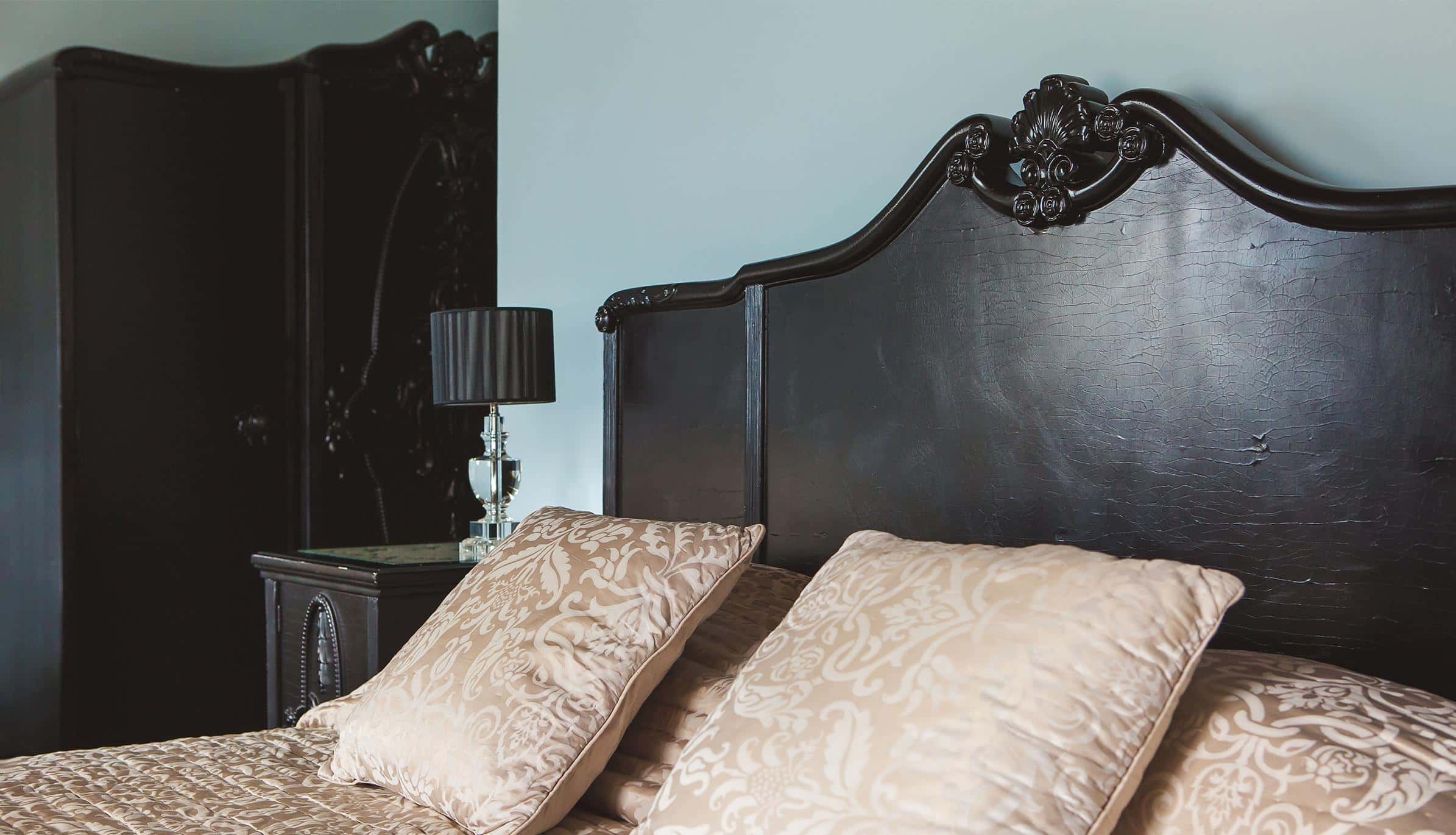
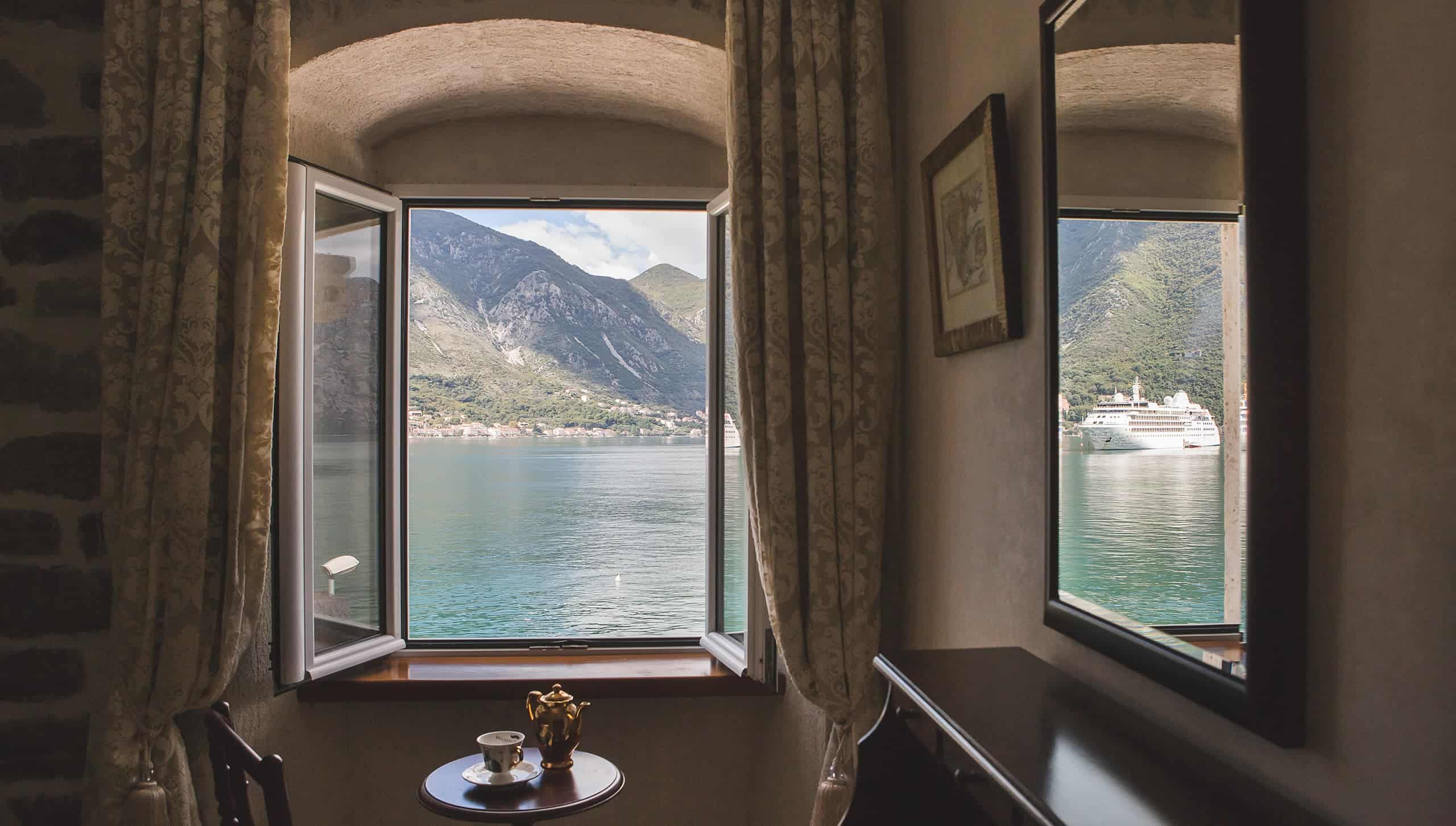
The same view the captains had, framed in stone a foot thick.
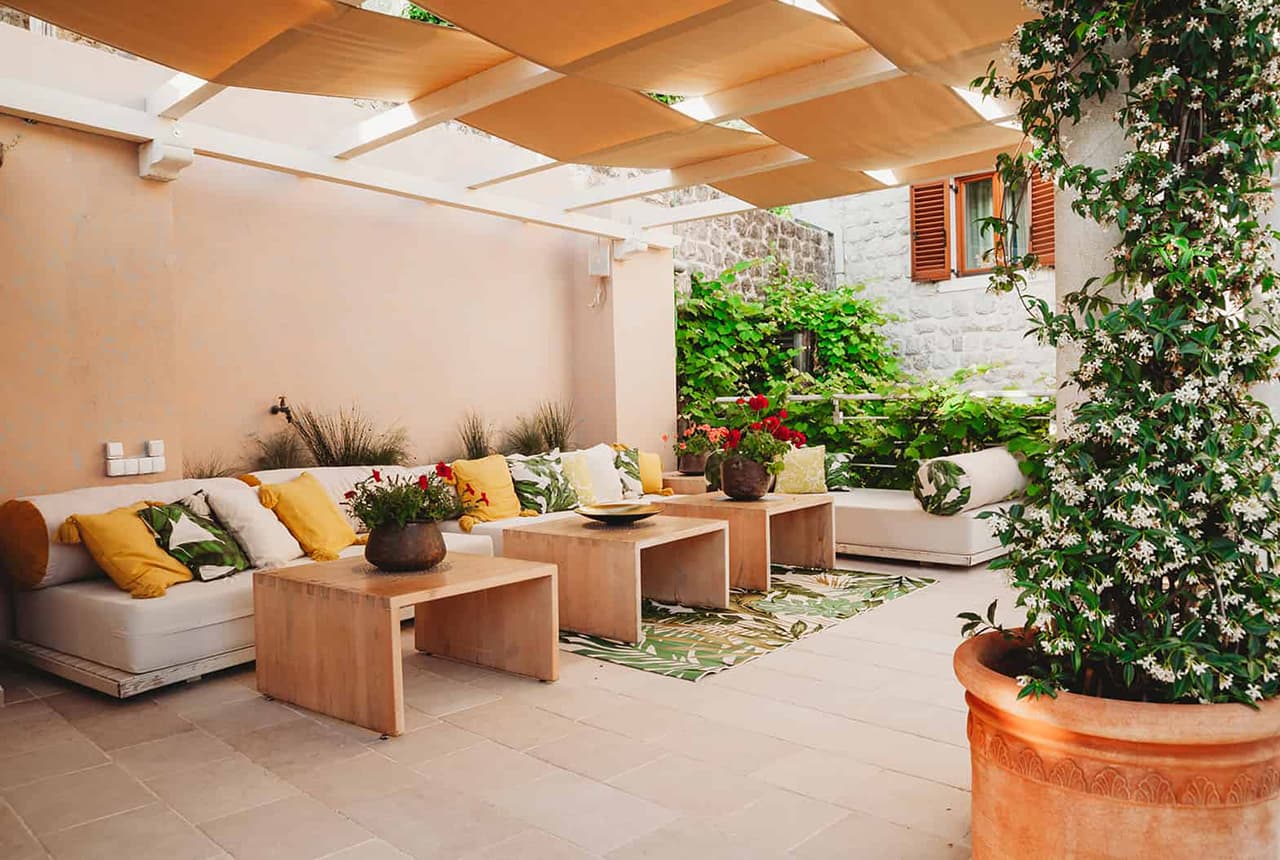
The long lunch by the water
Meals come out of Restaurant Palazzo, served in the house and, when the weather allows, on the terrace over the water. The kitchen keeps close to home: produce off the bay and the hills around it, fish out of the same channel the boats work, cooked simply by a chef given room to have ideas. It is not a destination restaurant, and it does not pretend to be one. What it does well is the long, unhurried meal by the water, the plates arriving without hurry and the afternoon going nowhere, which in Dobrota is rather the point.
The rest of the day is small by design. There is the courtyard pool for the heat of the afternoon, the jetty for a swim off the stone, a hammock strung under the trees for the hour after lunch when nothing needs doing. Mornings can start with yoga a few days a week, and the house takes in retreats out of season. When you do want more than the shore gives you, Kotor's old town is ten minutes back along the water, and Perast with the two islets of Our Lady of the Rocks and St George sits a little further round the bay. You go, you look, you come back to the quiet.
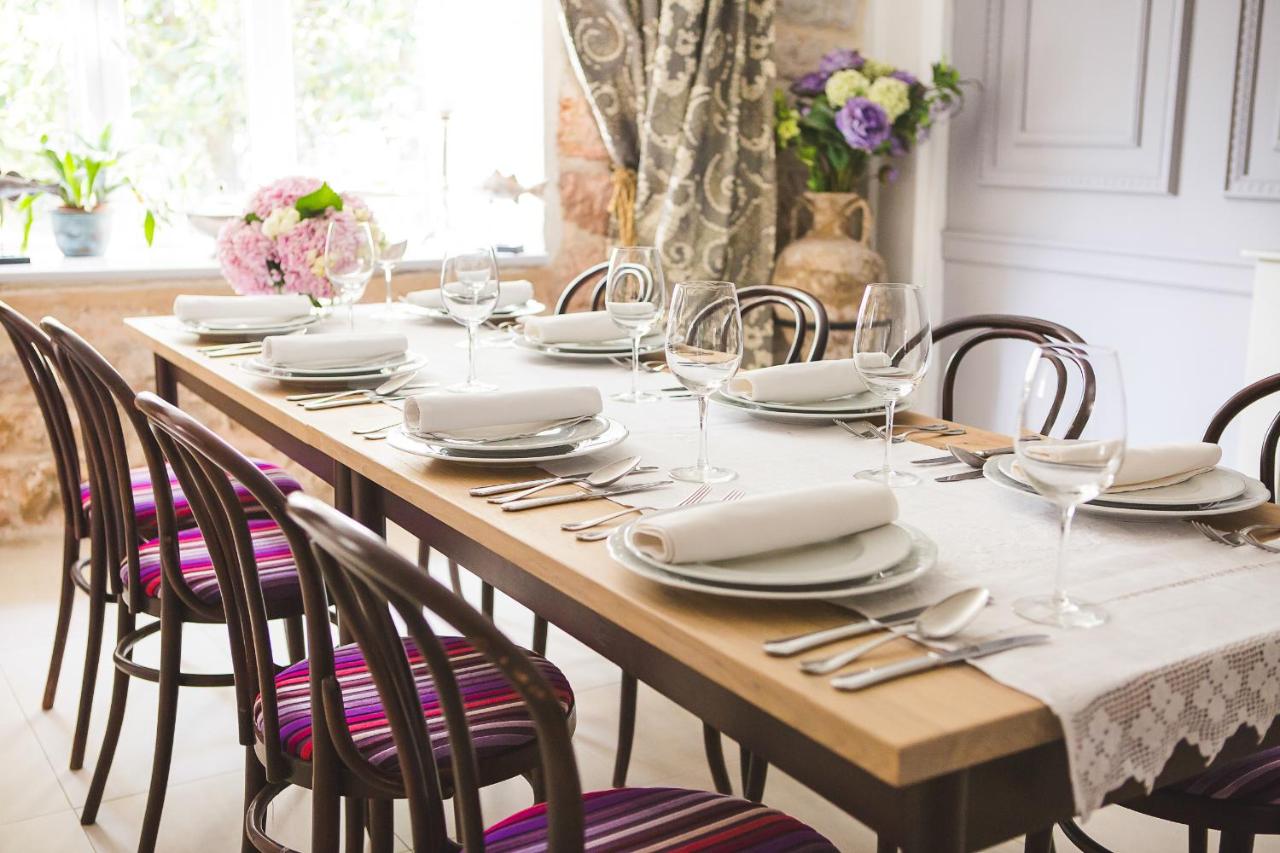
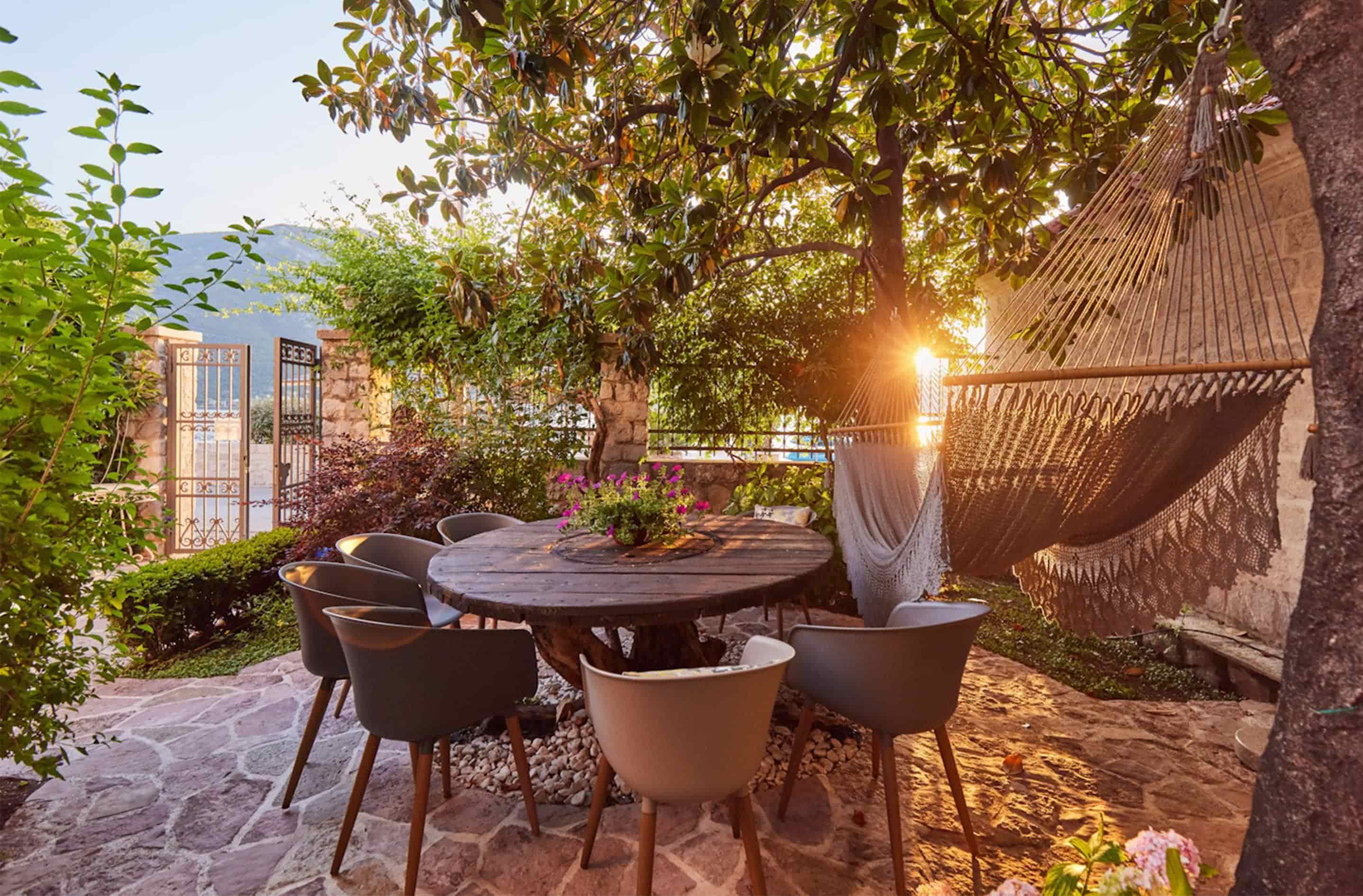
Not a destination restaurant. In Dobrota, that is the point.
The Boka fills up in August, and Kotor's walls fill faster still with day trippers off the ships. Palazzo Radomiri sits apart from all of it, ten minutes up the shore, with a jetty on the water and a courtyard pool to come back to. It is a four-star by its own reckoning, not a grand hotel, and we like it the more for knowing exactly what it is: a captain's house on the quiet stretch of the bay, given back its stone and its windows and left to do the one thing it has always done well, which is to sit still by the water and let you do the same. For the Boka at its calmest, this is where we would stay.
Photos: Palazzo Radomiri (official), self-hosted with credit.