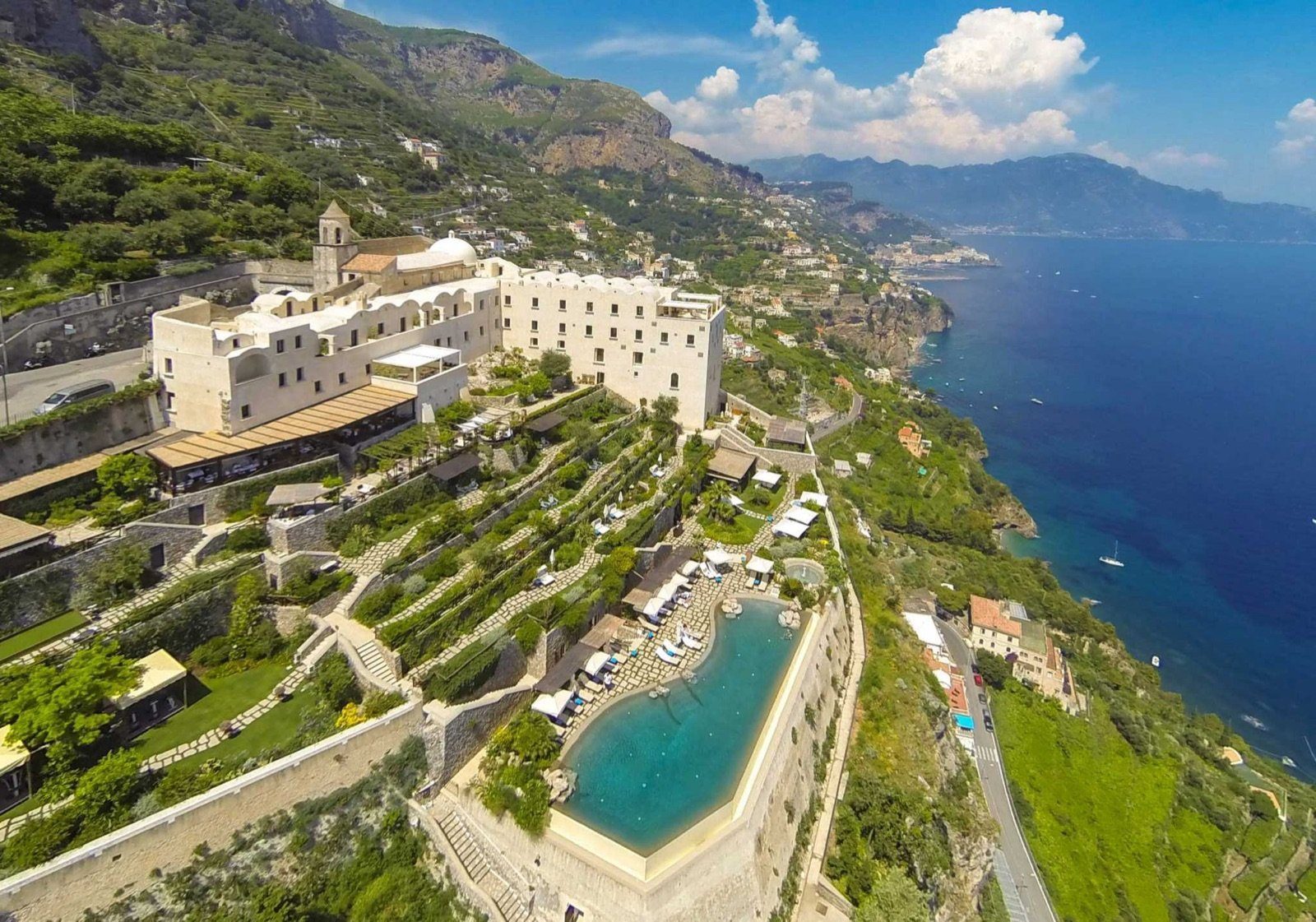
Built by nuns, named for a saint
The building was finished in 1681 and dedicated to Saint Rose of Lima, the work of Sister Rosa Pandolfi, of the Pontone family that had come down from Scala above. For most of three centuries it did what monasteries do, which is to say very little that the outside world thought to record. The one thing it gave the world was a pastry. In the refectory the sisters folded thin layers of dough around semolina and candied peel to settle the stomach of an ailing Mother Superior, and the sfogliatella Santa Rosa was born. Every pasticceria on the coast still sells a version of it.
The twentieth century nearly finished the place off. A Roman hotelier named Marcucci turned it into a hotel in 1924; after him it slid back into ruin, a shell of stone hanging off the rock above Conca dei Marini, closer to falling than to standing.
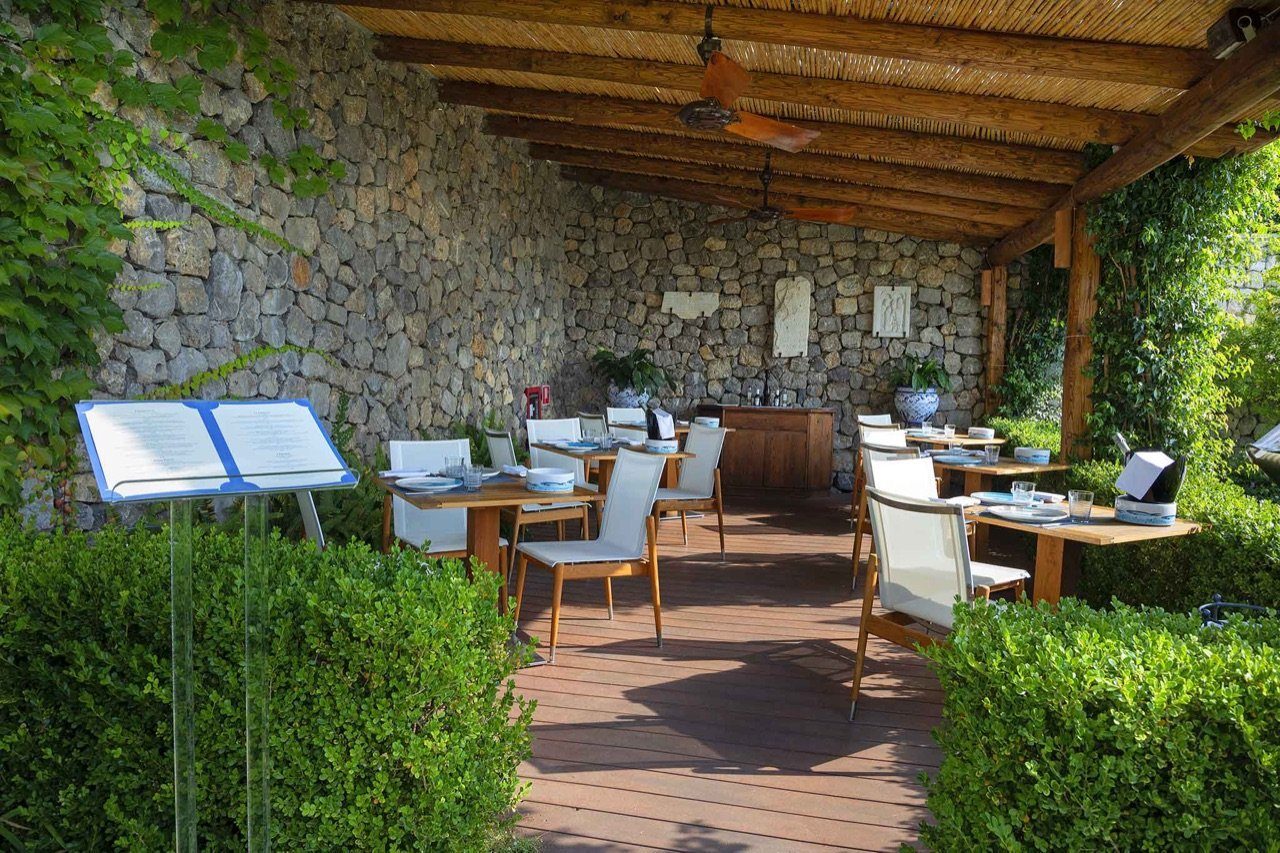
The nuns baked a pastry here to settle a sick stomach. The whole coast has been copying it ever since.
Ten years, room by room
In 2000 Bianca Sharma was on a boat in the Gulf of Salerno when she looked up and saw it, ruined and half-swallowed by the cliff. She bought the wreck, moved to the coast, and spent the better part of a decade putting it back under the rules that govern a building of that age. It reopened in 2012.
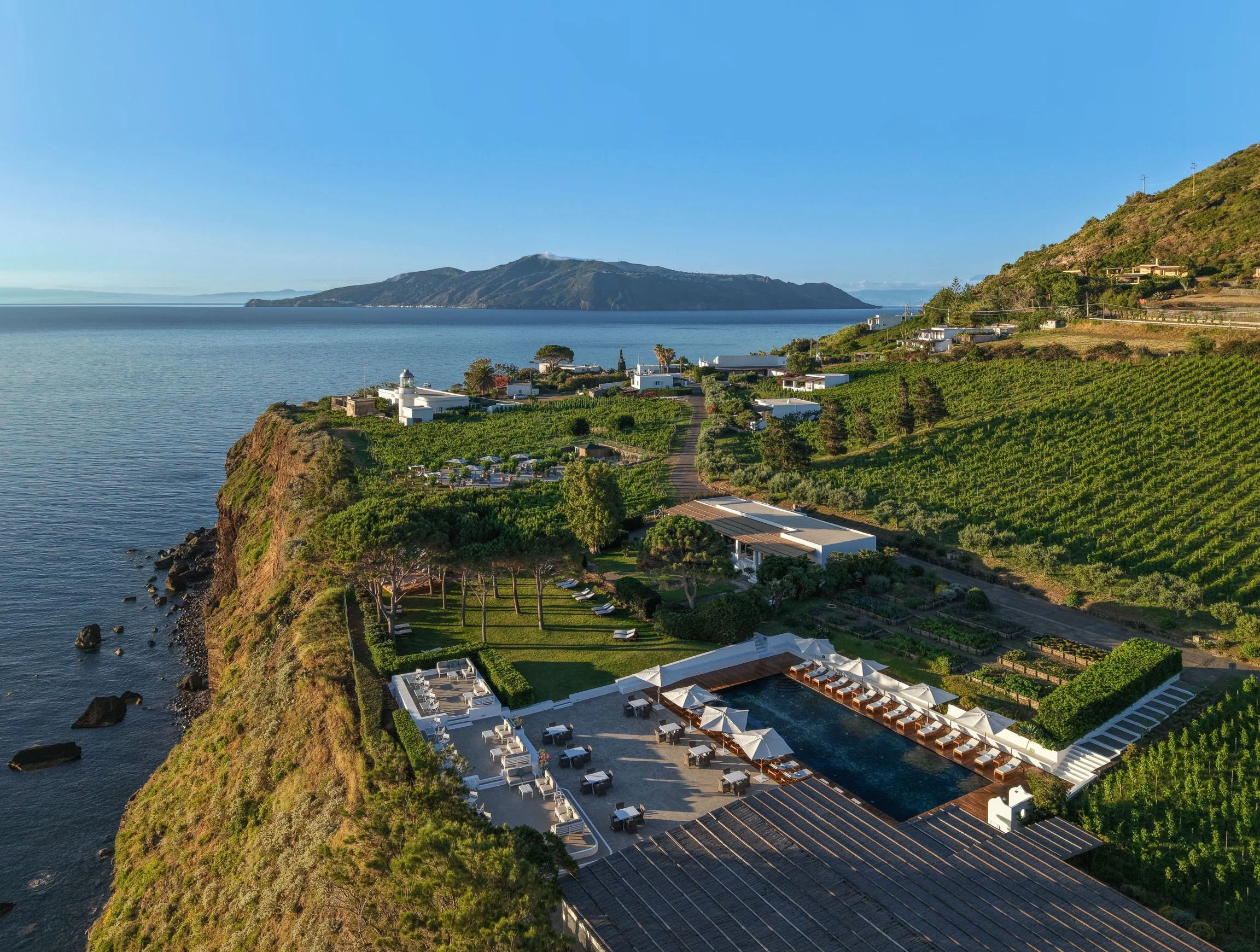
What she did not do was scrub the monastery out of it. The old cells are now twenty rooms and suites, set over two terraced levels that step down the rock, each one different and each looking out to the water. The gardens still climb in tiers above them. The spa is cut into the vaulted stone below, and the infinity pool, laid into the terrace, is the one everyone photographs, for once with reason. In 2019 Condé Nast Traveler readers voted it the best hotel in Italy.
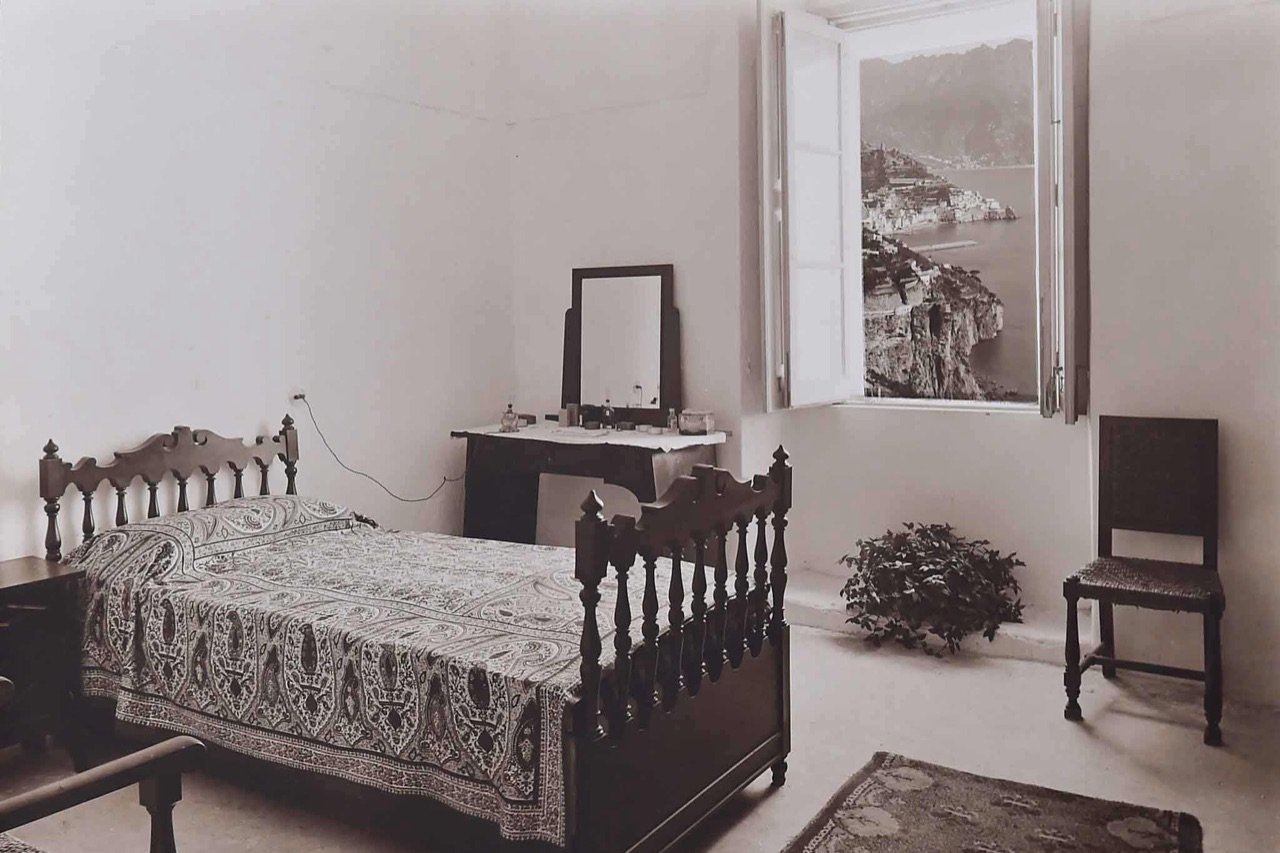
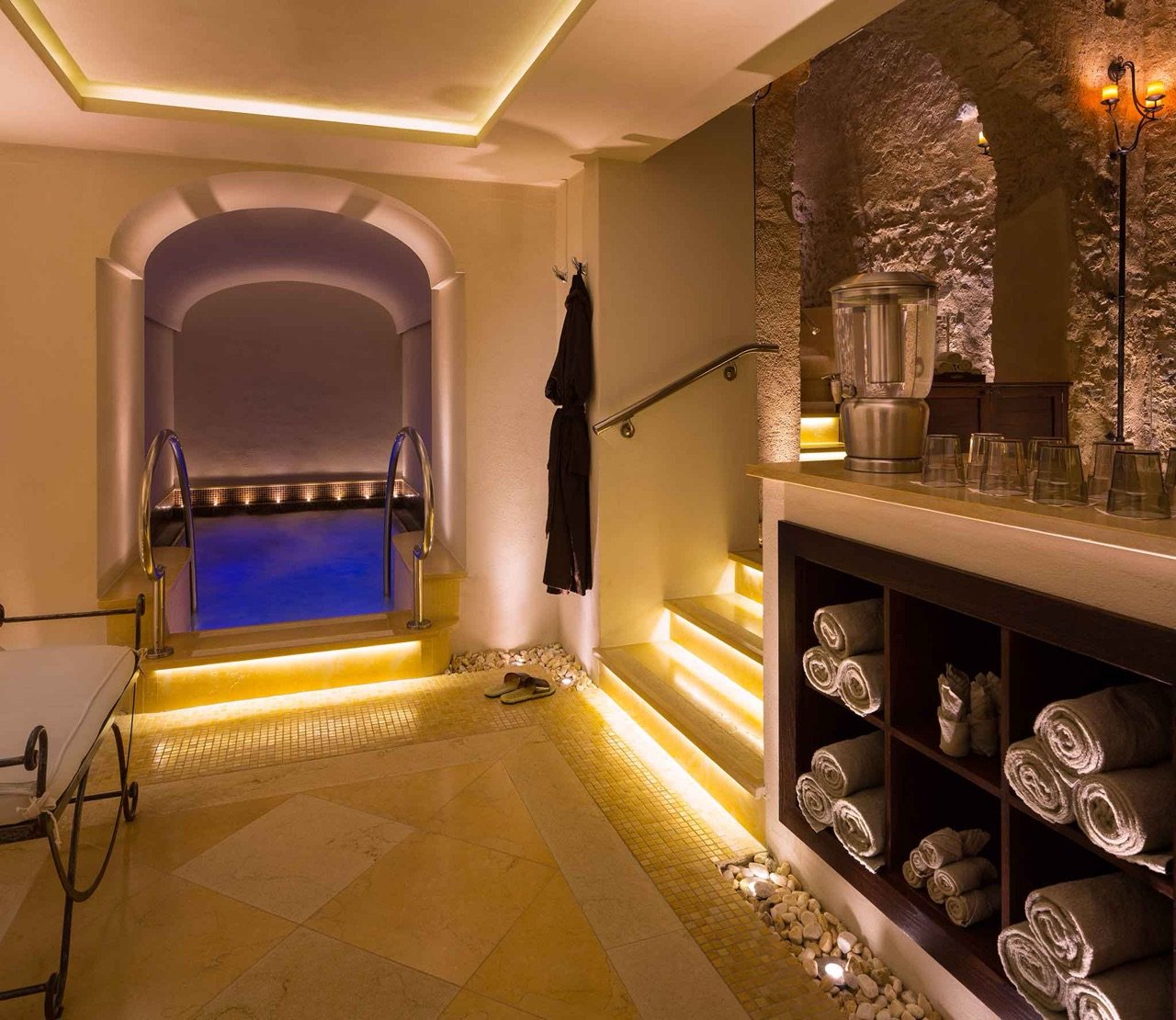
She saw a ruin from a boat, and gave it ten years for an answer.
The refectory, still feeding people
The restaurant kept the name of the room the pastry came from. Il Refettorio has held a Michelin star since 2017, and Alfonso Crescenzo cooks it, a chef from nearby Sarno who learned at his grandmother's side and still farms the family's ground. His line, that nothing is harder than cooking something simple, is the sort of thing chefs say and few of them mean. Here the plates carry it: Campanian and clean, built on the morning's catch and the vegetables from the monastery's own terraces. You eat on a terrace hung over the gulf, from breakfast to dinner, with most of the Amalfi Coast in front of you and none of its noise.
It is the rare hotel table that would pull you up the cliff on its own, and then make you forget there were rooms above it.
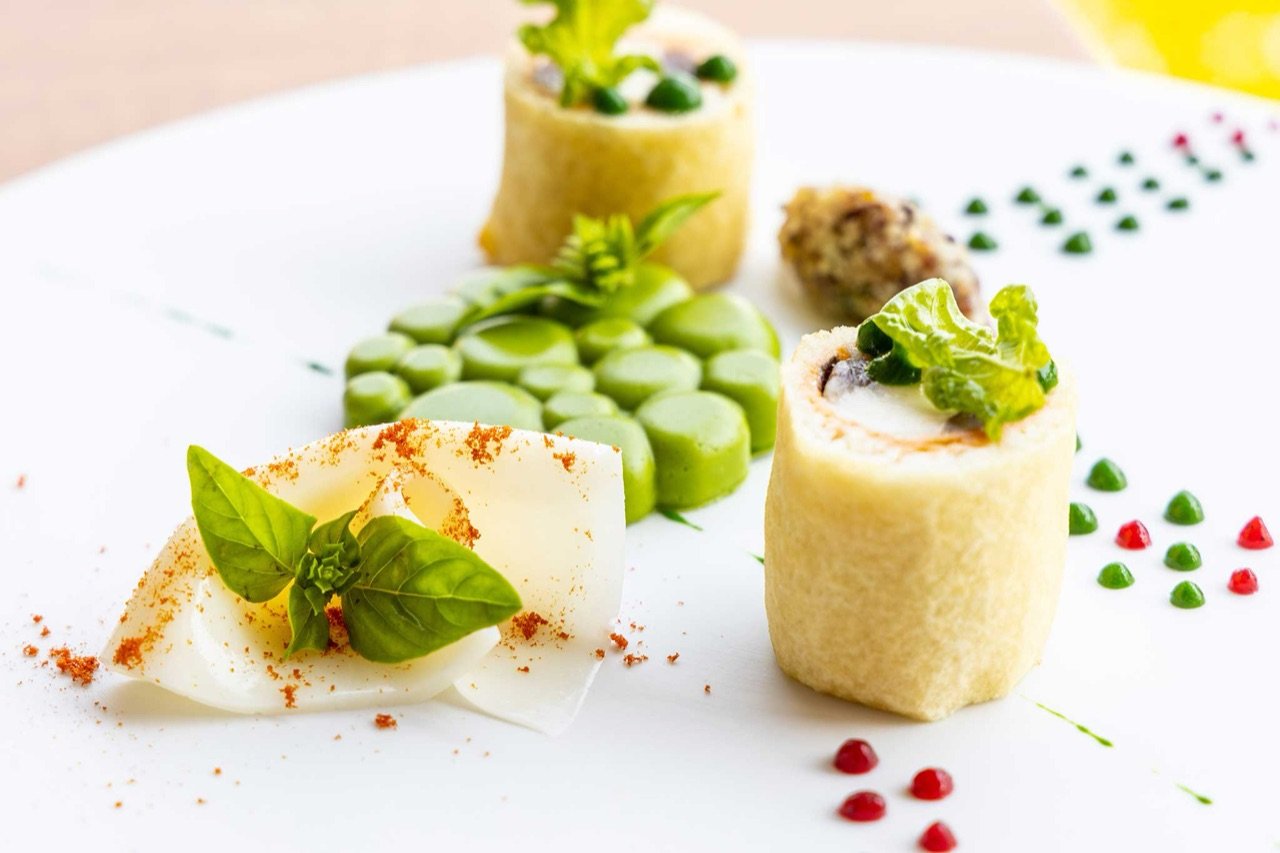
The room that gave the coast its pastry is still, three centuries on, the reason to climb the hill.
The Amalfi Coast deals in spectacle, and most of it shouts. Monastero Santa Rosa is the one that keeps its voice down: twenty rooms, an owner who refused to let the building die, a one-star kitchen and the deep quiet of a place built for prayer. Come for the architecture, the seclusion and the table, not for a scene. It is the coast at its most composed, a few hairpins and a whole world away from the crowds. That is why it is in VANE.