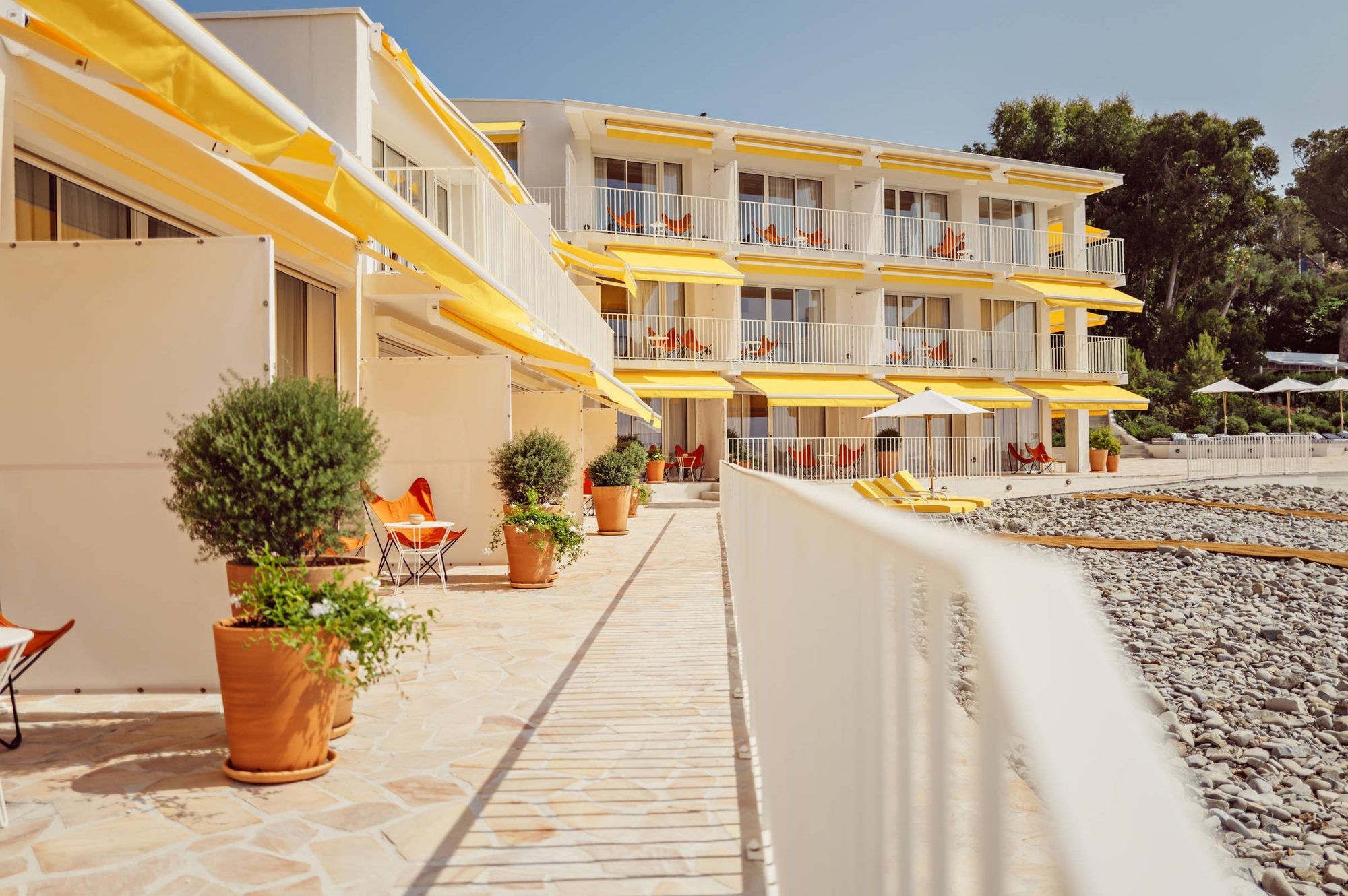
The rocks came first
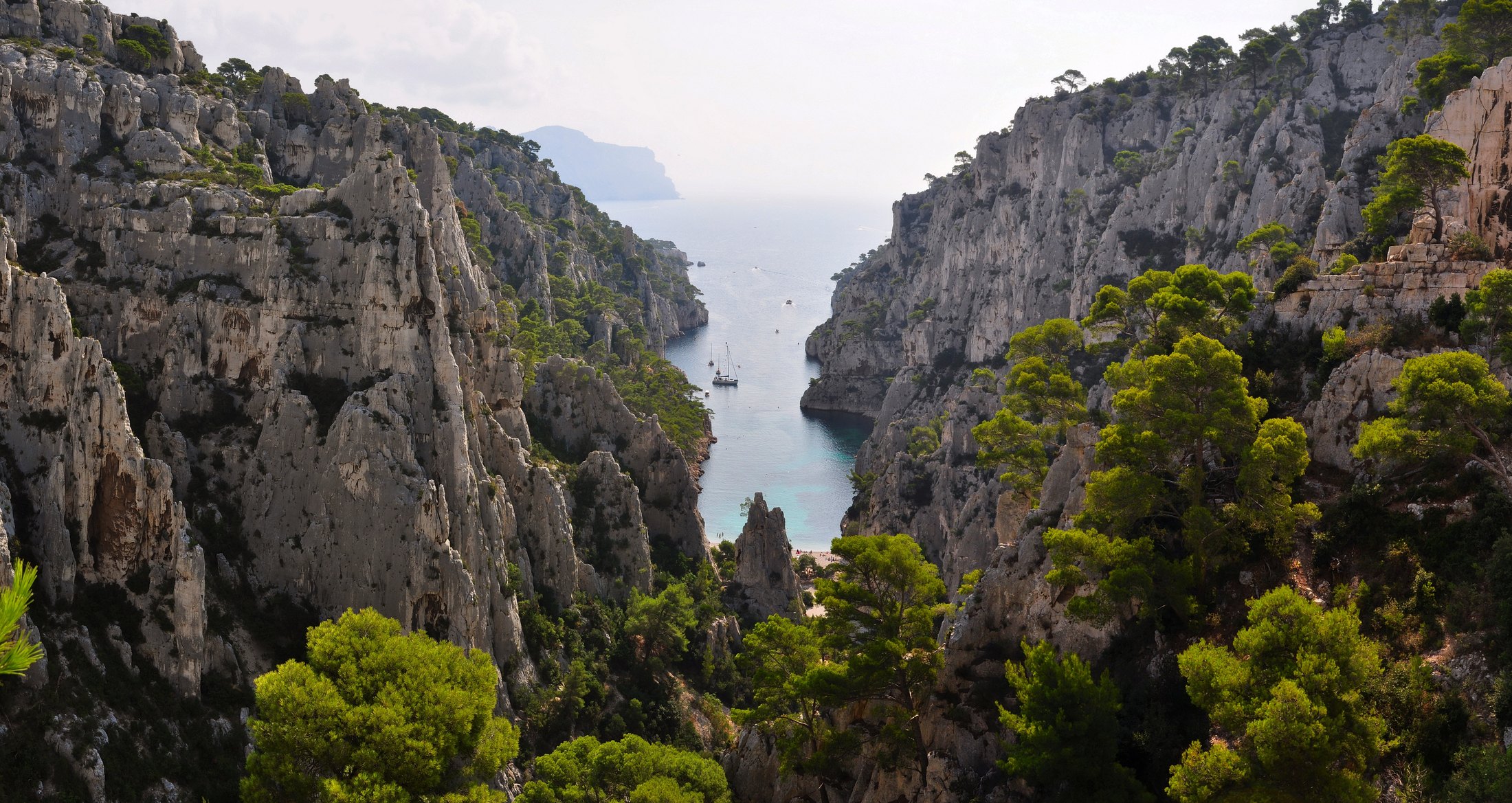
The Riviera between Saint-Raphaël and Cannes is not soft country. Here the Estérel massif drops into the sea in walls of red porphyry, and the water changes from turquoise to a deep blue over the stone. The coast road that threads along it, the Corniche d'Or, was cut for the view as much as for the traffic, and Les Roches Rouges sits on one of its best stretches, facing the little tower on the Île d'Or across the water.
The building came later, in the 1950s, a long and low modernist thing set close to the shore. For years it was a roadside hotel of no particular ambition. What saved it was the position. You cannot build here now, and you could not improve on where it stands: the pebbles a few steps below the terraces, the porphyry going copper in the late sun, Cap Dramont and Agay off to the east. The rocks came first, and everything the hotel does well is really the coast doing it.
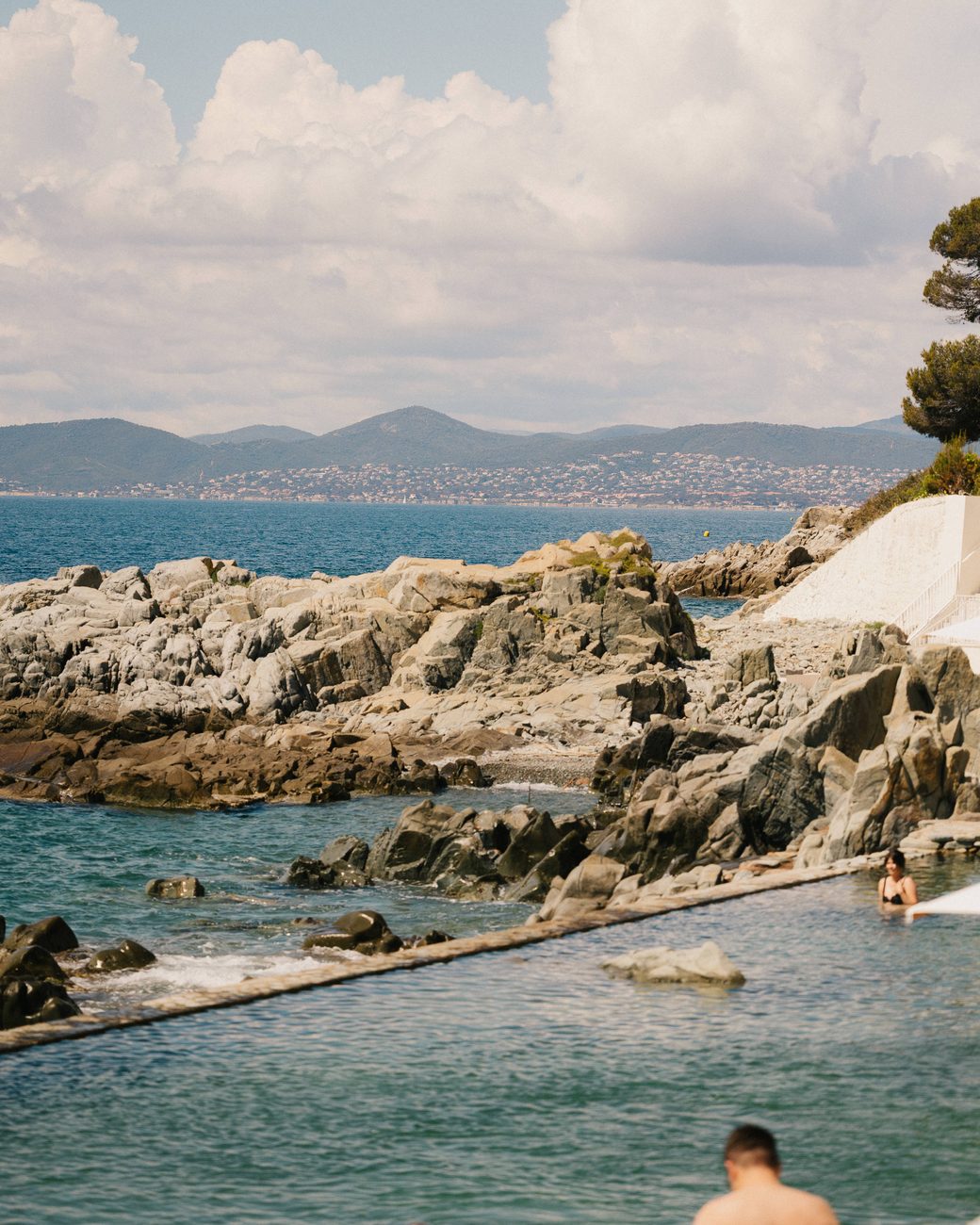
The rocks came first. Everything the hotel does well is really the coast doing it.
What Festen kept
The Paris studio Festen took the hotel back to its modernist bones rather than dressing it in something new. The vocabulary is mid-century and it is left mostly alone: white walls warmed by ochre and faded red, rattan and pale wood, yellow awnings pulled against the afternoon, orange butterfly chairs out on the balconies. It reads as a house that was always this considered, which is the hardest kind of design to pull off and the least showy to look at.
There are sixty-eight rooms and suites, and the ones worth having sit low and close to the water, some at sea level with terraces a few steps from the pebbles. The signature is the pool, a seawater basin hewn into the rock at the shoreline so the Mediterranean spills over its edge, with a heated lap pool for the cooler months and private access to the sea off the rocks. A wellness area is tucked into the plan. The hotel now belongs to the Beaumier group, which has kept the restraint intact rather than turning it up.
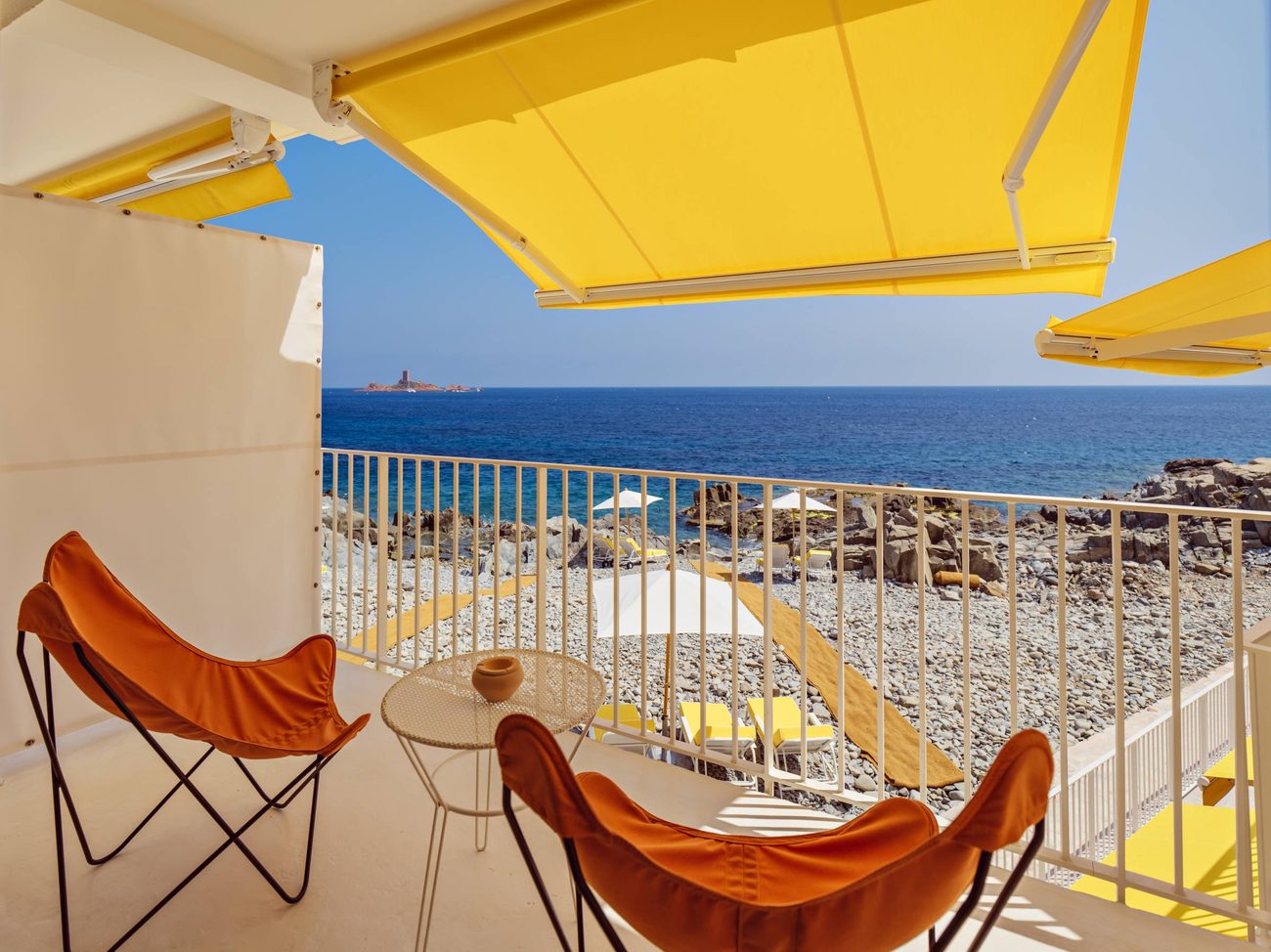
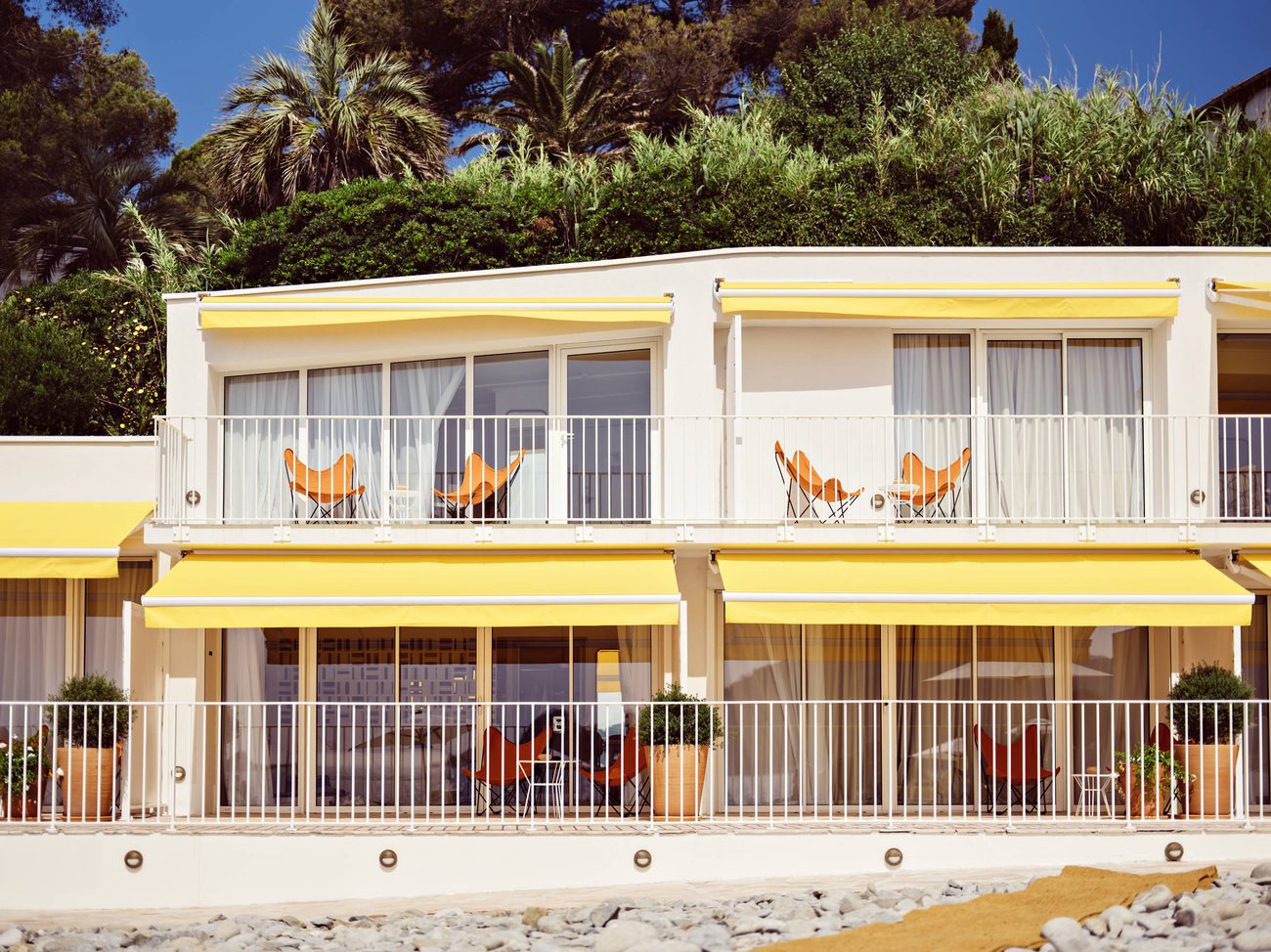
It reads as a house that was always this considered, which is the hardest kind of design to pull off.
Lunch at the waterline
Estelo is the reason to let lunch run long. It faces the water, and the kitchen keeps to the Mediterranean without dressing it up: fish from the day, vegetables from the Var, oil and herbs that taste of the coast. In the evening the light does most of the work, the Île d'Or turning to a black cut-out against a pink sky. Nothing here strains for effect, which on this coast in August is a luxury of its own.
La Chicoula takes the other end of the day. It has the loose feel of a guinguette, a bar where a drink can run on until the swifts come out over the rocks. Breakfast is unhurried and, when the weather agrees, taken in the open with the sea a few metres below. The whole rhythm of the place is set at the waterline, and it is the better for refusing to move indoors.
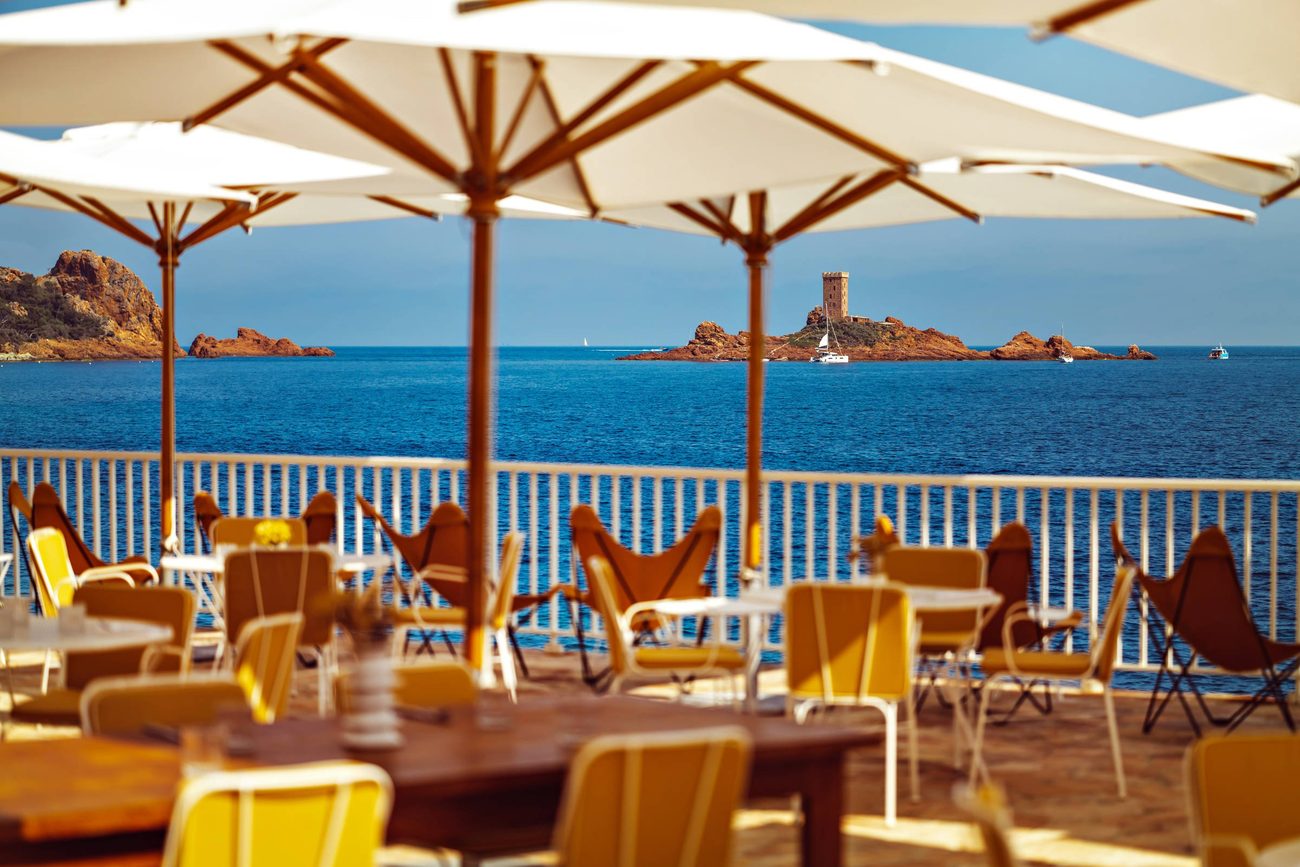
Les Roches Rouges works because it trusts its own restraint. Nothing shouts. The design does the talking and the rock and the water do the rest, and the place ends up feeling of the Estérel rather than dropped onto it. It is honest about its scale. Sixty-eight rooms on a working coast means the seafront can fill on an August afternoon, and the pebble beach is narrow. Come at the edges of the season, take a room low and near the water, and swim off the rocks early, before the loungers are claimed. This is the Côte d'Azur with the volume turned down, which is the version worth having.
VANE note. This is a researched profile of Les Roches Rouges, drawn from the hotel's own material and reputable press, not yet a first-hand VANE verdict. A full review carries a stay date, an independence disclosure and the writer's own account.
Photos: Les Roches Rouges (official), self-hosted with credit.