Behind the ochre front
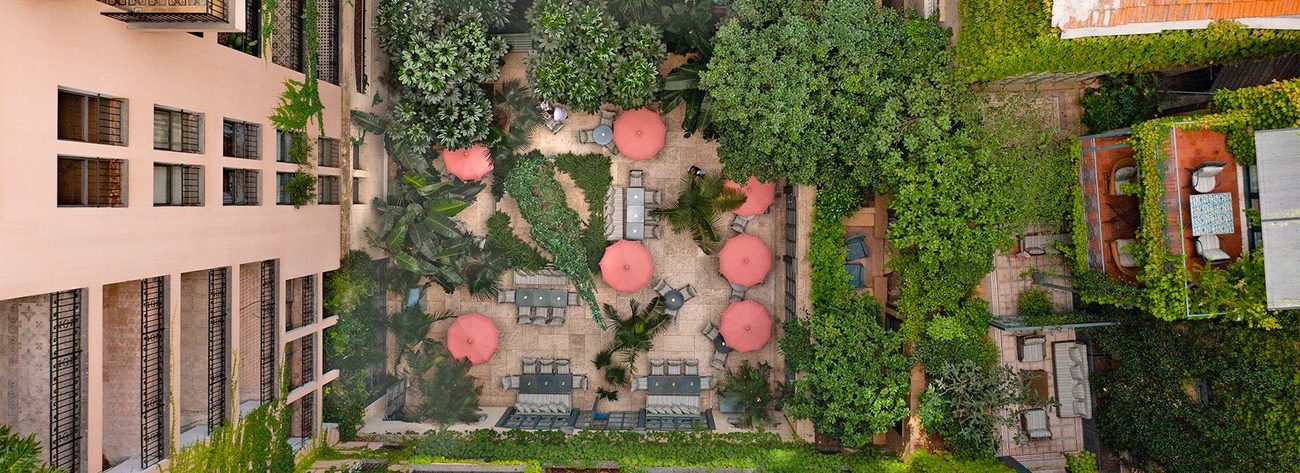
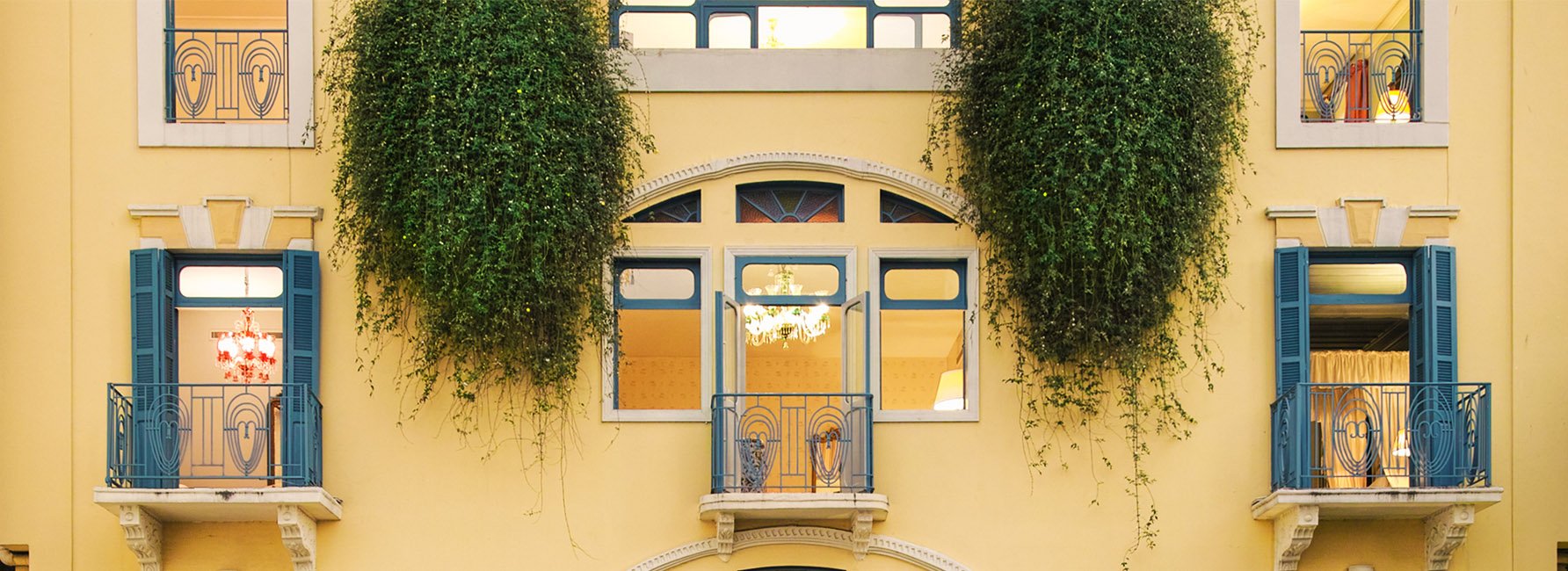
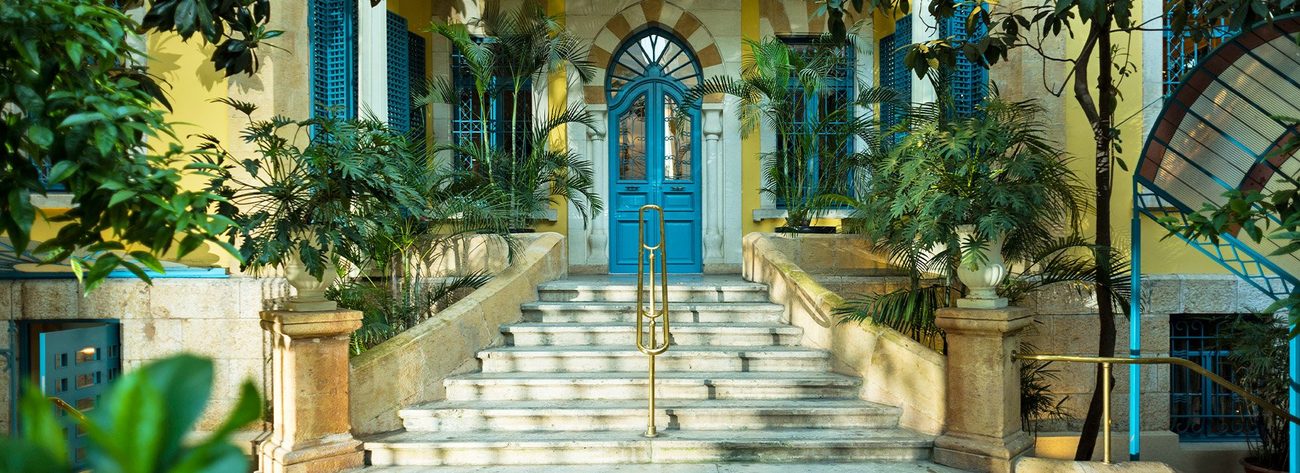
The building goes back to the 1930s, three tall arches on a façade the colour of old butter, blue shutters, creeper spilling from the upper windows onto the balconies below. From the pavement it reads as a private residence that never quite decided to turn commercial. You climb a short flight of stone steps between palms, past a blue door set into a carved arch, and the traffic falls away behind you.
Achrafieh is the Beirut that has come through everything, a district of churches, galleries and antique dealers where the city feels most like itself. The Albergo sits in the middle of it and stays quiet, which here is its own form of luxury. It belongs to Relais & Châteaux, the only house in the country to carry the badge, and it wears the distinction lightly.
Thirty-three rooms, no two alike
There are thirty-three suites and no two are the same. One is papered in painted lotus, another lined floor to ceiling with hand-drawn botanical panels, a third built around a four-poster and a Damascene mirror. The place was furnished from a collection rather than a catalogue: antiques, kilims, mother-of-pearl, striped silk, the accumulation of a family that travelled and kept things. The effect is layered rather than tasteful, and it is the better for refusing to hold back.
The newer rooms carry the same instinct into our own decade. Walls drawn with ferns and herbs, rattan chairs, a bathroom panelled corner to corner in painted plants, each one labelled in a careful hand. Nothing in them matches, and nothing needs to.
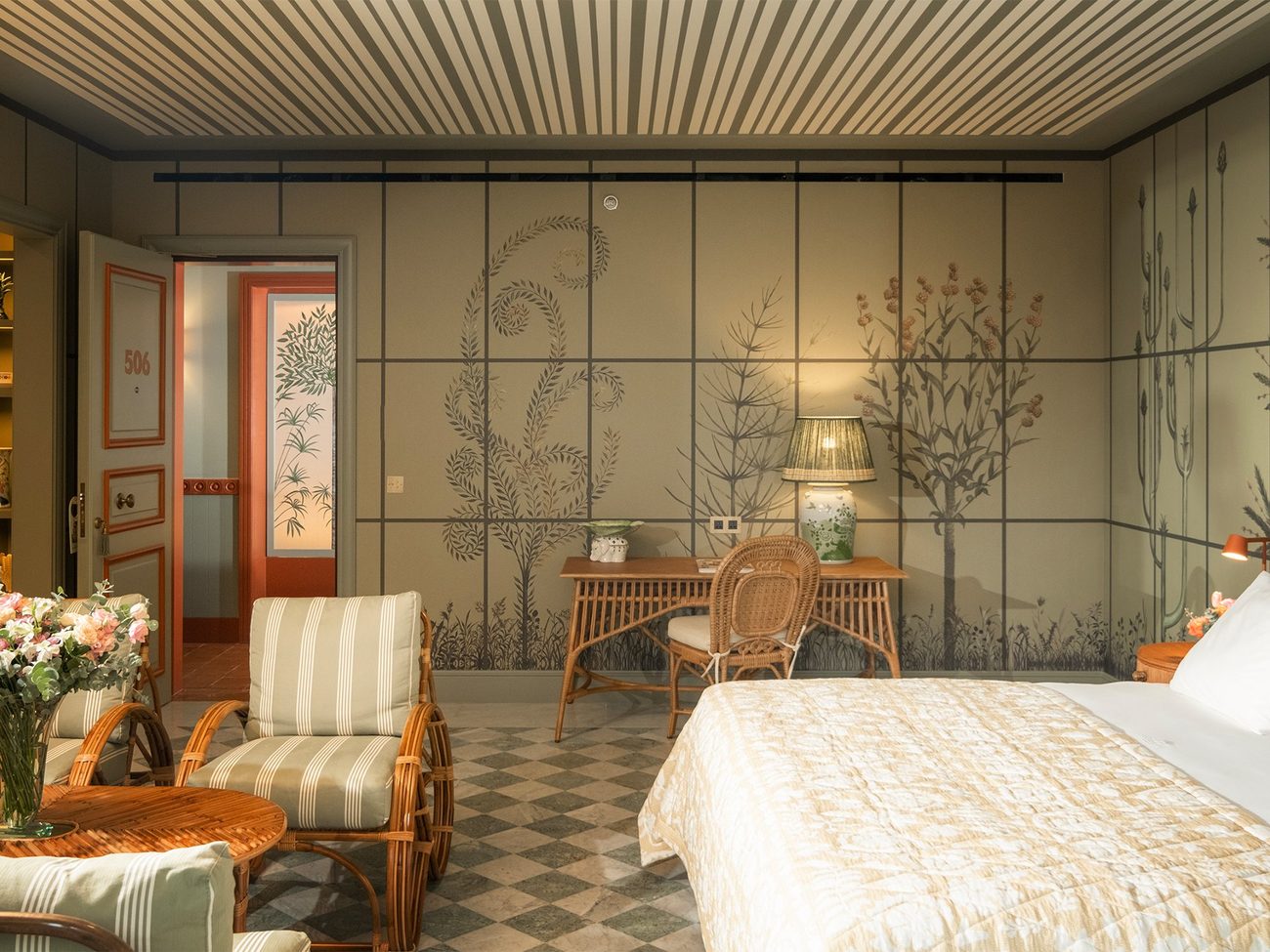
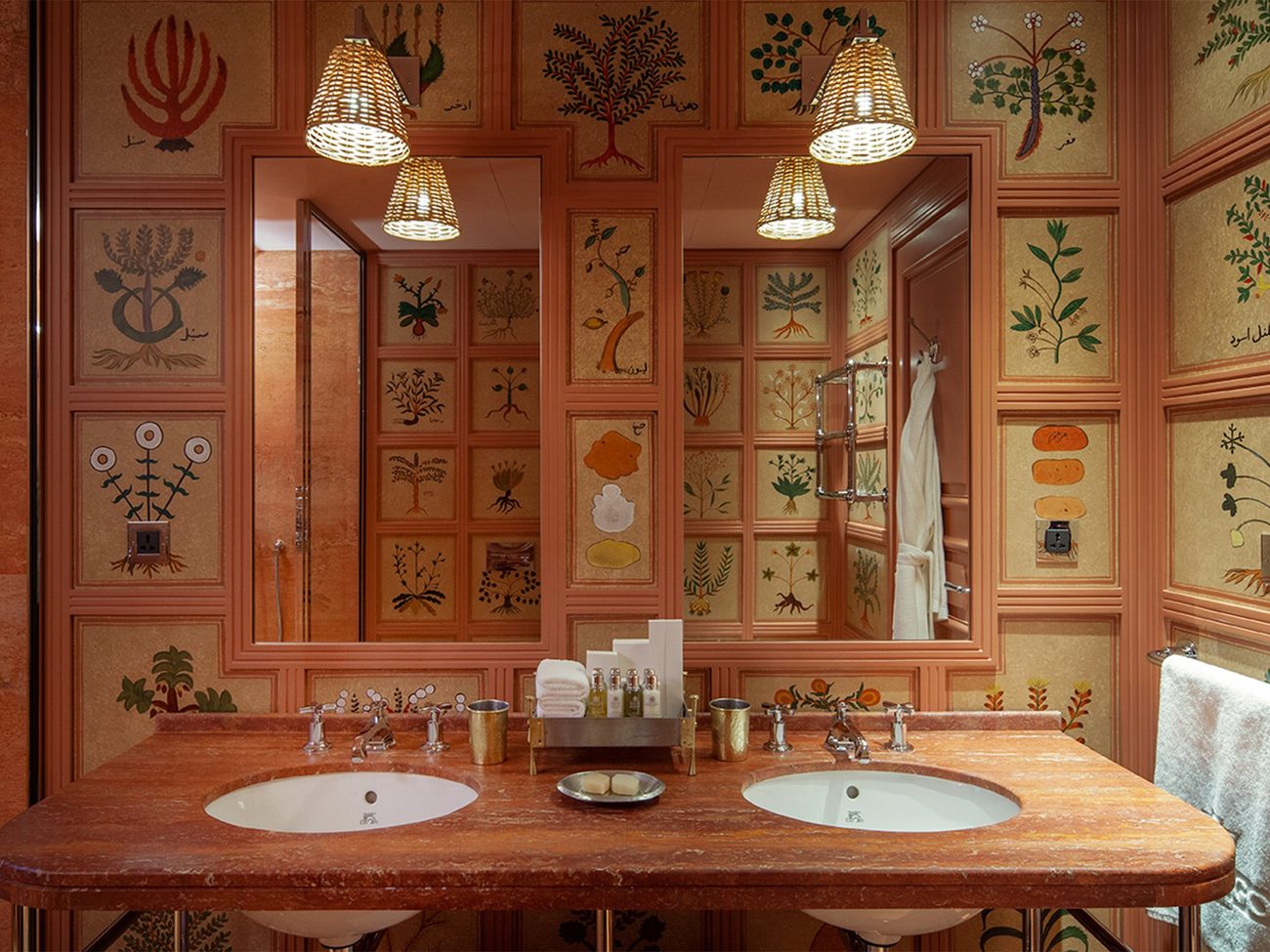
A hotel that furnishes itself from a family's own cupboards, and lets the mismatch stand.
Up at the top of the house
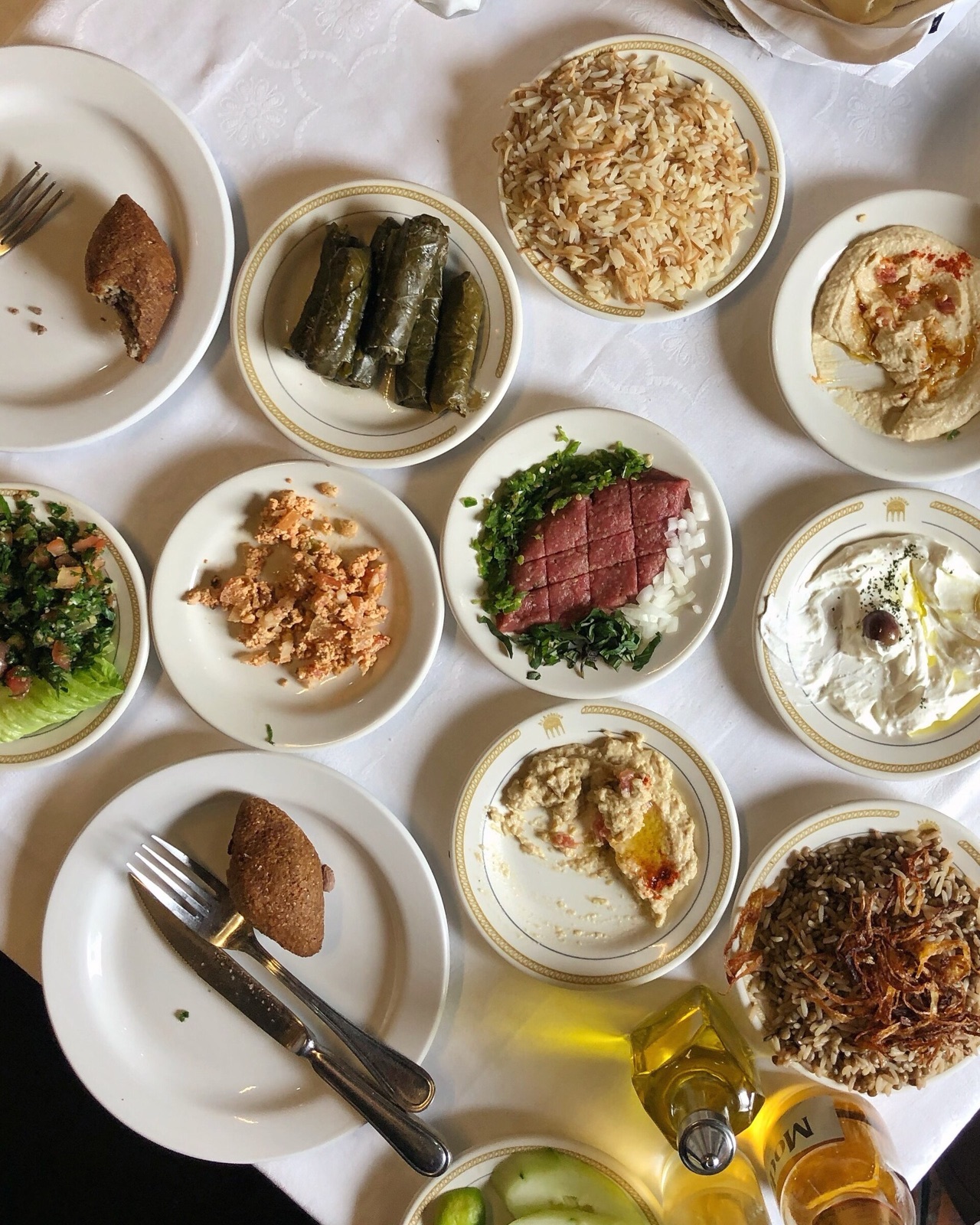
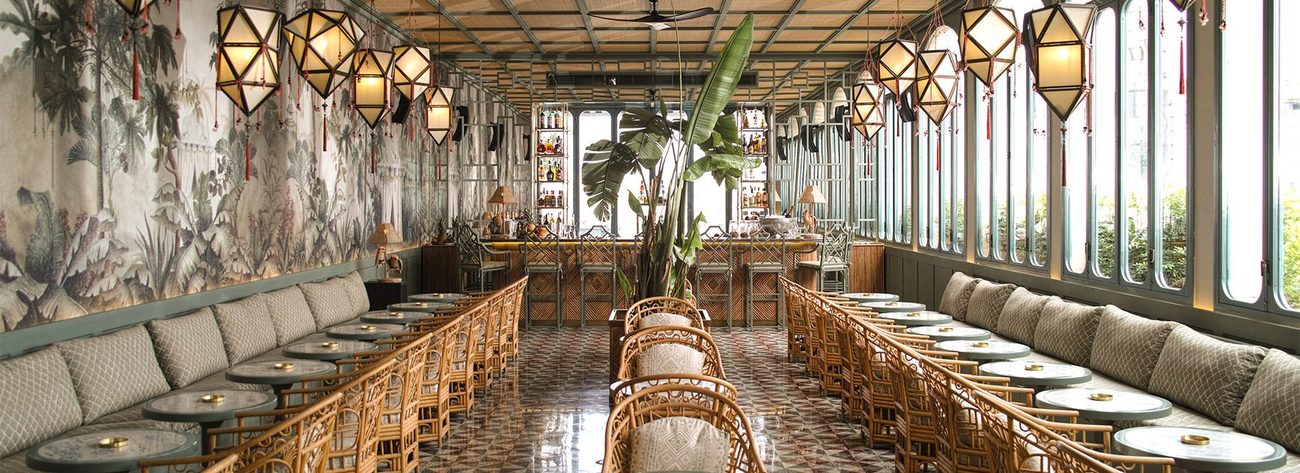
The kitchen keeps to the upper floors. The restaurant, and in the warm months the terrace beside it, cooks the Mediterranean with an Italian lean under old chandeliers and against a wall of painted jungle. It is a serious table that never turns solemn, which in a Relais & Châteaux house is harder than it sounds. Down at street level the café takes the courtyard from the morning, coffee and something from the wood oven under the trees, the most Lebanese corner of the building and usually the fullest.
A pool and a hanging garden
Above all of it is the roof, and the roof is the argument. A pool is laid into it, bordered by a hanging garden of jasmine and dwarf fig, a handful of loungers in the shade. The mountains stack up behind, the sea sits somewhere ahead of the aerials and the water tanks, and the noise of the city arrives softened, as though it too had taken the stairs. On a hot afternoon you need no other reason to be here.
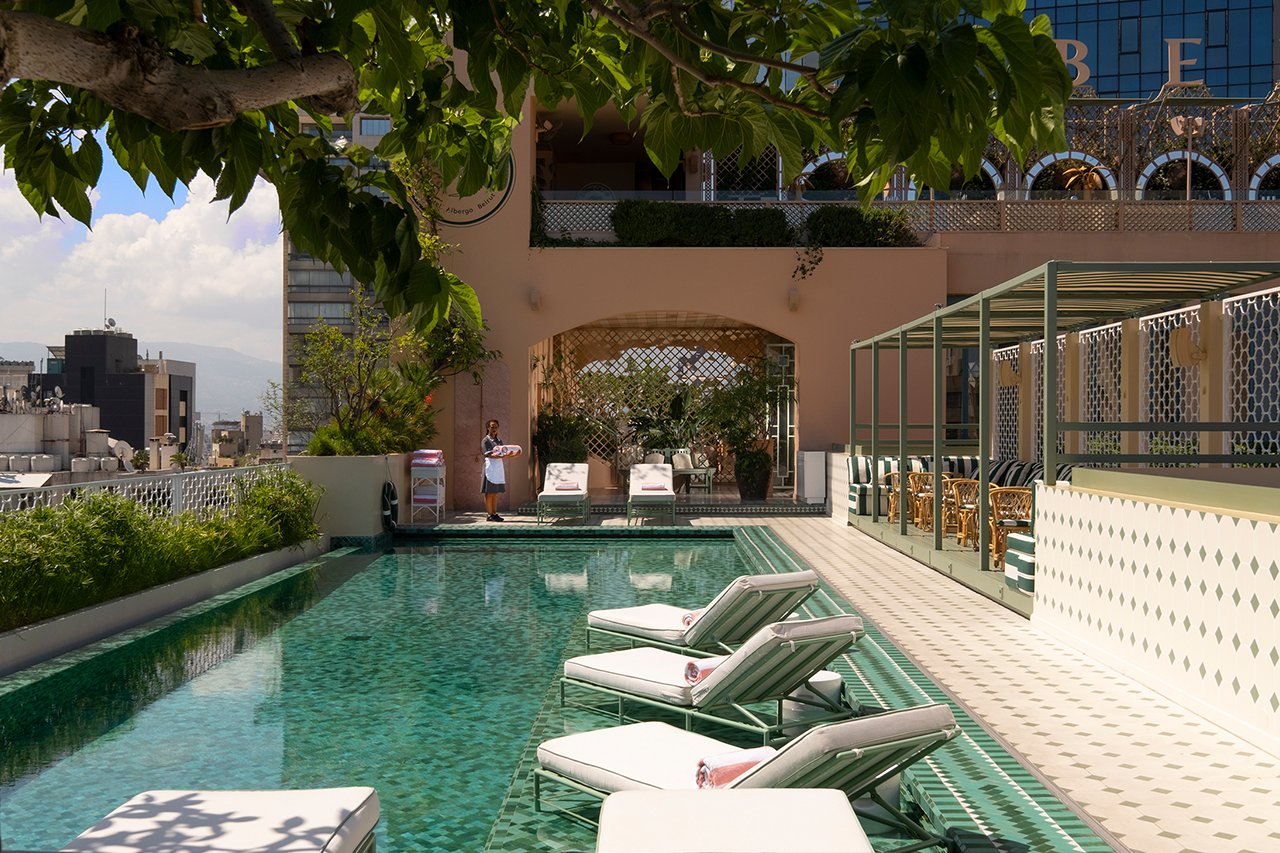
Beirut is not a soft city, and the Albergo does not pretend otherwise. What it offers instead is shelter of a domestic kind: rooms that feel inherited rather than designed, a table worth the climb, a roof that hands back the sky. We would come for the suites and the quiet, and treat the top of the house as the reward at the end of the day.