The Table
There is a hill town on the Calabrian coast, above the Tyrrhenian, where fewer than fifteen hundred people live and a single soft red salame carries the place further than any road ever has. Spilinga sits on the slopes of Monte Poro, in the province of Vibo Valentia, and it makes 'nduja. We went for the chilli and stayed for the argument, because everyone here has a firm opinion on how it should be done.
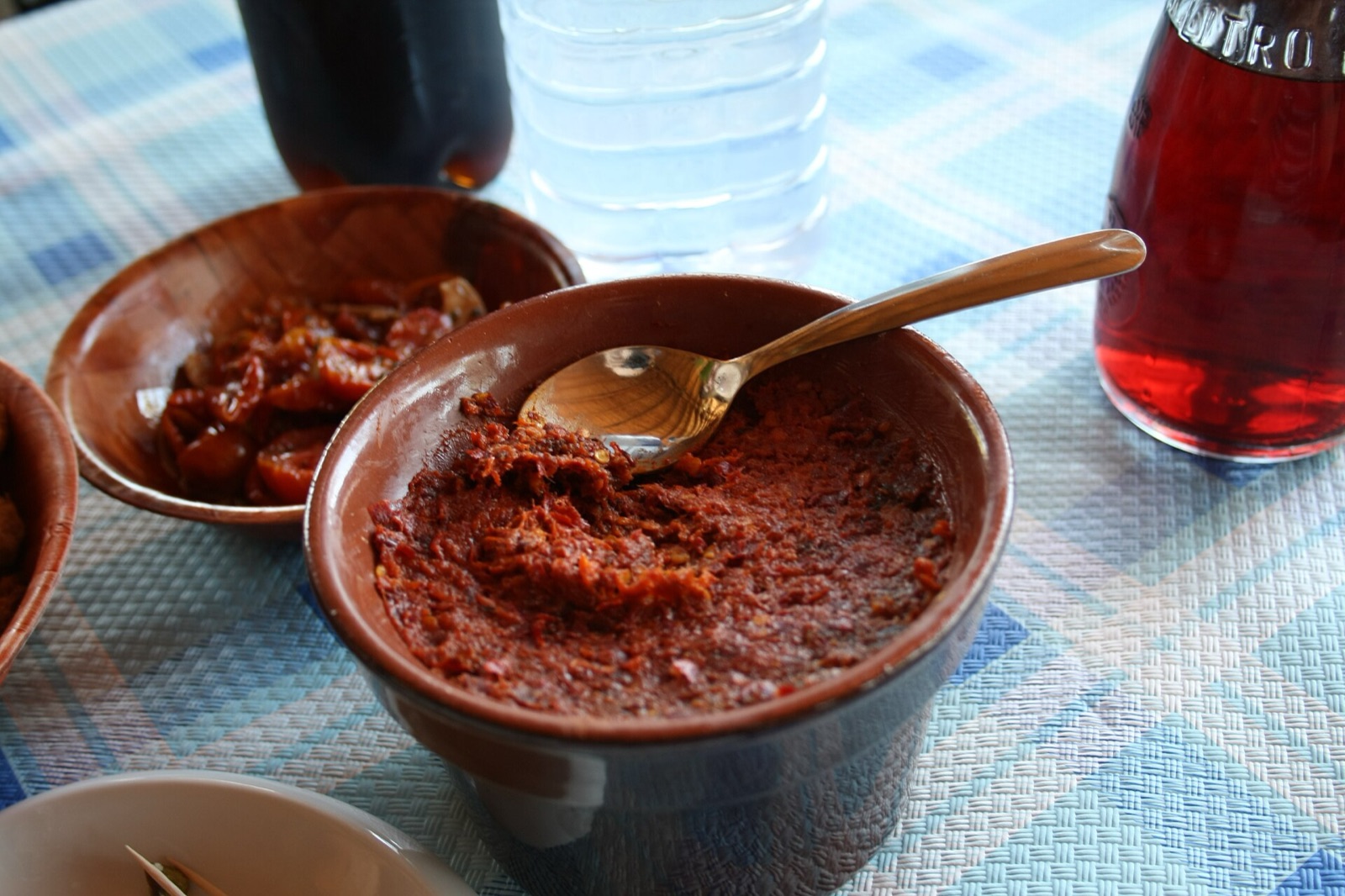
The thing itself is disarmingly simple. Soft pork fat and the trimmings a butcher would once have kept for the house, worked together with sun-dried Calabrian peperoncino until the paste turns the colour of embers. It is pushed into a casing, smoked lightly over oak, then left to cure in the mountain air. What comes out is not a salame you slice. It is one you spread, warm and almost molten, across bread still holding the heat of the oven.
Heat here is not a garnish. It is the whole grammar of the plate.
The chilli does more than burn. In a region that for centuries had little refrigeration and less money, the peperoncino was preservation, colour and pleasure at once, a way of making the humble cuts of one pig last through a winter. That economy is written into the taste. 'Nduja is poor food that learned to be generous.
Cooks a long way from Calabria have noticed. A spoonful loosens into a tomato sauce and turns it smoky and dangerous. It melts over a pizza, into a pot of mussels, through soft eggs. The kitchens we trust treat it with respect rather than novelty, using a little where a lot would only shout. Good 'nduja does not need help. It needs bread and a glass of something cold.
Spilinga knows what it has. A consortium of local producers is pushing for European protected status, hoping to fence the name to the hill that raised it before the rest of Italy claims it too. Whether Brussels grants it or not, the town already holds the only certificate that counts, which is that the best version is still made within sight of the sea that shaped it. Come in August, when the streets fill for the festival that carries its name, and you understand that this is less a product than a temperament. Bring an appetite. Leave the delicate palate at home.