Built to receive the world
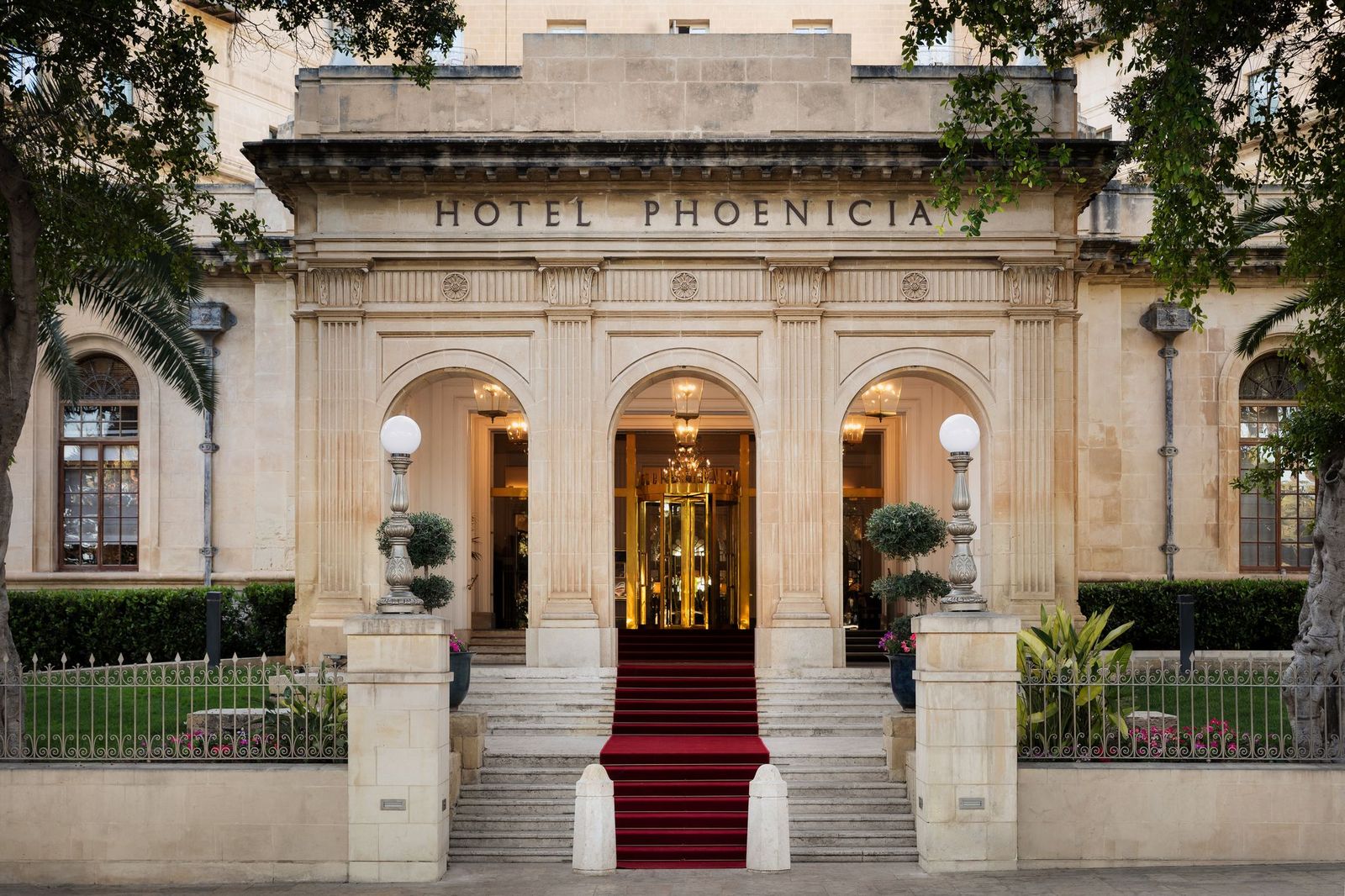
The idea belonged to Lady Margaret Strickland, wife of a former prime minister of Malta, and the Scottish architect William Binnie gave it a shape: a long, low building in island limestone, its name cut over the door, set just outside the walls where Valletta narrows to its land gate. Work began in the 1930s and then the war arrived. RAF crews took the unfinished site, bombs fell on the harbour around it, and it was 1947 before the Countess finally opened the doors to any fanfare at all.
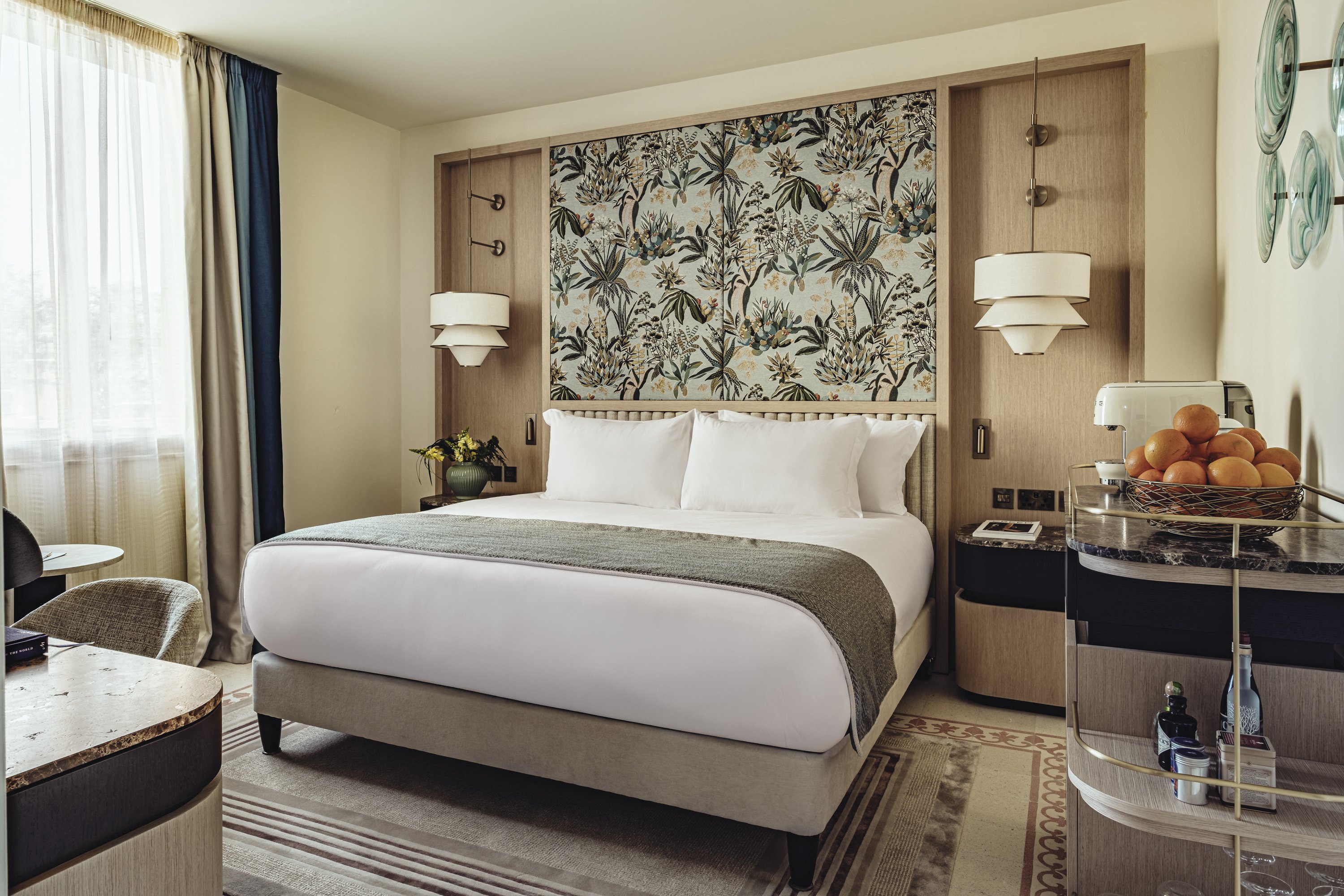
It was the island's first five-star, and it drew the traffic of a first. Princess Elizabeth stayed in 1949, in the years she and Prince Philip kept a life on Malta, and returned as Queen in 2005. Charles Forte bought the hotel in 1966 and gave it a longer international reach. A restoration finished in 2017 put fifteen million euros through the building and left the art deco bones alone, the marble, the light well of the Rotunda, the sweep of the entrance stair.
A first hotel carries the manners of a country learning to be visited.
Seven acres and a bastion
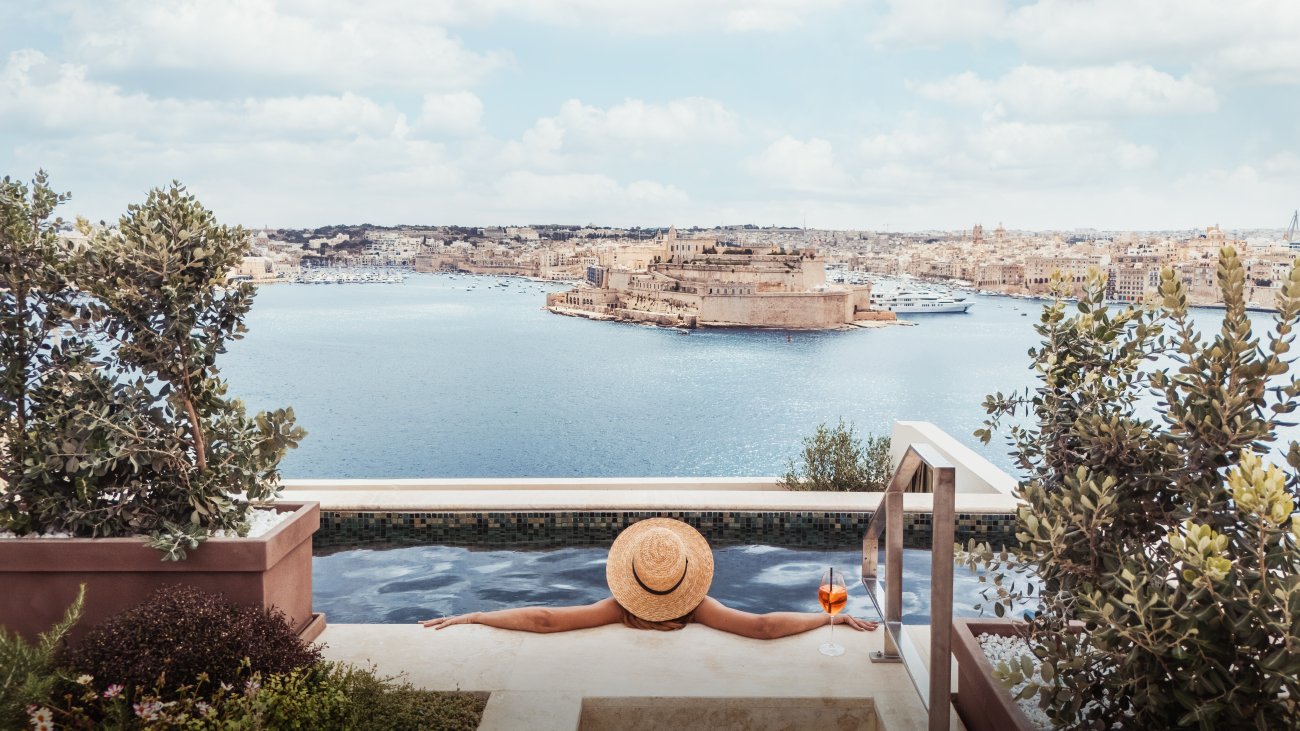
What no newer rival on the island can copy sits behind the building. Seven acres of private garden, an extravagance where land is this dear, drop in terraces from the entrance towards the water. At the bottom the Bastion Pool lies against honey-coloured stone the Knights of St John cut in the sixteenth century, Marsamxett Harbour and the Sliema skyline on the other side, a sentry turret standing off to one flank. You can be a two-minute walk from the gates of a capital and hear almost nothing.
The spa is set into the old fortification itself, cool rooms in the thickness of the wall, an indoor pool run alongside the stone. Ask for a room over the garden or the harbour rather than the city road, and the property quiets right down.
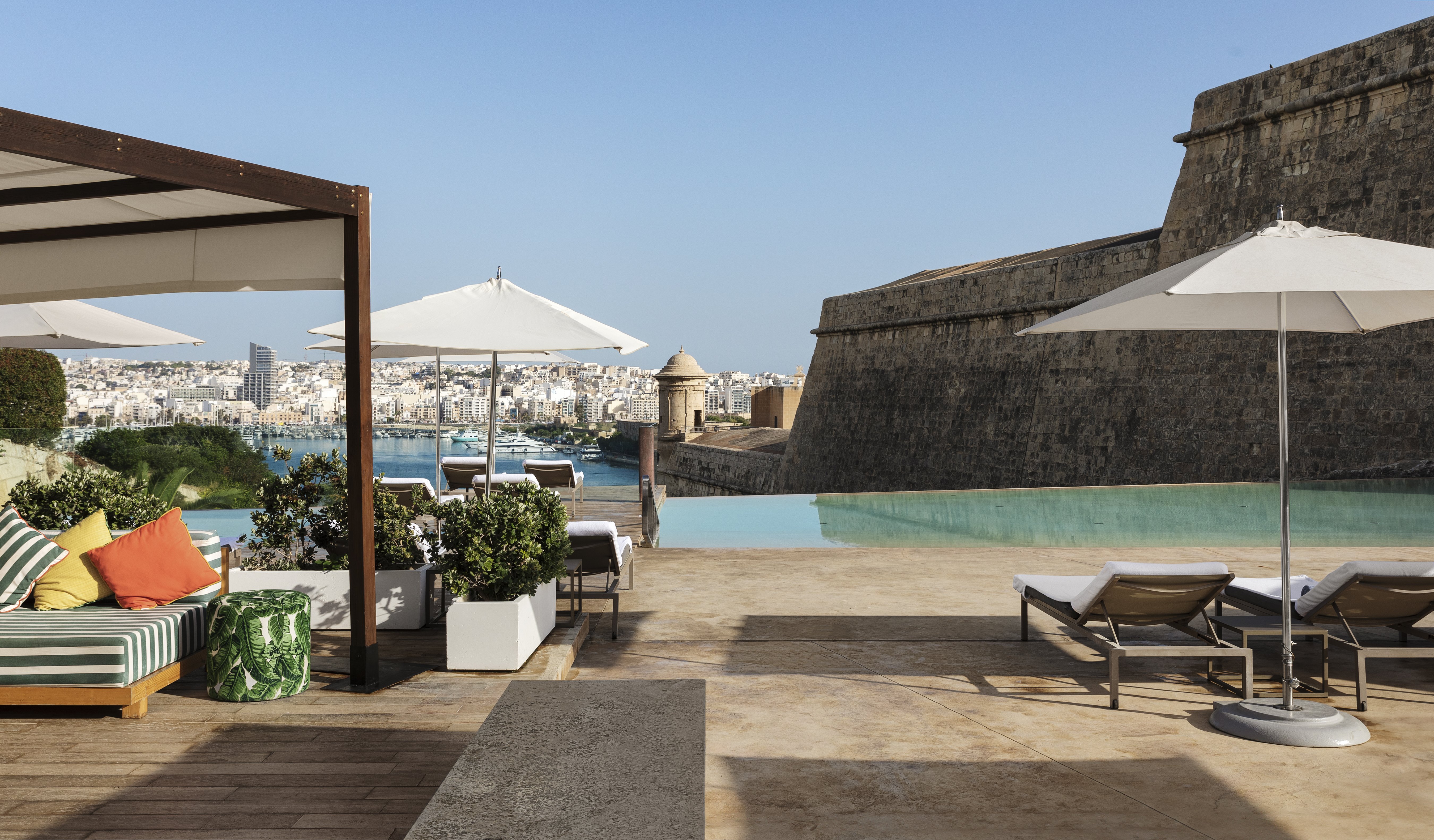
The wall was raised to keep the world out. Now it just holds the light.
What the garden sends up
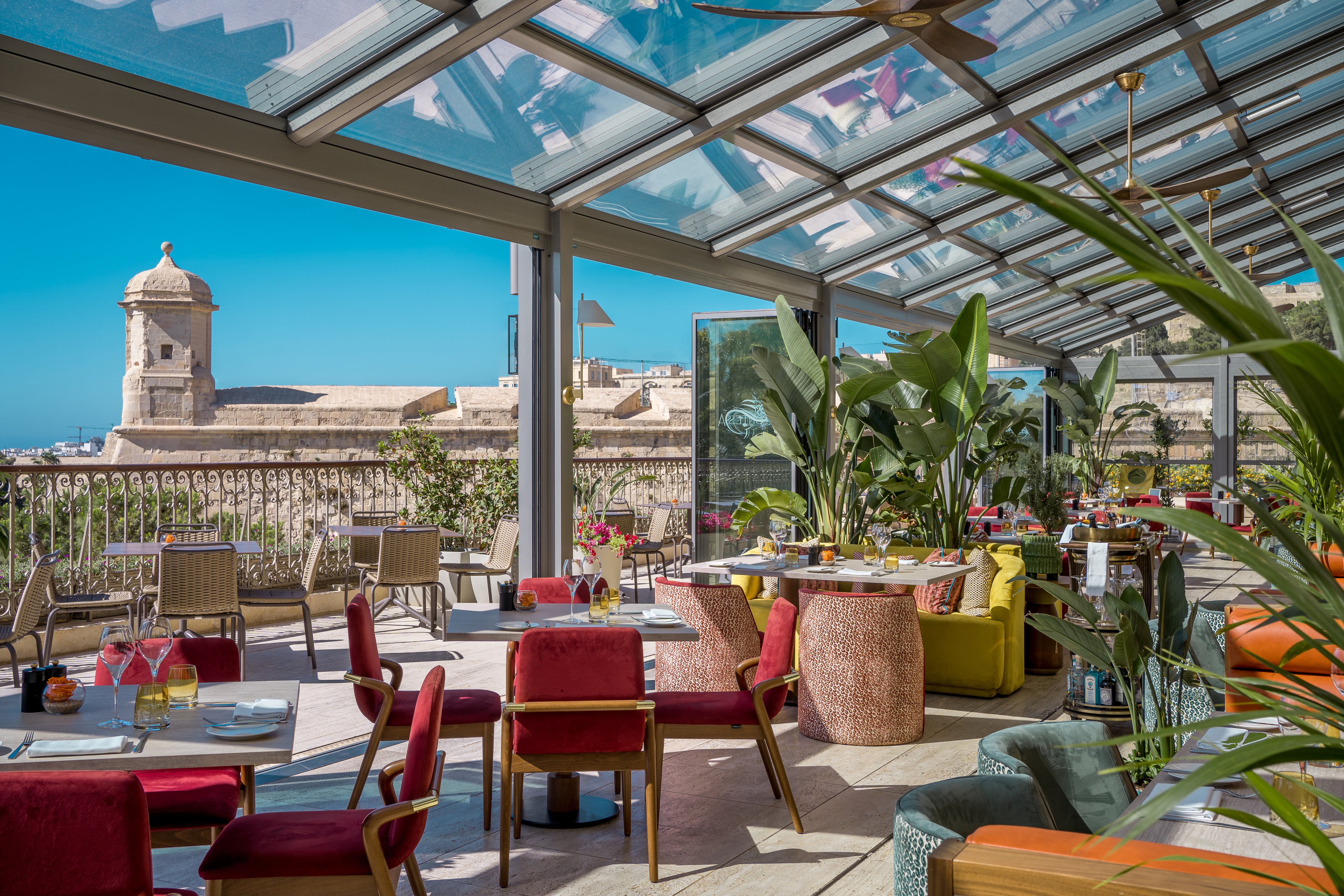
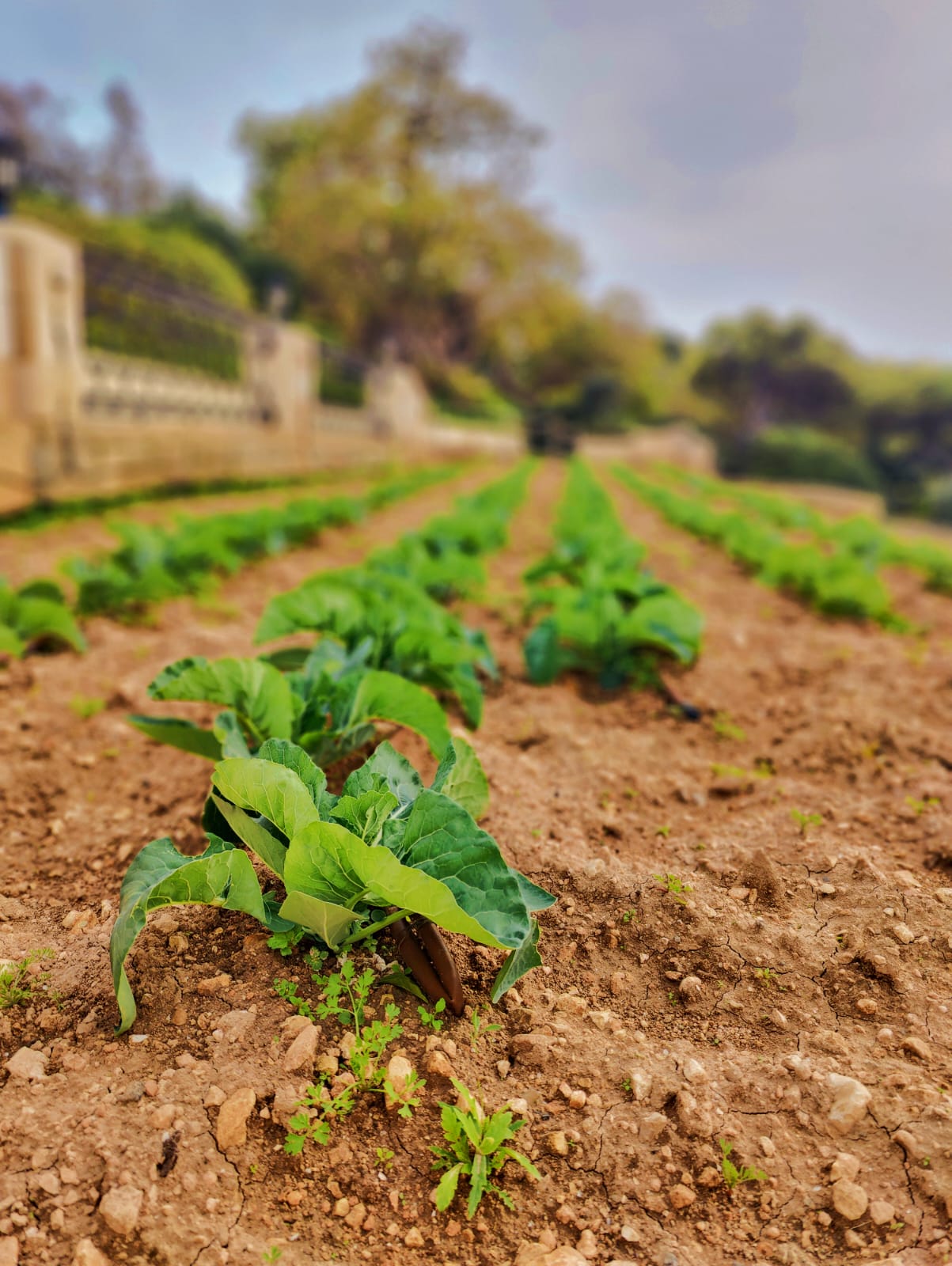
Contessa is the main room, named for the Countess who opened the place, and it reads as a quiet tribute rather than a theme: southern Mediterranean cooking that leans on Maltese produce, served under a glazed conservatory roof that opens onto a terrace facing the bastion. A working kitchen garden on the grounds sends up part of what lands on the plate, which is not a line most city hotels can offer with a straight face. Beefbar has taken a corner of the ground floor for a pared-back steak menu, and the Palm Court lounge keeps the afternoon-tea habit the hotel has traded on for decades.
In summer the kitchen follows you down the terraces to the Bastion Pool, and lunch is eaten at the foot of the wall with the harbour working away beyond it. It is a large hotel that also does weddings and receptions, and we will not pretend it is a hideaway. Keep to the garden side and it behaves like a much smaller one.
Malta is short on hotels with a real sense of place. The Phoenicia has it without straining: history it did not invent, ground no one else on the island can offer, and the discipline, in the last restoration, to leave the good bones be. Come for the garden, the bastion and the walk to the gates of Valletta, and take a room on the quiet side.