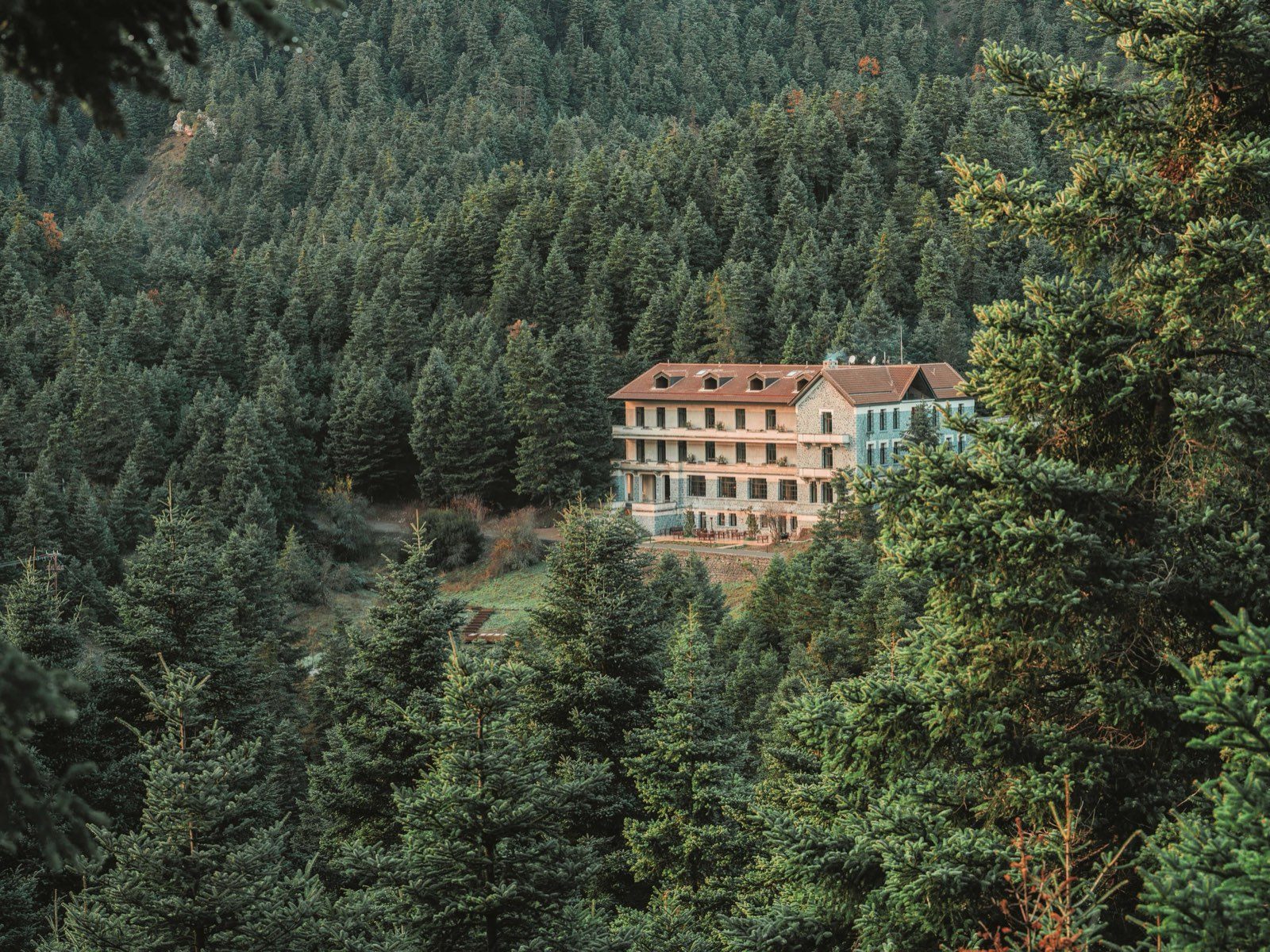
A building that came here to breathe
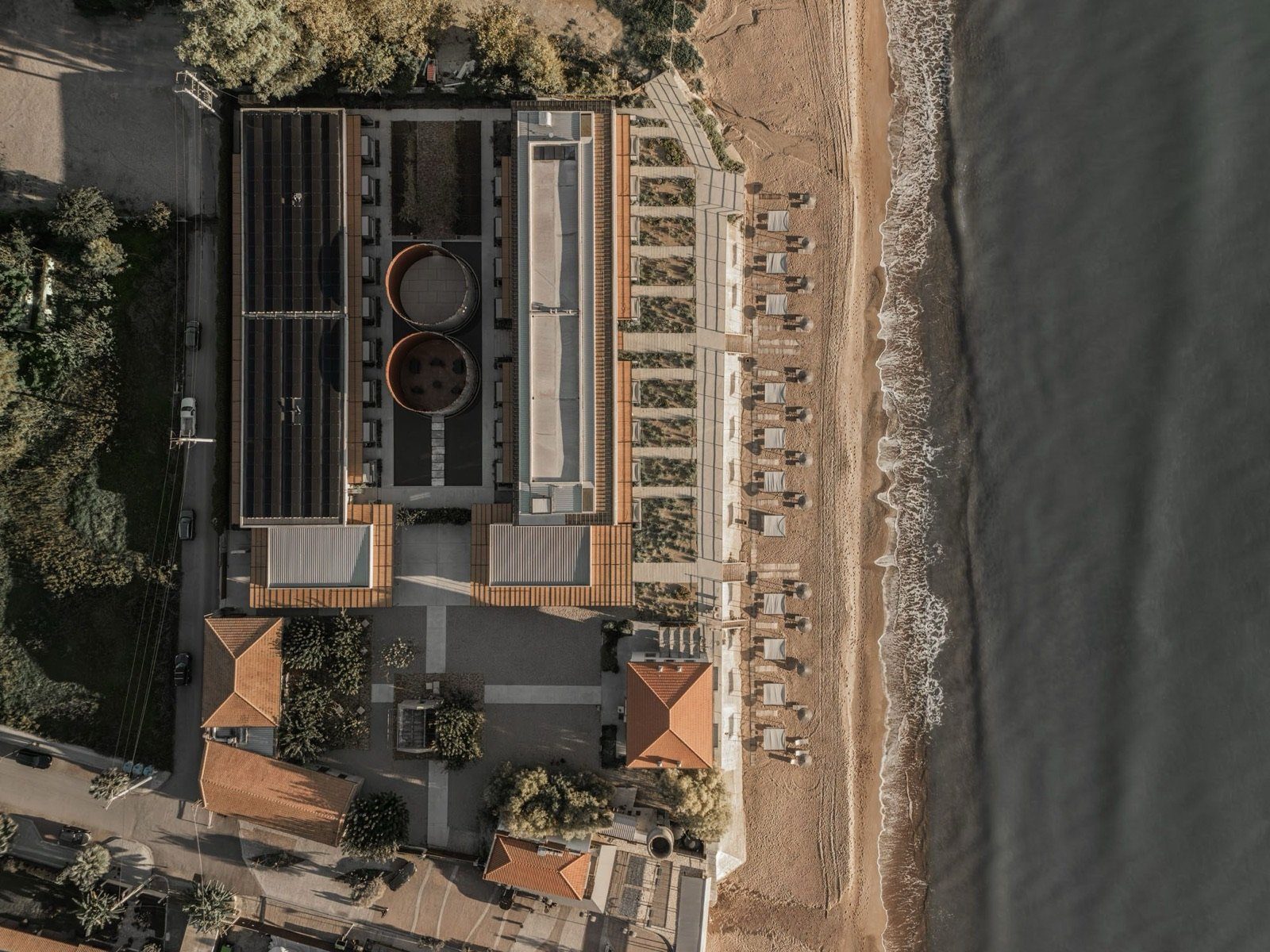
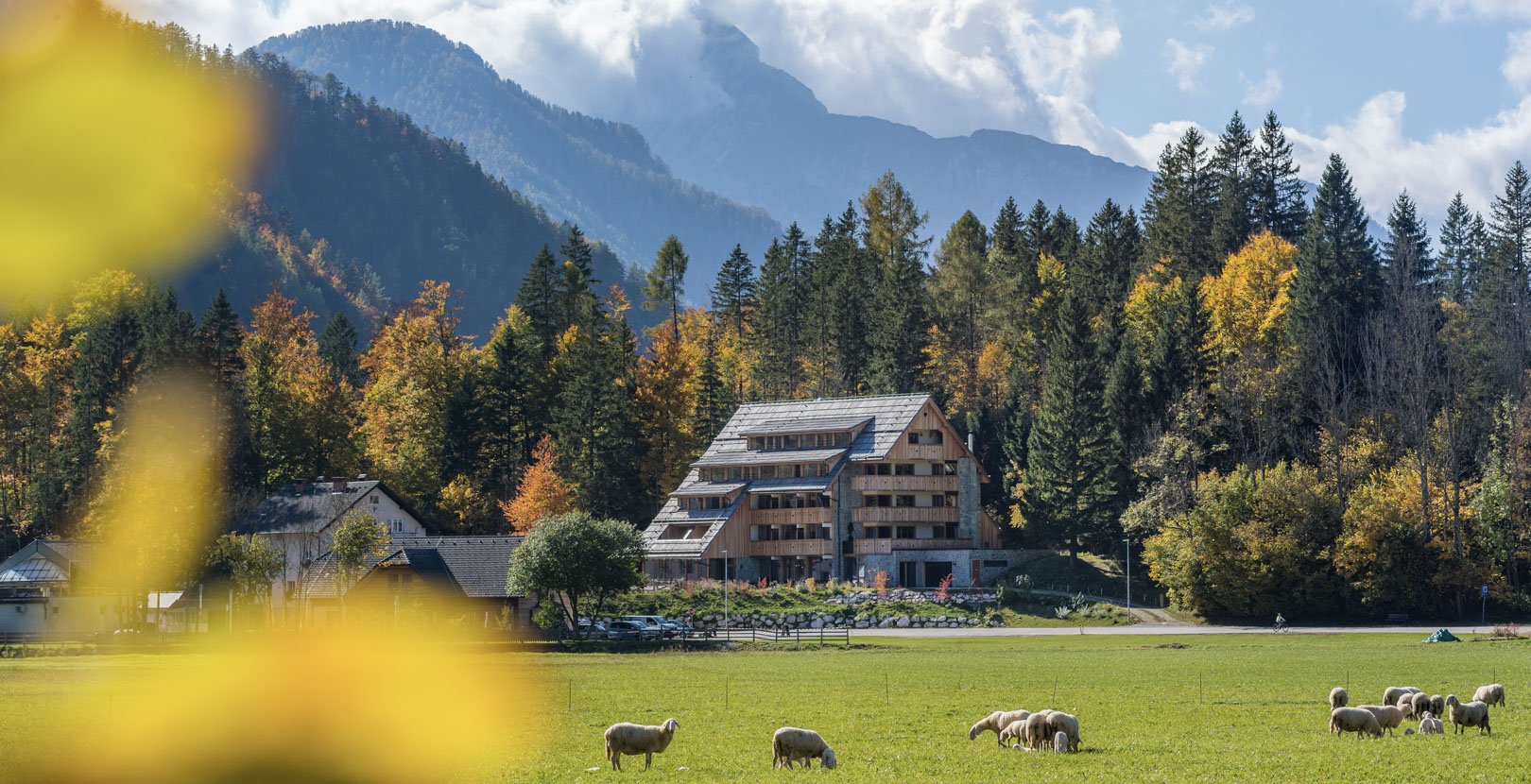
The interior of the Peloponnese keeps its distances. To reach Manna you climb away from the coast road into Arcadia, up the flank of Mount Mainalo, until the olive gives way to fir and the air changes temperature. At around 1,200 metres the trees open onto a clearing, and there it stands: a tall, pale, four-square building, alone in the forest, looking less like a hotel than like something the mountain has always kept.
It very nearly was. In the late 1920s this was a sanatorium, built up here so that patients with tuberculosis might heal on the clean cold air of the arcadian woods. Swiss architects drew it, and they drew it plainly, stepping away from the neoclassical habit of the region. Then in 1938 penicillin arrived, the logic of the mountain cure collapsed almost overnight, and the building was left to the fir and the winters. For the better part of a century it simply stood there, emptying.
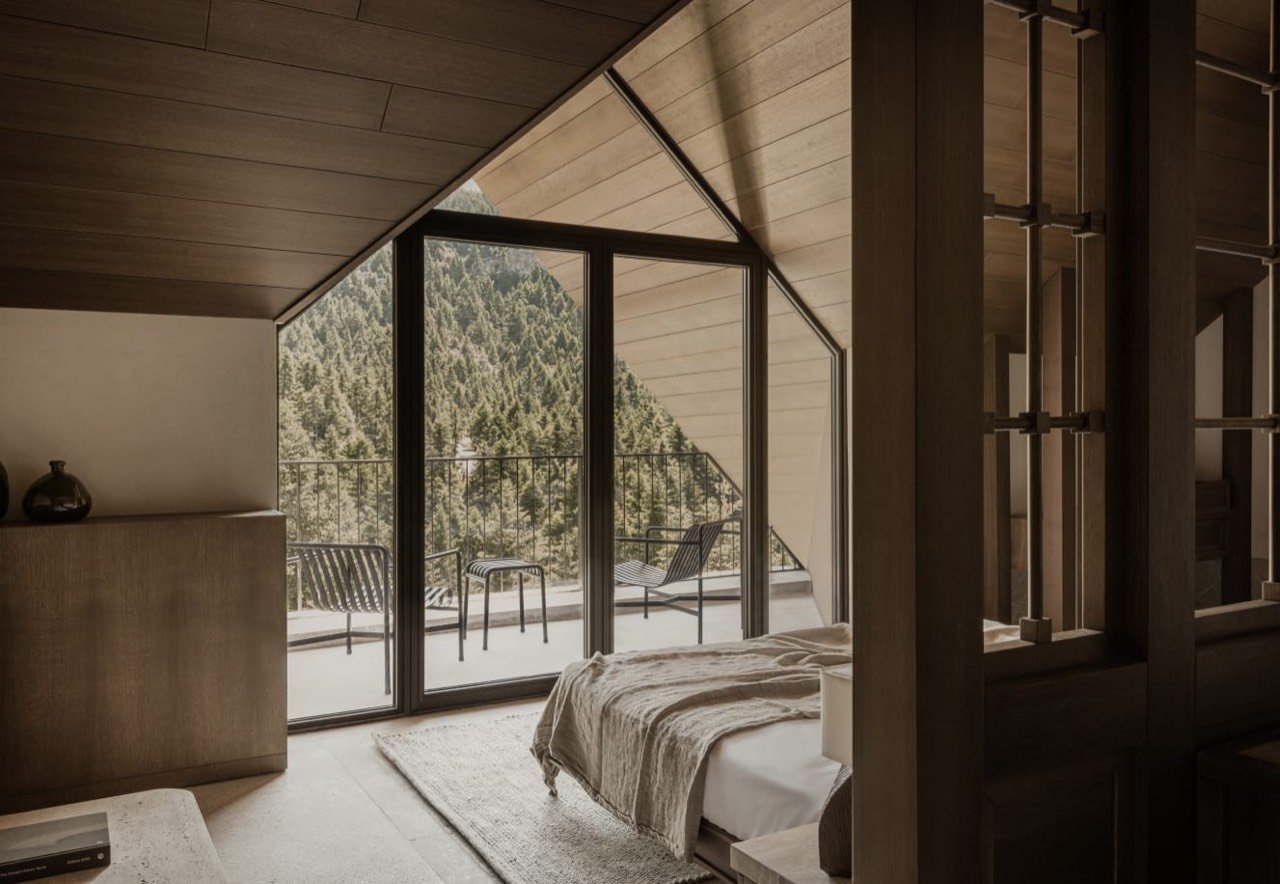
The view was always the medicine. Only the patients have changed.
What K-Studio chose to leave alone
When the Athens practice K-Studio took the shell in hand, the easy move would have been to make a mountain lodge of it, all antler and open fire and heavy wood. They resisted. The thirty-two rooms and suites are worked in a low, quiet palette, pale plaster, local stone, timber the colour of weak tea, and the windows are handed the loudest line in the room. Under the eaves they rise to a sharp gable of glass, and the fir slope opposite pours straight in. You do not decorate against a view like that. You get out of its way.
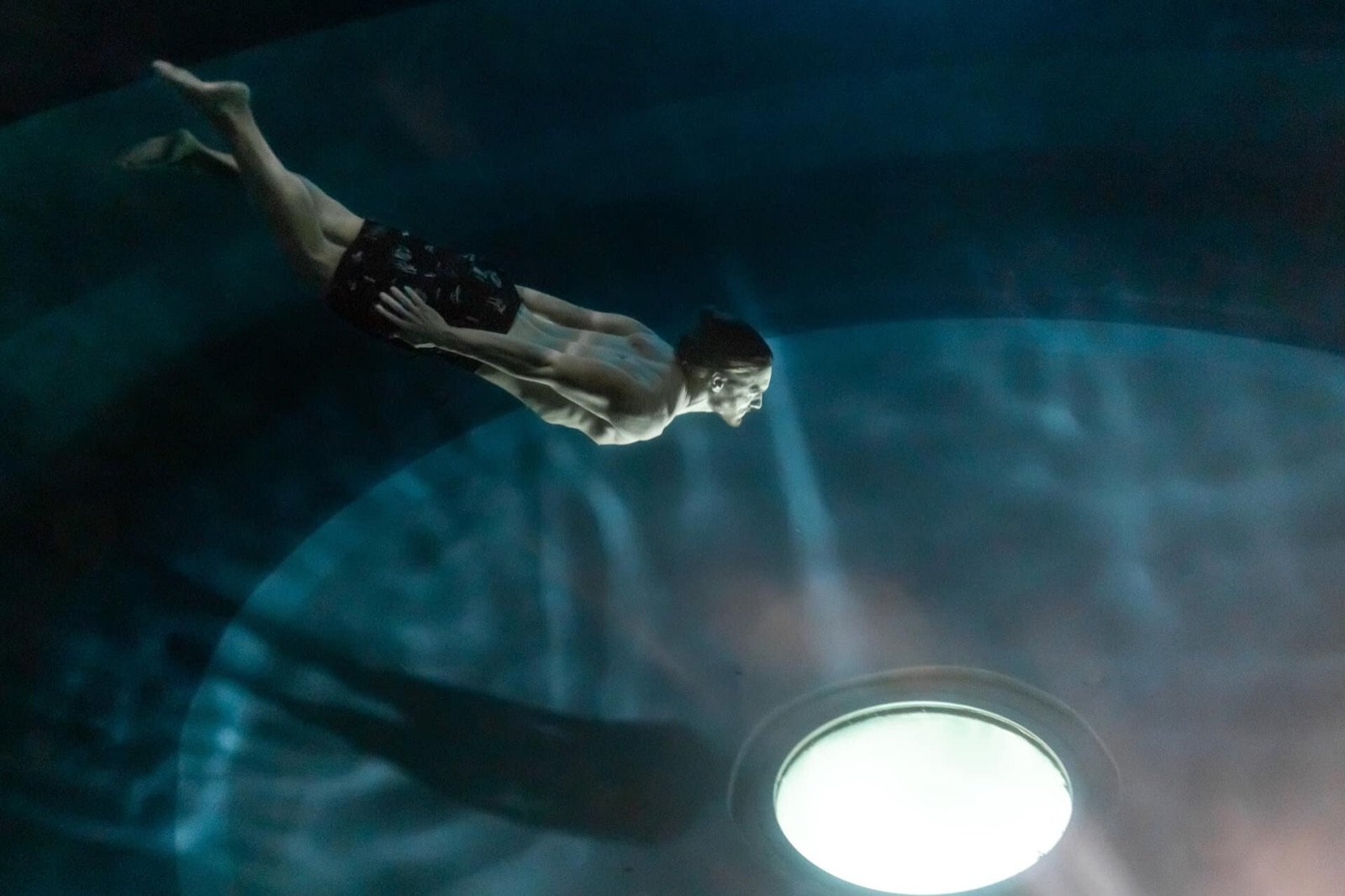
Wellness is not a wing bolted on here; it is the whole argument, inherited from the building's first life. There is a cave-like indoor pool cut into the stone, a sauna and a hammam, an outdoor deck for yoga with the forest for a wall. Even the copper tub set into a bedroom reads less as a flourish than as a thesis: that rest, taken seriously, was the point of this place before anyone thought to call it design. Manna, a Member of Design Hotels, has simply given the old cure a better room.
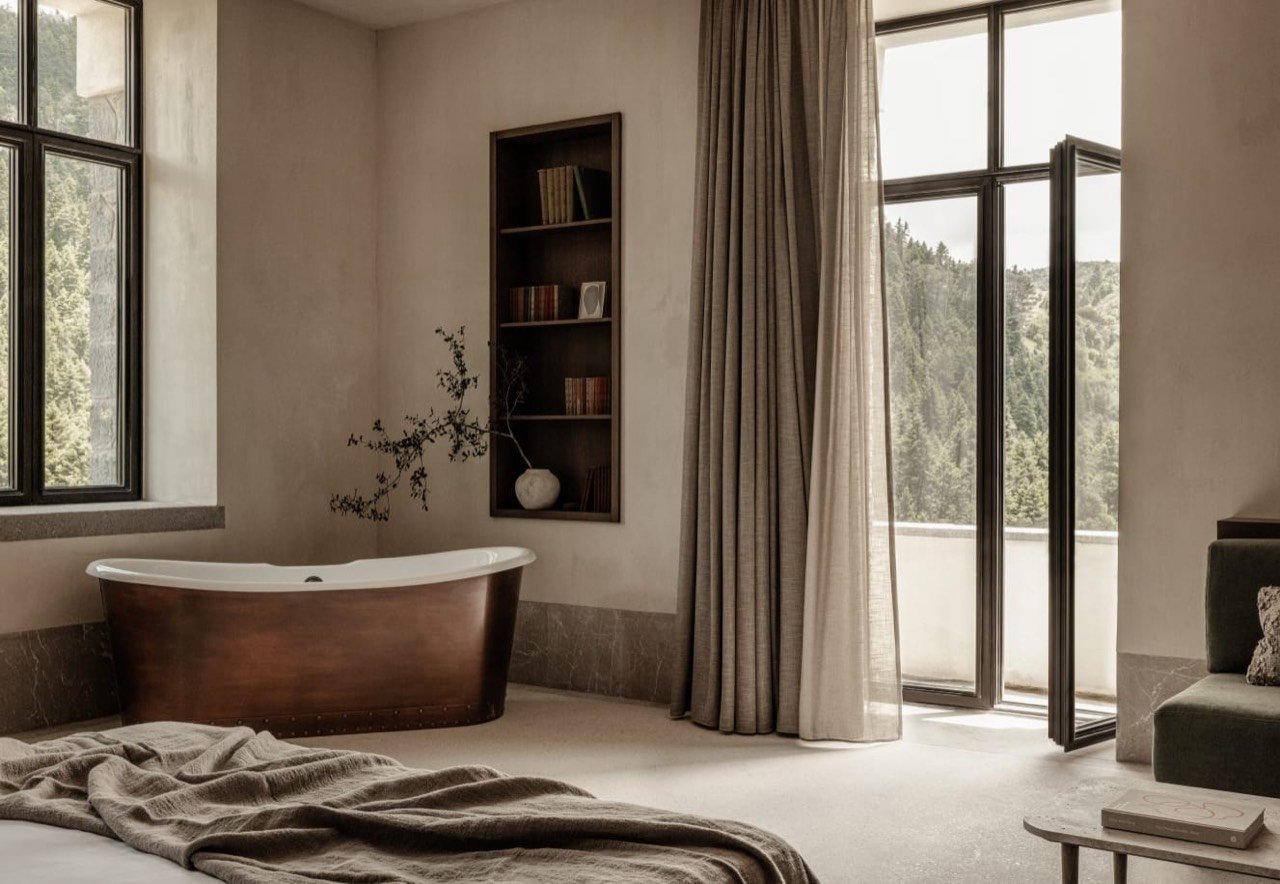
They let the forest do the talking, and had the nerve to stay quiet.
A kitchen the drive would justify
The restaurant is led by Athinagoras Kostakos, and it is the rare hotel kitchen in the Greek interior serious enough to be a reason in itself. The cooking leans on the mountain larder and the Mediterranean habit, herbs and mushrooms and cheeses off the surrounding valleys, produce that has not travelled far. This is not sea-facing Greek food. It tastes of altitude, of fir and cold water, and it is the better for having a landscape it cannot borrow from anyone else.
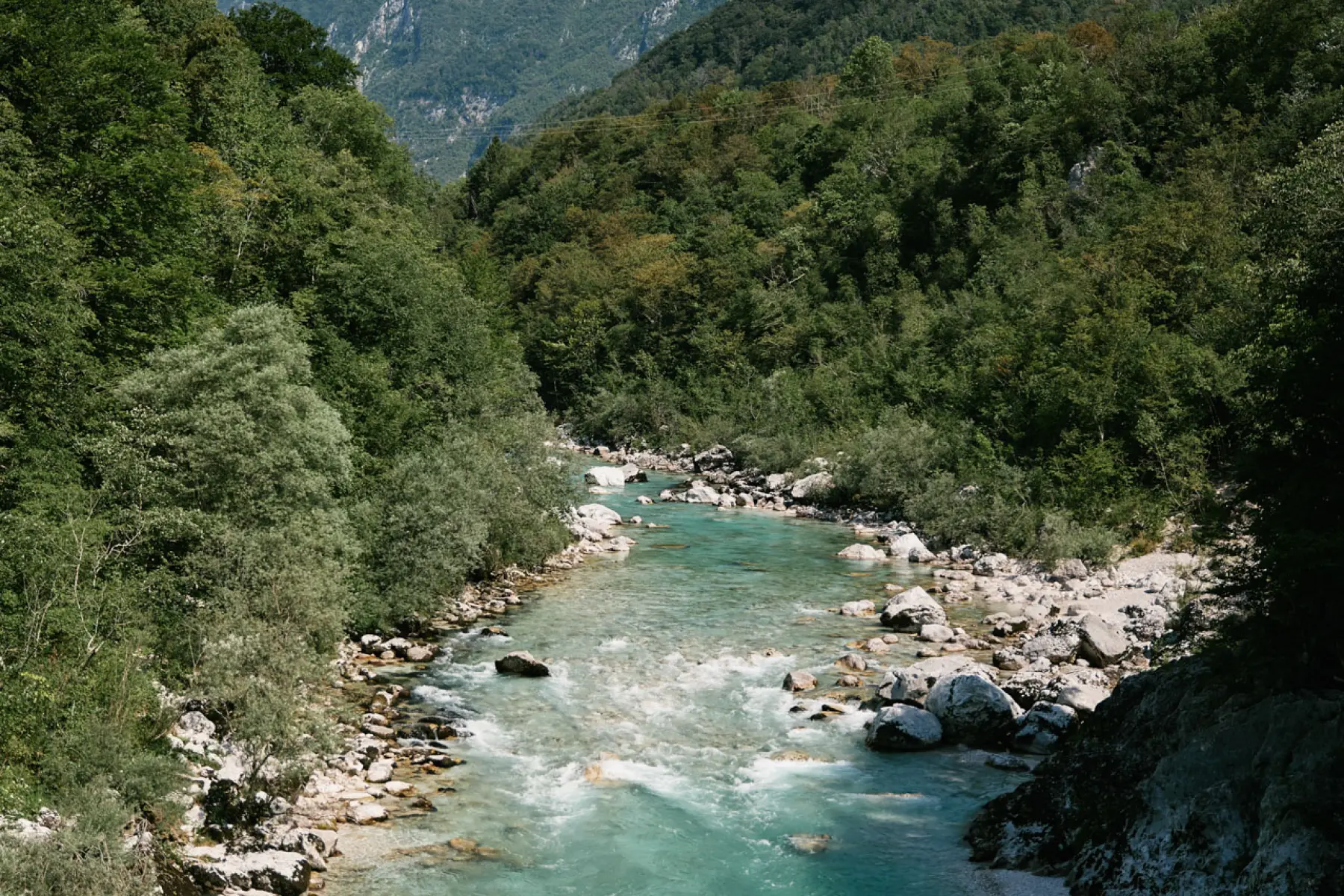
And the landscape is the last of it. The Menalon Trail runs through this country, a waymarked path that laces together the stone villages of the region, Dimitsana, Stemnitsa, Vytina, each worth the detour on its own. You come to Manna to sit still in the forest, but the door opens onto one of the finest walking corners in Greece. The mountain that once prescribed rest is happy, now, to prescribe a long day out and a slow evening back.
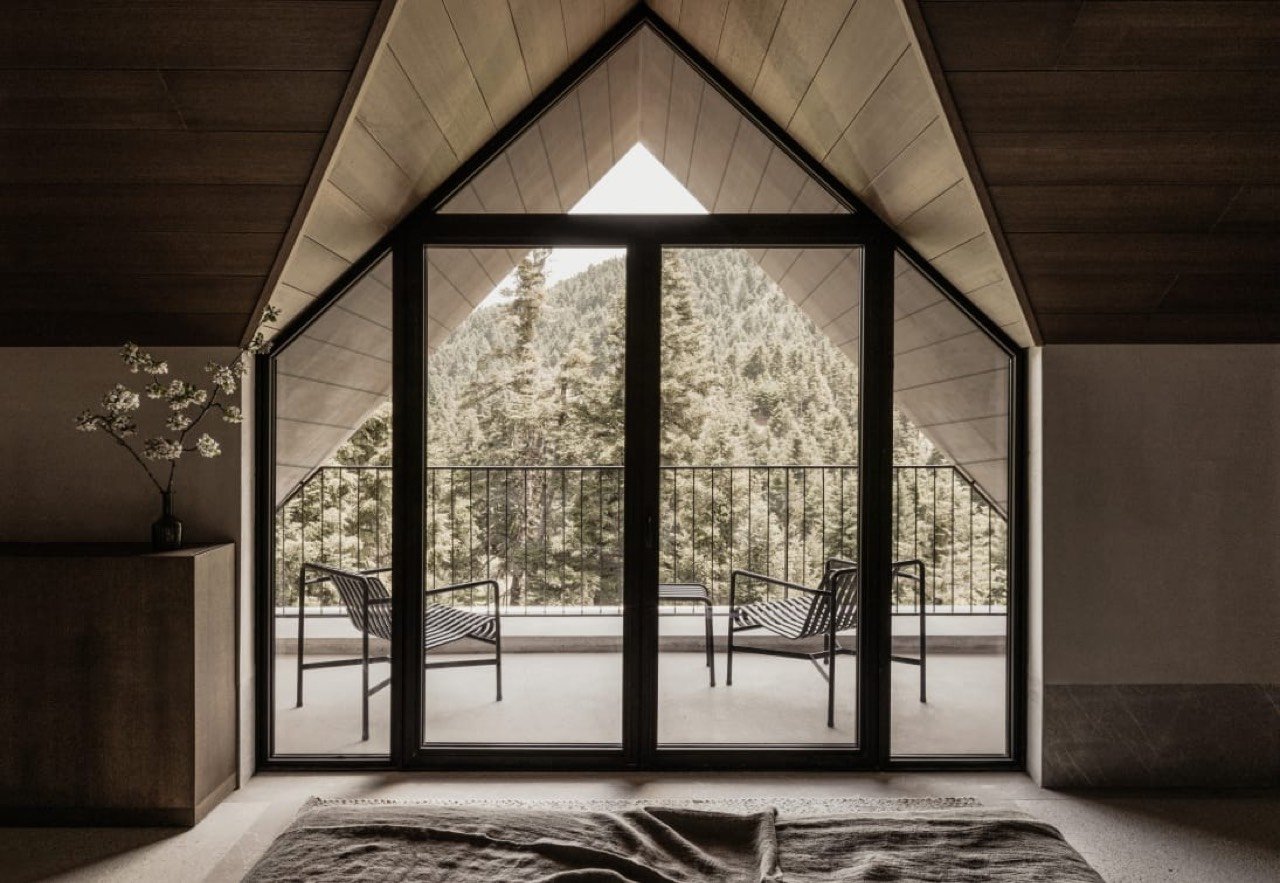
The most interesting Greece is often the one without a coastline.
Manna is the case for the Greek mountains made without apology: real design, real quiet, and a real table in one forest clearing. It does not compete with the islands. It offers the thing the islands cannot, height, cold air, silence, and a building that has been waiting a hundred years to be right. On the evidence, it is.
VANE note. This is a researched profile, not yet a first-hand VANE verdict. A full review carries a stay date, an independence disclosure and the writer's own account. Facts here are drawn from the hotel, K-Studio and Design Hotels, and verified to primary sources. Photos: Manna / Design Hotels (official), with credit.