A peninsula with a memory
The Astir Palace opened in August 1960, on a peninsula the state had set aside for a resort that was meant to signal something: that Greece, a decade out of a civil war, could hold its own against the Riviera to the west. It worked. The names that came down to swim, Onassis and Sinatra and Bardot among them, did the rest, and for a generation the Astir was shorthand for the Athenian summer at its most gilded.
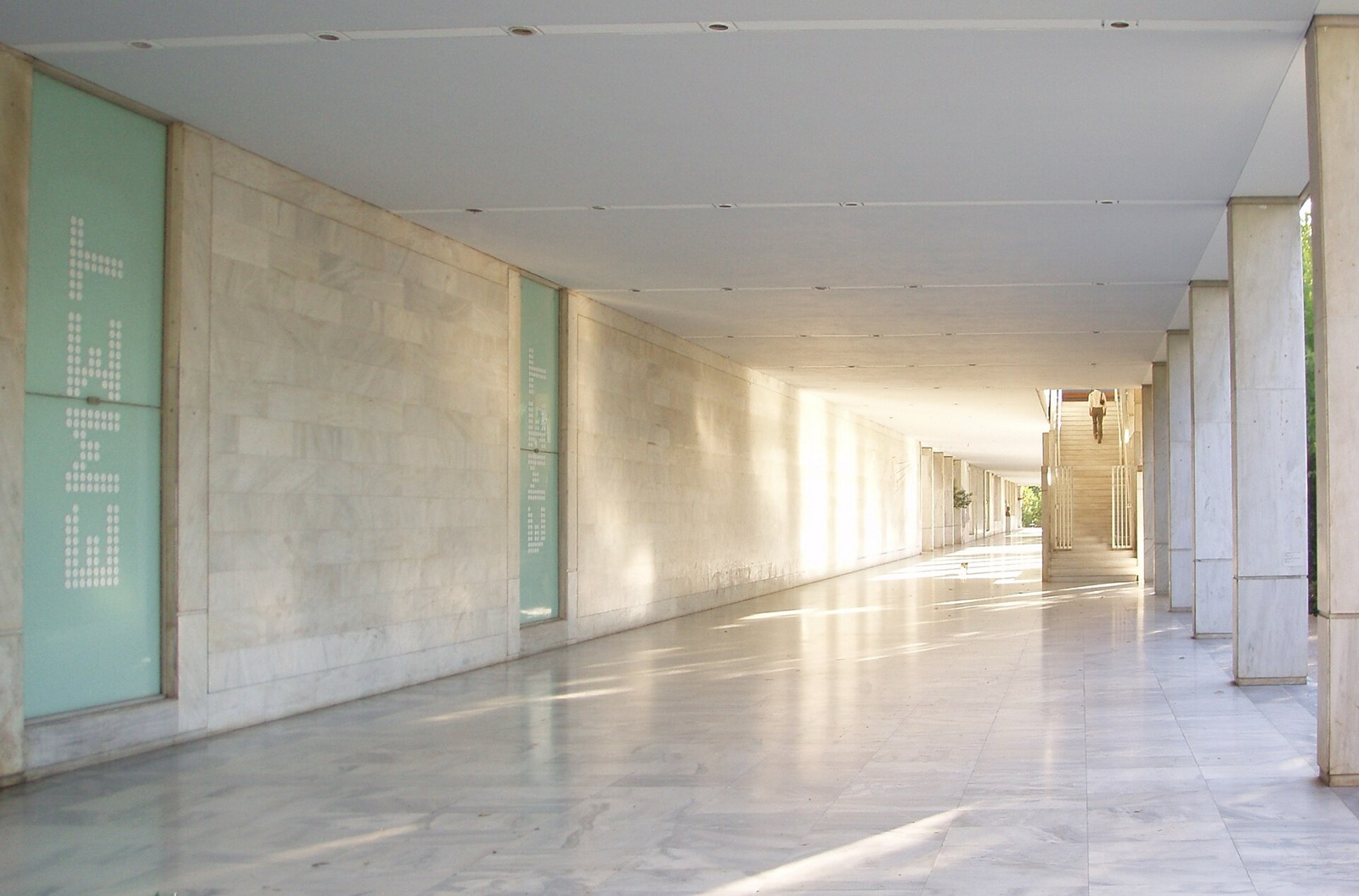
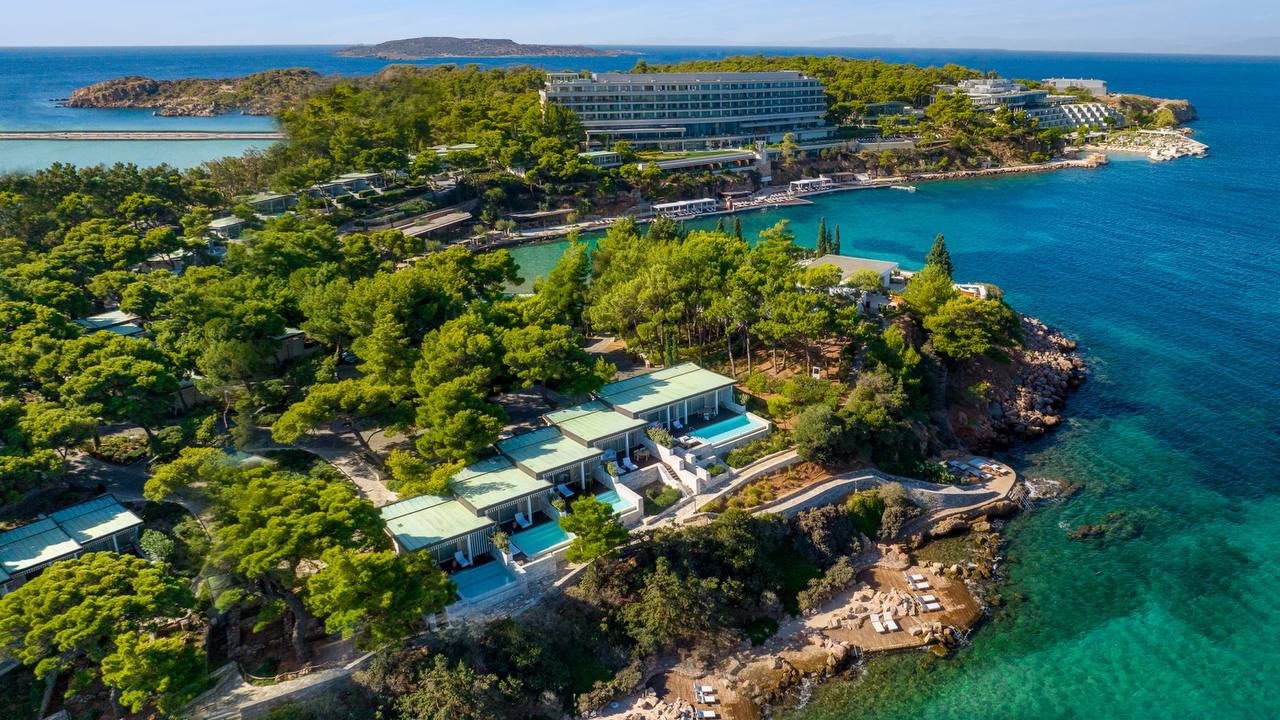
Then it aged, as these places do, and by the 2010s it was tired. A restoration reported at some six hundred million euros stripped it back and rebuilt it, and in March 2019 it reopened as a Four Seasons. The gamble was whether the new operator would flatten the character into something you could find in any warm country. It did not. The pines were kept, the coves were kept, the low horizontal lines of the old buildings were kept. What changed is the finish, not the bones.
Two hotels and a fleet of bungalows
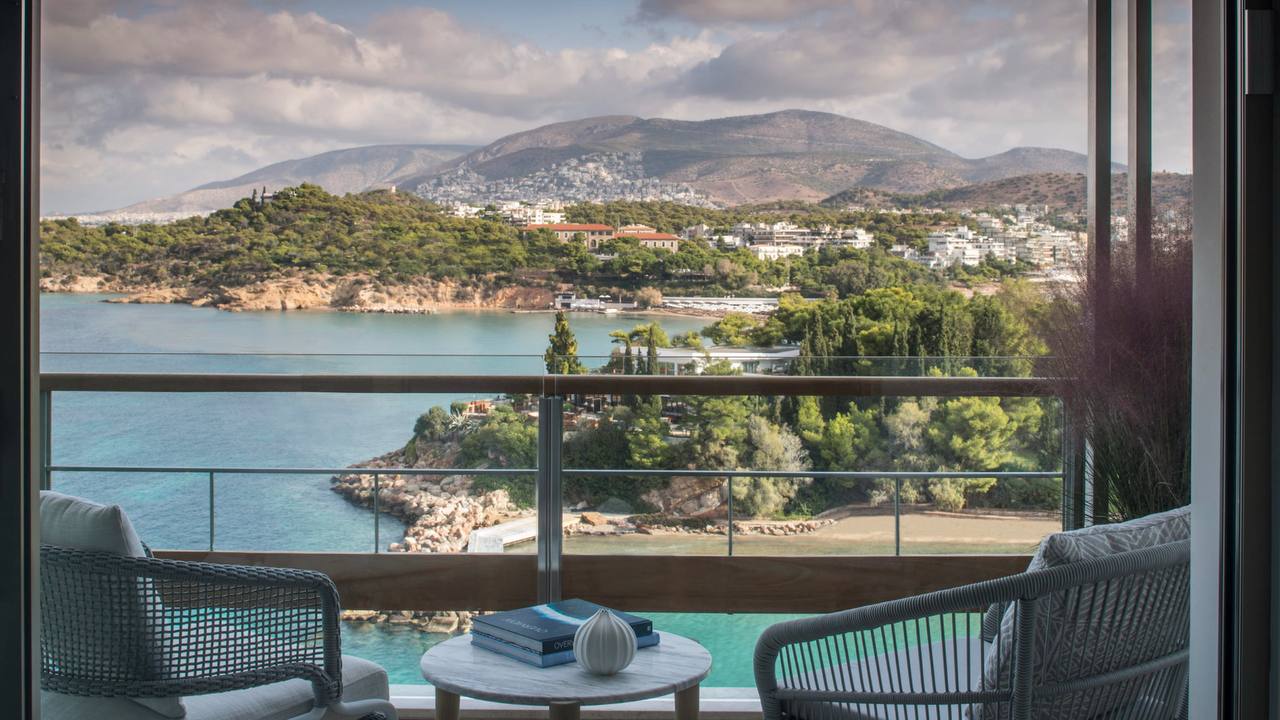
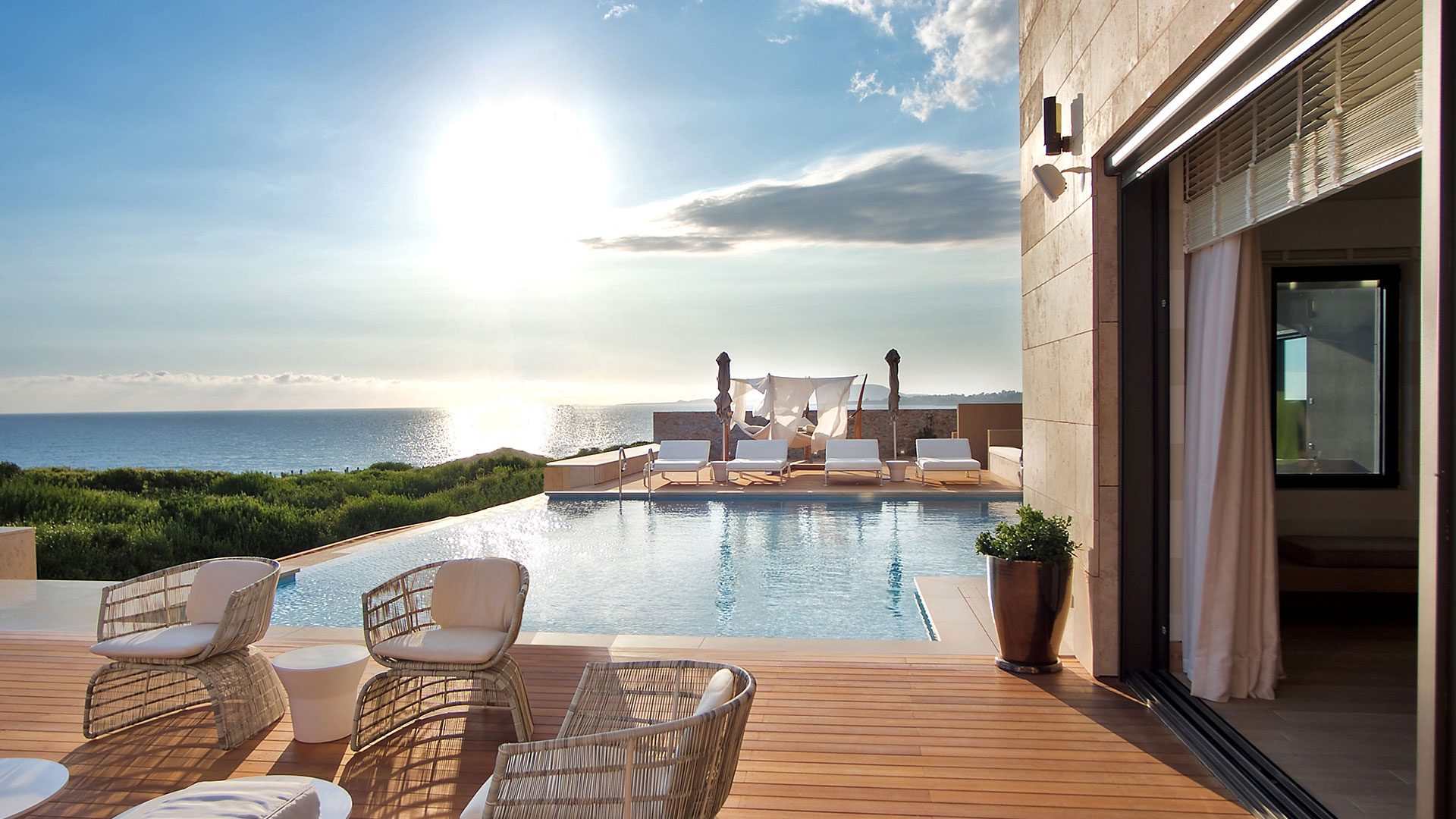
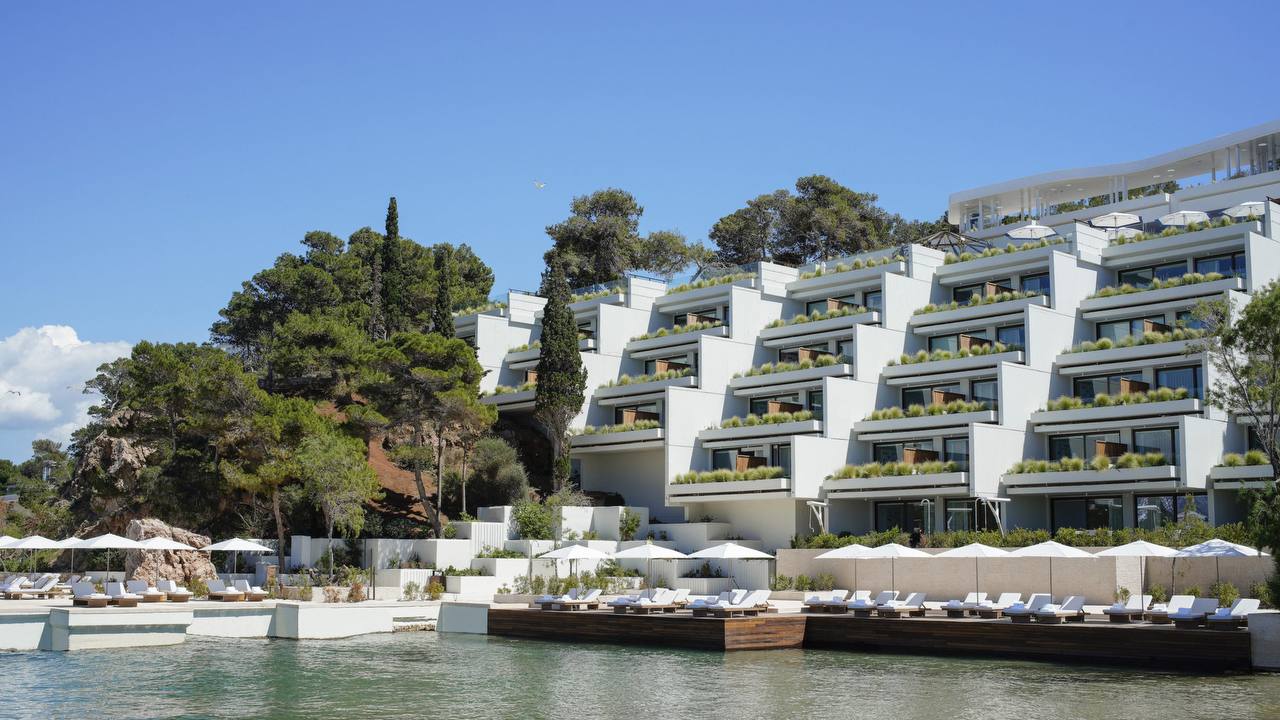
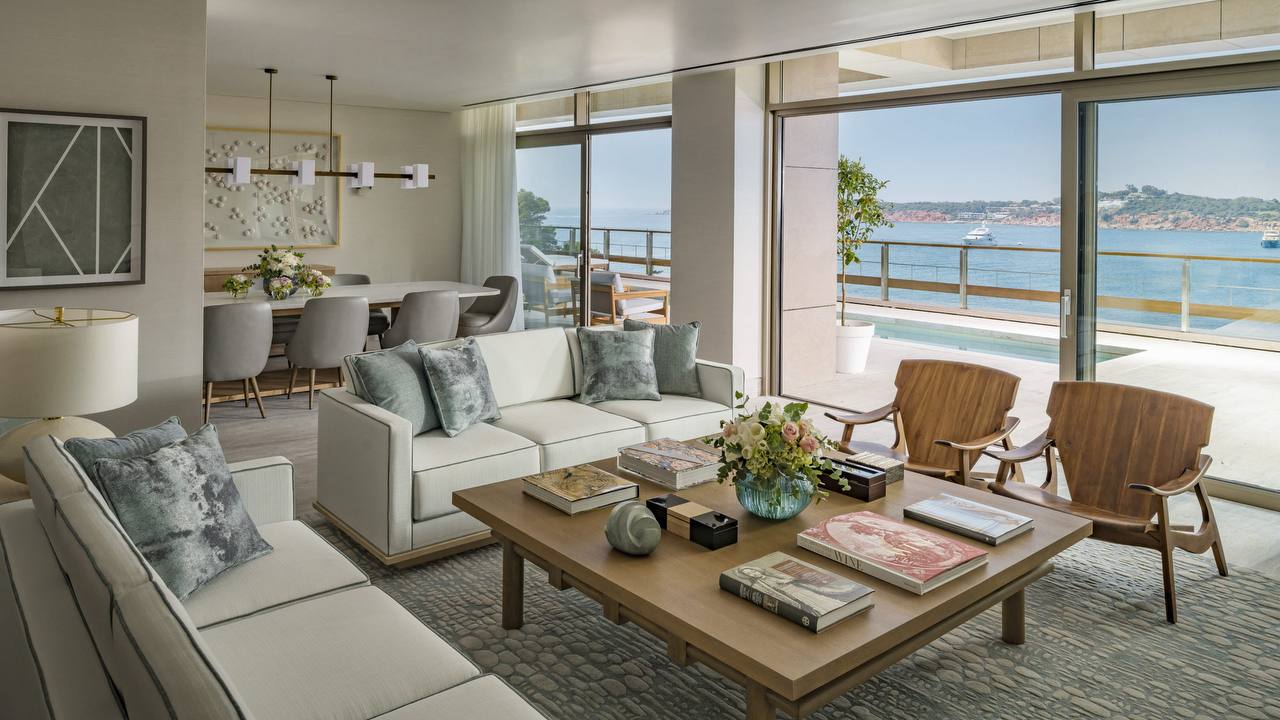
The resort is not one building but a small territory. Three hundred and three keys divide across two hotels, the busier Nafsika and the quieter Arion, with sixty-one villas and bungalows scattered through the trees down towards the sea. Three private beaches edge the headland, and the pool decks run their loungers almost to the waterline, so the gulf is rarely out of sight. The rooms read cool and quiet, oak and pale stone, the sort of interior that steps out of the way of the view rather than competing with it.
What the money bought, in the end, is space and quiet. The peninsula is large enough that a full house never feels like one, and the planting is old enough that a bungalow can feel like a house of its own. That is the rarer luxury here, rarer than the marble: room to disappear, thirty minutes from a capital of four million.
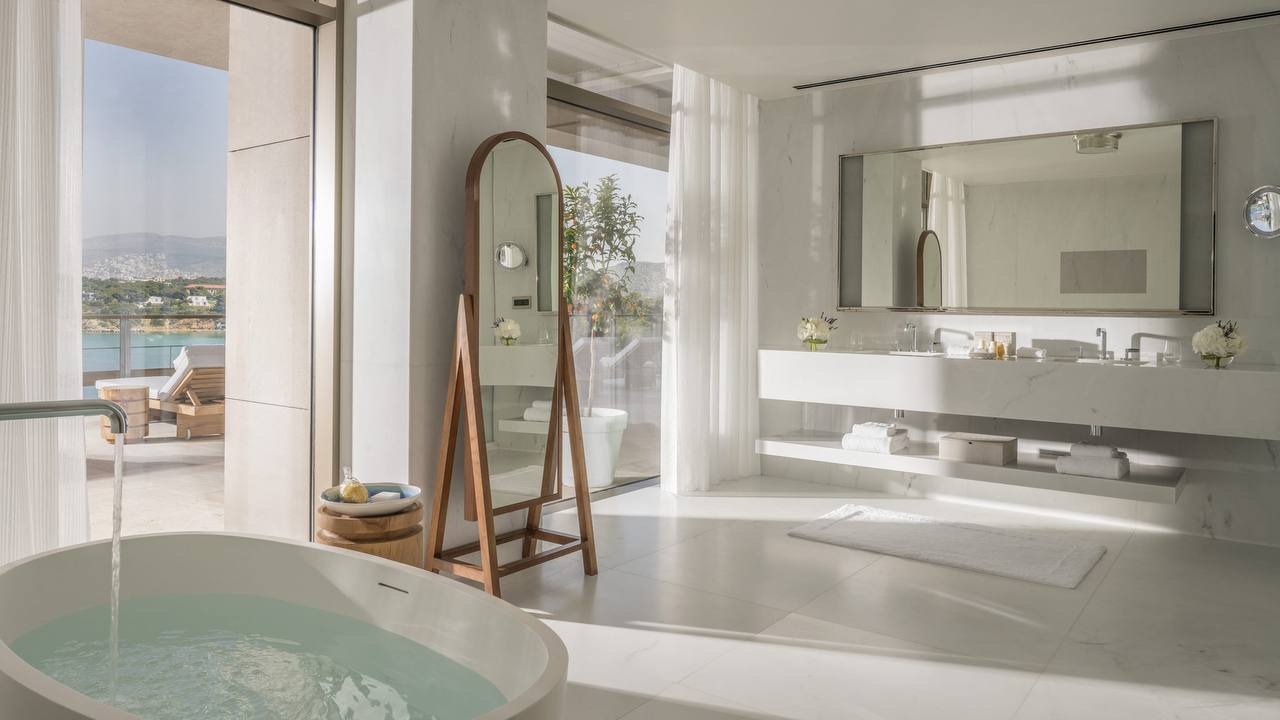
The finish is new. The memory is not.
A reason to come, not just to stay
Dining is the part that lifts the Astir above the run of grand seaside hotels, and it turns on Pelagos. The restaurant took a Michelin star within months of the 2019 reopening and has held it since, cooking a Mediterranean menu built around seafood off a broad sea-view terrace. In the kitchen is Luca Piscazzi, an Italian who trained across Italy, London, Spain and Hong Kong, and who ran the pass at Anne-Sophie Pic's La Dame de Pic in London while it held two stars. The cooking is precise without being cold, which on this coast is the harder trick.
Pelagos is not the only table, and the resort is smarter for that. Around it sit Mercato, an Italian trattoria, the Latin-American Helios, and Taverna 37, which does the Greek register straight. You can eat seriously one night and simply the next without leaving the headland. That range is the point: the Astir wants to be a destination for the table, not merely a bed with a good restaurant attached.
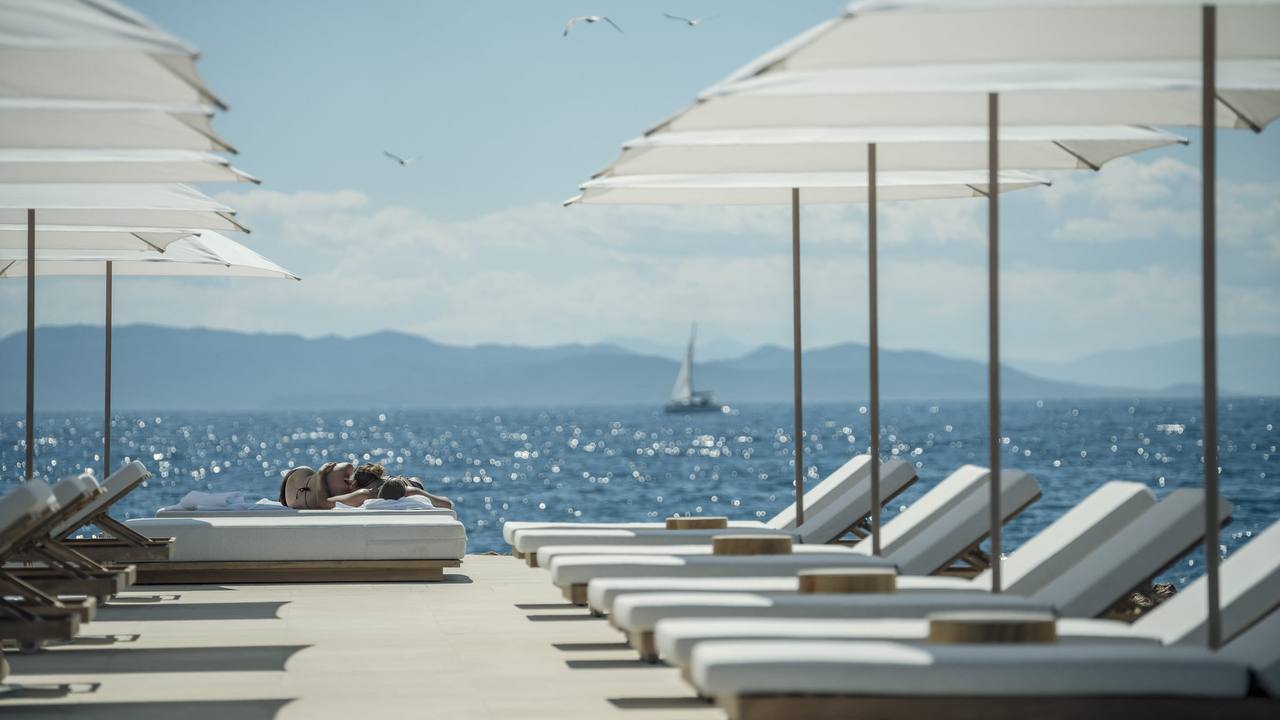
The Astir had every reason to lose itself in the rebuild, and did not. It carries a founding legend, a one-star table and a pine headland that still feels private, half an hour from the Acropolis. We have not yet stayed under the Four Seasons flag, so this stands as a researched profile rather than a first-hand verdict. Two caveats hold even so. This is a big resort, and a full house is a full house, however well hidden. And the tariff sits where the postcard suggests. On the evidence, it earns the closer look, and the return visit that a verdict needs.
VANE note. This is a researched profile, not yet a first-hand VANE verdict. A full review carries a stay date, an independence disclosure and the writer's own account. Photos: Four Seasons Astir Palace (official press images), self-hosted, with credit.